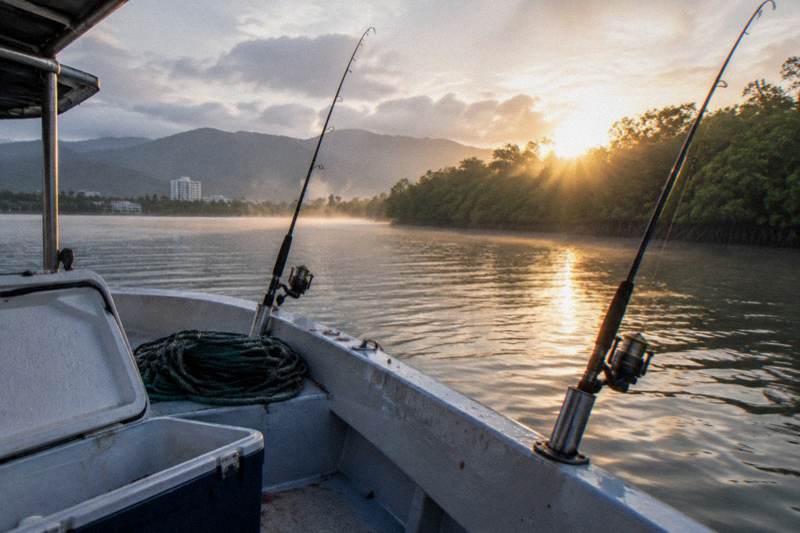
Cairns Fishing Tides And Conditions: A Plain English Guide
Tides and wind decide more about a fishing day in Cairns than almost anything else you can plan for. Here is how the two work on the inlet, the creeks and the reef, and why the local operators pick the departure windows they do.
Short answer
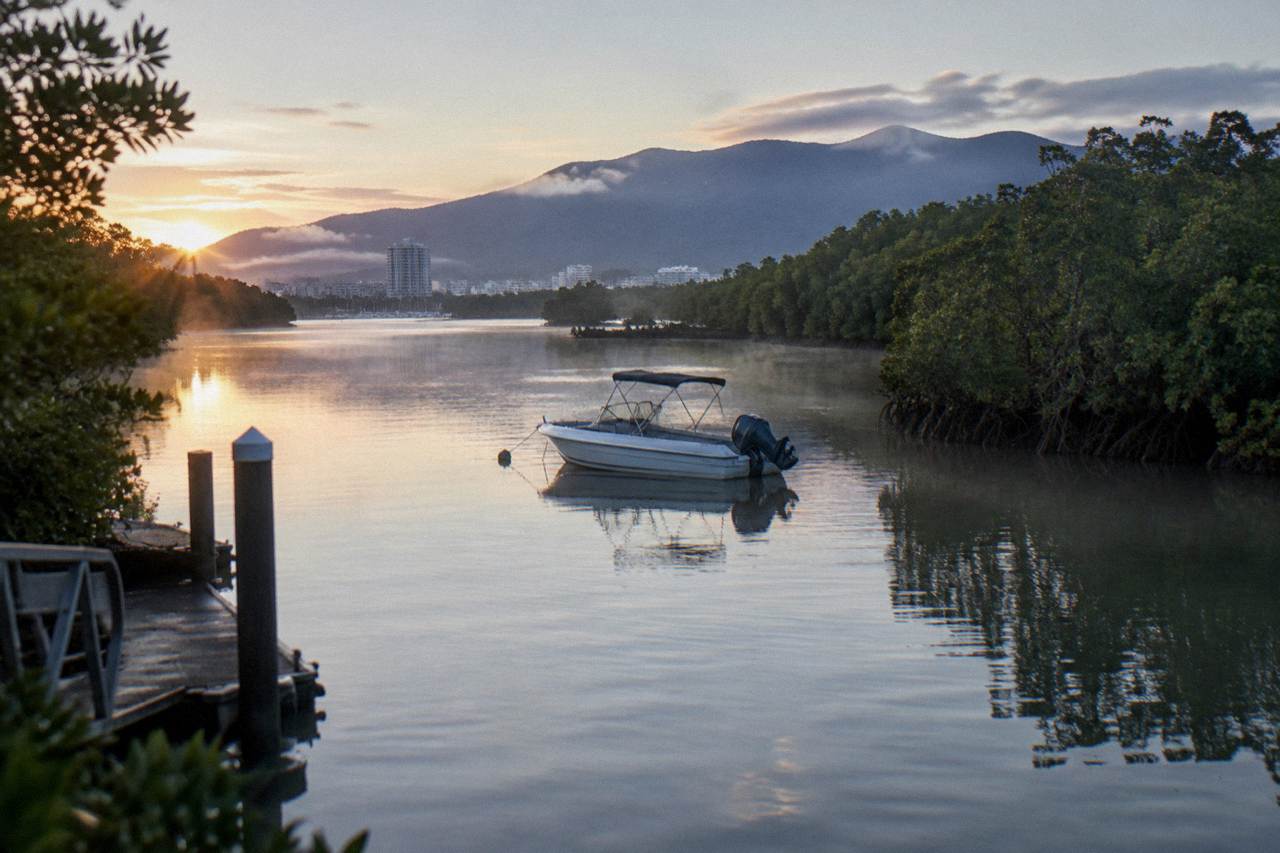
Cairns fishing runs on two tidal cycles a day, and the estuary charter meets at 6.30am to fish the morning run through Trinity Inlet. Southeast trade winds blow through the drier months, roughly May to October, and reef days tolerate more wind than creek days. No licence is needed in tidal waters.
Trinity Inlet breathes twice a day. Water floods up the creeks off Cairns, spreads over the mangrove flats, then drains back out and pulls bait, prawns and predators with it. That rhythm, stacked on top of the southeast trade winds that mark the drier months, is what a Cairns fishing day is actually built around, and it explains almost every departure time, meeting point and cancellation call the local operators make. The same tides and trade winds shape the offshore runs too, and if you're wondering how far the boats actually travel for black marlin, how far out you go to chase marlin from Cairns lays out what is genuinely known.
This guide lays out how tides and conditions work across the three kinds of fishing day available from Cairns: the estuary morning on Trinity Inlet, the full-day reef run, and the self-drive boat exploring the inlet on your own clock. No tide times or heights are printed here, because they shift daily; the official Queensland tide tables and the Bureau of Meteorology forecast are the two sources to check the night before, by name, and both are free.
How Do Tides Shape Fishing In Cairns?
Tides move the food and the fish twice a day through Trinity Inlet and the creek systems, and the change of tide, the turn itself, is when feeding generally switches on. Operators time departures to the morning tidal run rather than the clock, which is why the estuary charter meets at 6.30am at the marina.
Cairns sits on a roughly semidiurnal tide pattern, which means two highs and two lows each day, of unequal size. For fishing, what matters is not the height printed in a table but the movement: rising water floods the mangroves and lets predators like barramundi, mangrove jack and estuary cod push up onto flats and among the roots where the bait hides. Falling water drains those same fish back into the channels, concentrating them in gutters and holes where a lure worked with the current gets noticed.
The turn is the moment. Most estuary guides fish hardest for the hour either side of a tide change, because the slack lets fish hold position and strike without fighting flow. The hours of dead mid-tide, when the water barely moves, are usually the slowest of the day. This is why a charter that looks early on paper, a 6.30am meet, is really a tidal decision: the operator is putting the group on the water for the morning run, not simply beating the heat.
Two practical points follow. First, tides are predictable years in advance, so the official tide tables, published for standard ports including Cairns, are worth checking before you book anything. Second, wind is not predictable that far out, so the Bureau of Meteorology forecast is the second check, closer to the day. The tide tells you when fish feed; the wind tells you whether the boat can reach them.
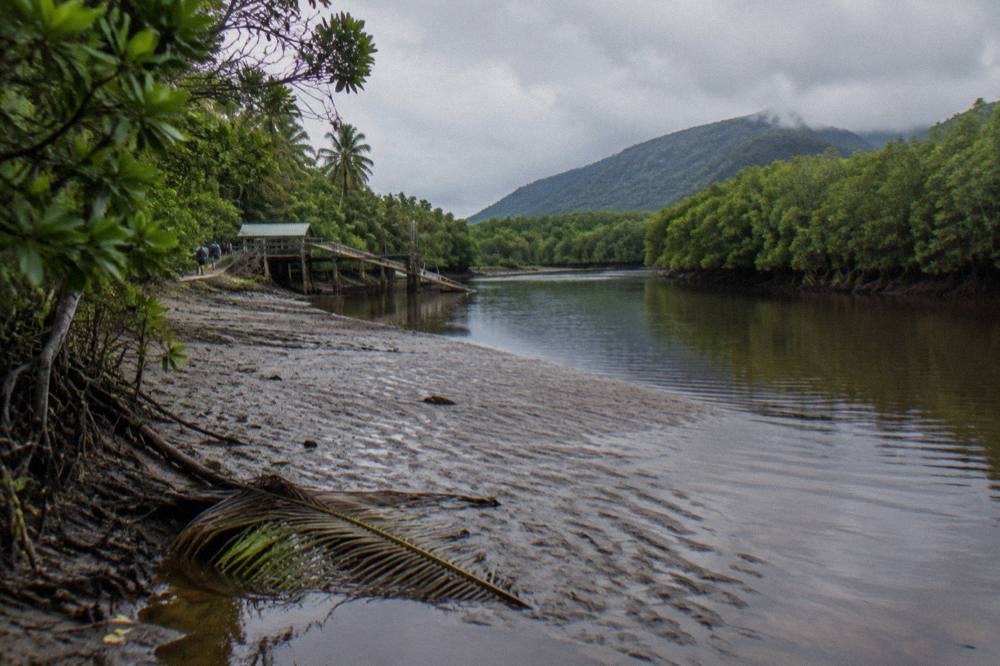
Each phase of the tide suits a different approach, and this is the shorthand local skippers work to:
| Tide Phase | What The Water Is Doing | Where To Fish | Best Technique |
|---|---|---|---|
| Rising (flood) | Water pushes over mangrove flats and roots | Flooded bank edges, snag lines | Casting lures tight to structure |
| High slack | Movement slows to a stop | Channel edges near flats | Soaked baits, slower retrieves |
| Falling (drain) | Water pulls off flats into gutters | Channel holes, drain mouths | Work lures with the outgoing flow |
| Low slack | Minimal movement, clear shallows | Deeper holes and bends | Slow, patient presentations |
The creek systems around Cairns, Trinity Inlet, the Barron, the Mulgrave and Russell rivers and the Daintree further north, all follow this same flood and drain logic. Local fishing reports through 2026 describe active fish in these systems across the year, with the noted peaks in the run-off from March to May and the build-up from October to November. The closed season matters here too: barramundi may not be targeted in tidal waters from 1 November to 31 January, per the Queensland closure that applies east coast wide, so a summer estuary trip fishes other species instead. The rules are on the Fisheries Queensland seasons page, and the same source lists the species that stay open.
For readers comparing options, the planning picture is in Cairns Fishing Charters Compared, and the month by month version of this calendar is in Cairns Fishing Season By Month.
Why Does The Estuary Charter Meet At 6.30am?
The 6.30am meet at Cairns Marina, Finger D berth 2, puts the morning estuary charter on Trinity Inlet for the first tidal run of the day, the most reliable feeding window in the tropics, before the daytime heat shuts the bite down. The trip runs 4.5 hours with a maximum of six guests.
Tropical estuary fishing is a morning game more than a temperate one. Water in the inlet sits in the high twenties for much of the year, and once the sun is high, many species slide back under snags and shut down. A 6.30am start fishes the cool end of the day, the low light period when barramundi, jacks and trevally hunt, and stacks the trip against the morning tide rather than the dead middle of the day.
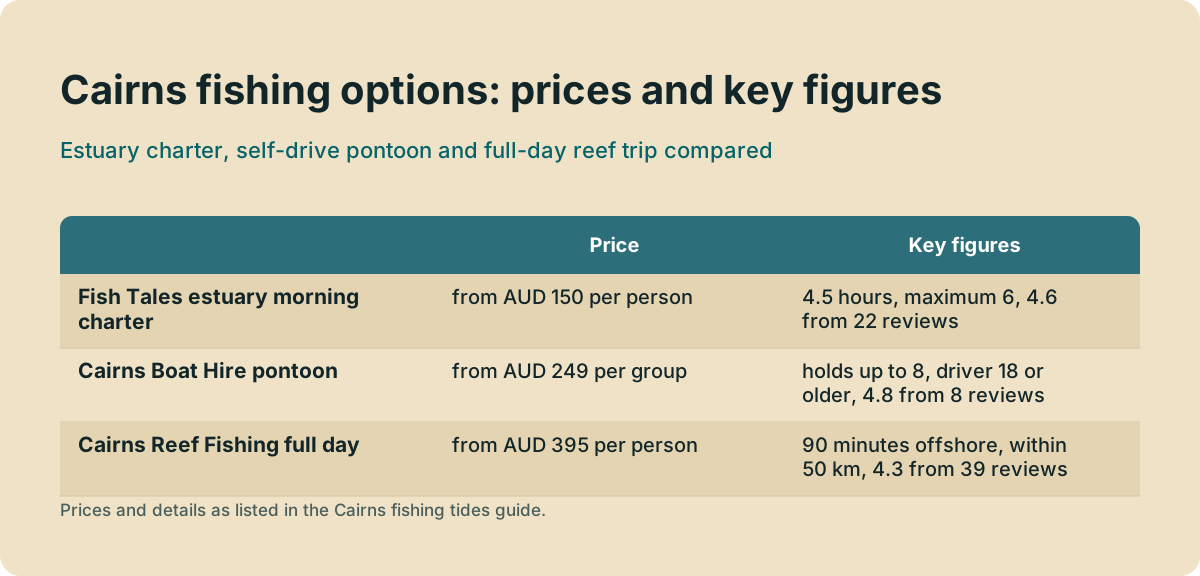
The Fish Tales Charters morning trip is the roster's estuary product: from AUD 150 per person, 4.6 from 22 reviews, rods, reels, bait and tackle supplied, plus bottled water and an esky with ice but no food, so bring breakfast. It is a 19-foot river boat working Trinity Inlet, small group or private, maximum 6, with free cancellation. The listing does not name target species, which is honest: an estuary day fishes what the tide and season offer, and the inlet produces barramundi outside the closure, mangrove jack, grunter, queenfish, trevally, estuary cod and flathead across the year.
If a 6.30am meet sounds brutal on holiday, the self-drive options below let you pick your own window, with the trade-off that you take on the tide reading yourself. The Half-Day Fishing In Cairns guide covers the shorter formats in detail.
Tides Versus Wind: What Actually Cancels A Day?
Tide never cancels a Cairns fishing day, it only changes where you fish. Wind is what cancels one. Southeast trade winds blow through the drier months, roughly May to October, and they determine whether a small boat can work the open inlet or must shelter in the creeks.
This distinction is the single most useful thing to understand when you see a forecast. The tide will do exactly what the table said it would, hours in advance. The wind is the variable, and in Cairns it has a seasonal pattern: the southeast trades dominate the drier months from roughly May to October, while the wet season from roughly November to April brings lighter, more variable and less predictable air.
For a sheltered estuary trip on Trinity Inlet, wind is mostly a comfort issue. The inlet is protected, and a 19-foot river boat with a guide at the wheel handles a fresh southeast morning by tucking into lee banks and creeks. For a self-drive boat, the same wind is a bigger deal: you are your own skipper, and the open stretches of the inlet that are pleasant at 10 knots are a wet, tiring push at 20.
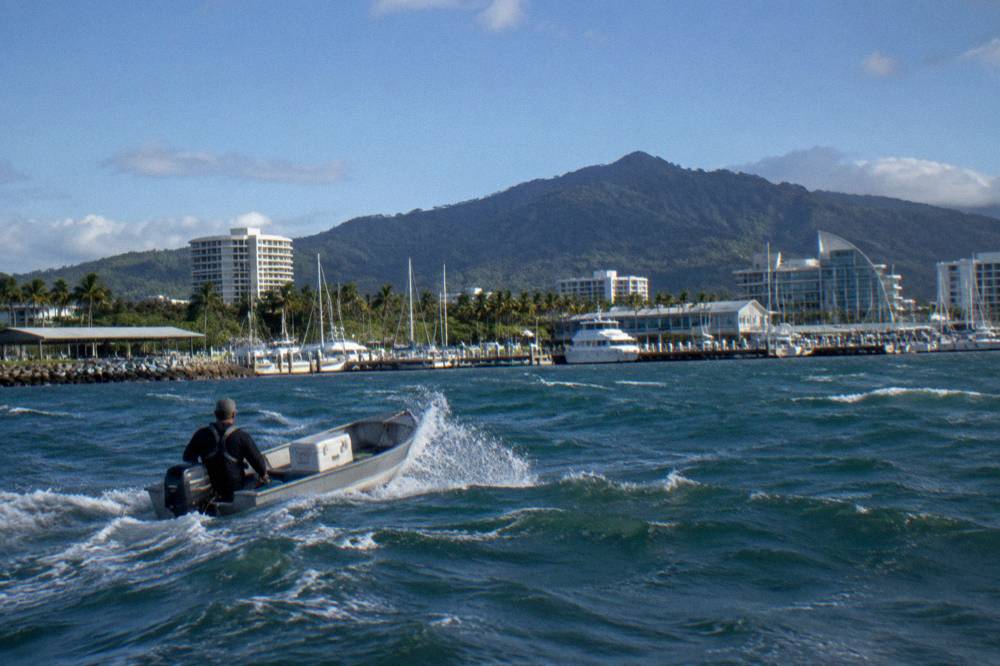
How much wind tolerance each format carries is worth setting side by side:
| Fishing Day | Wind Sensitivity | Typical Response To Fresh Trades |
|---|---|---|
| Guided estuary morning | Low, the inlet is sheltered | Skipper shifts to lee banks and creeks |
| Self-drive tinny or pontoon | Moderate, you make the call | Stay in sheltered creek arms, avoid open stretches |
| Full-day reef charter | Handled by the larger boat, but operator decides | Trip moves or reschedules the day before |
| Hook-A-Barra pond session | None, stocked ponds on land | Runs regardless of wind |
The reef is a different calculation again. A full-day reef charter runs about 90 minutes offshore to grounds within 50 km of Cairns, and those boats go in conditions a small boat never would, but operators still read the same Bureau of Meteorology forecast and make the call the day before. Free cancellation on the roster's trips means a weather call rarely costs you the fare.
The practical habit to build: check the official tide tables when you pick your date, then check the Bureau of Meteorology Cairns forecast in the 48 hours before departure. If the trades are forecast strong and your day is a self-drive day, plan creek shelter over open water, and the fishing-spot tips given at boat collection are worth asking about specifically for wind.
The pontoon option is the one most sensitive to this trade-off, and it is also the one that rewards planning most. The Cairns Boat Hire pontoon, from AUD 249 per group with the boat holding up to 8, comes with a safety briefing and fishing-spot tips at collection, fuel and life jackets included, rods and bait optional extras, driver 18 or older, free cancellation. Its 4.8 rating comes from only 8 reviews, a small pool stated plainly as such, so judge it on the inclusions and the briefing rather than the score.
How Do Tides Work On A Reef Day?
Reef fishing around Cairns is less tide driven than creek fishing, because the grounds sit in deeper water where current matters more than level, but the tides still set the drift and the bite, and the two five-day reef finfish closures in October and November each year sit outside any tide plan.
A reef charter from Cairns, the Cairns Reef Fishing full day from AUD 395 per person, 4.3 from 39 reviews, runs to grounds within 50 km of the coast targeting coral trout, red emperor and large mouth nannygai. Out there the tide expresses itself as current over the bommies and rubble patches: some drifts fish, some do not, and the skipper reads the direction and strength of the run to decide where to anchor or drift. Guests feel it mainly as the pace of the drift and the weight on the line.
What reef guests should actually plan around is the calendar, not the tide table. Queensland closes coral reef finfish take for two five-day windows each October and November around the new moons: in 2026 those are 8 to 12 October and 6 to 10 November. Spanish mackerel have their own longer northern closures, 8 to 29 October and 6 to 27 November in 2026. These closures bind charters as much as private boats, so a reef booking in those windows either moves or fishes outside the closed species. The dates are published on the official Queensland closures page.
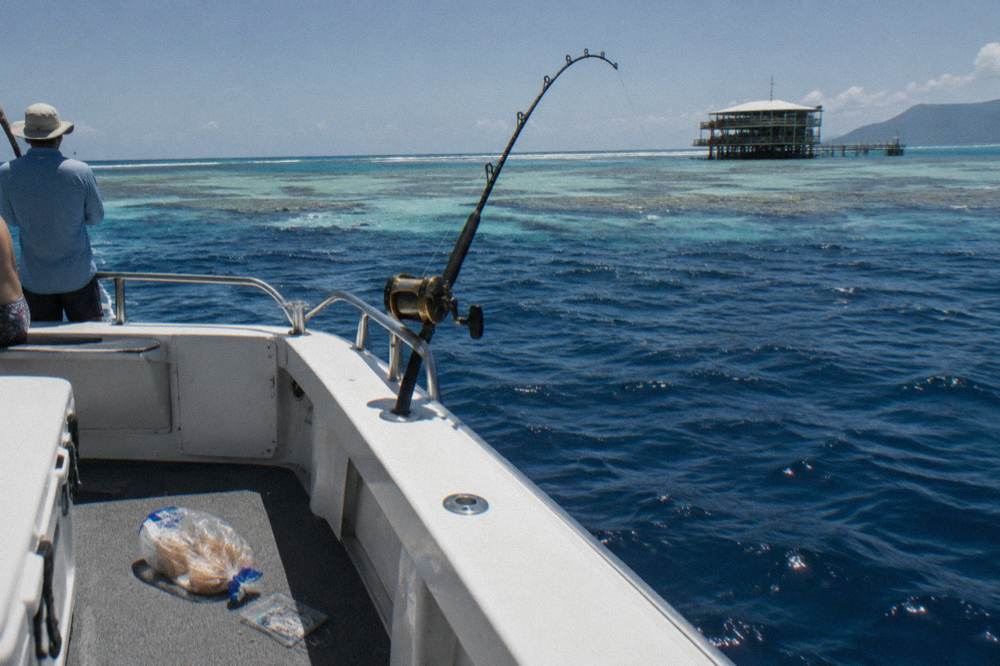
The reef day itself is long, about 9 hours, back at the marina around 3:30 to 4:00pm, with rods, tackle, bait, buffet lunch, afternoon tea, water and reef taxes included, and the catch cleaned, chilled and bagged to take home. Alcohol and soft drinks are not included; bring your own cans, no glass. There is no pickup, the departure is the Cairns Marlin Marina, and there is no marlin or game fishing on this trip: it is a shared reef bottom-fishing day, honest about what it is. The depth of that comparison is covered in Reef Fishing Cairns.
What Do The Trade Winds Mean For Your Month?
The drier months, roughly May to October, bring the southeast trades and the most dependable weather windows in Cairns, while the wet season from roughly November to April brings heat, storms and variable winds, plus marine stinger season from 1 November to 31 May.
Planning by month in Cairns is really planning by wind and rain. The southeast trades blow with real consistency through the drier months, and they are mostly a friend: they cool the mornings, settle the vis on the reef between blows, and put a predictable bend in the flag. The trade-off is that fresh trade days make open water lumpy for small boats, which pushes self-drive days into the creeks and the sheltered arms of the inlet.
The wet season flips the pattern. Winds ease and swing, the air gets heavy, and storm cells can build quickly in the afternoons, which is one more reason estuary trips run in the morning. The wet also opens the run-off period, March to May, one of the two noted estuary peaks, when rain flushing through the river systems concentrates feeding fish.
| Period | Wind Pattern | Fishing Notes | Season Flags |
|---|---|---|---|
| January to April, wet season | Light, variable, storm cells | Build-up to run-off; barramundi closed to 31 Jan | Stinger season, croc care after rain |
| March to May, run-off | Easing trades | Noted estuary peak as systems flush | Stinger season to 31 May |
| May to October, dry season | Steady southeast trades | Prime reef months, coral trout best August to October | Lowest stinger risk |
| October to November, build-up | Warming, gusty | Second estuary peak; closure windows apply | Reef closures Oct and Nov |
| November to December, early wet | Hot, storms building | Barra closure from 1 Nov; jacks and grunter instead | Stinger season from 1 Nov |
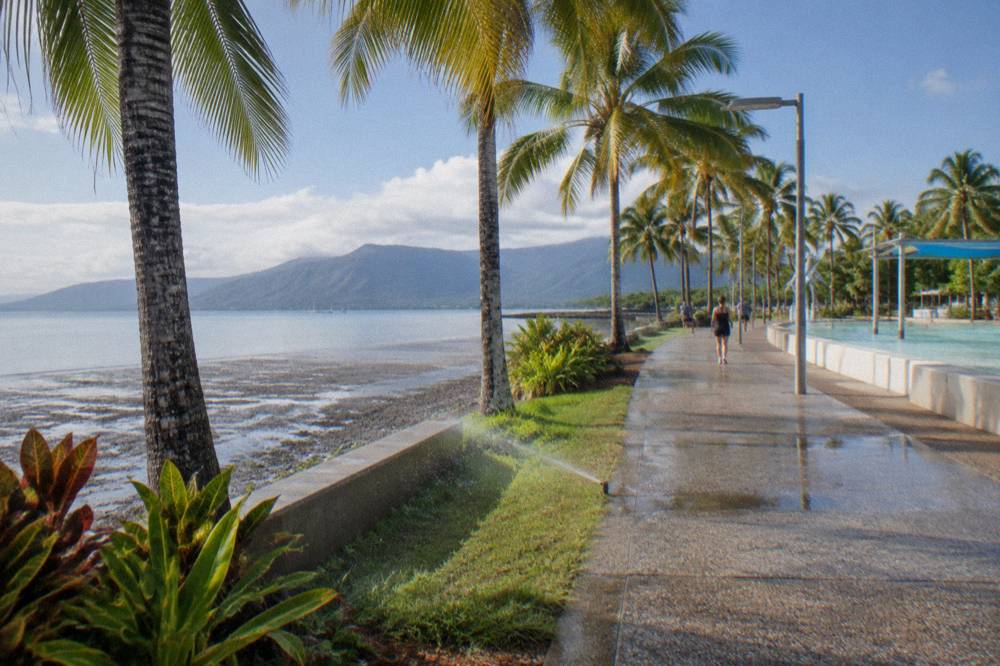
Two seasonal flags matter for safety planning. Marine stinger season runs 1 November to 31 May, with risk lower from June to October and lower again on outer reef trips than on inshore beaches. And estuary waters in Far North Queensland are crocodile country year round: stand well back from the water's edge, never wade in to retrieve a lure, never clean fish or dump scraps near the water or ramps, and take extra care at dawn, dusk and after rain or high tides. That is Queensland Government guidance, not tour copy, and it applies to shore fishing and self-drive days alike. Sightings can be reported on 1300 130 372.
How Do You Read The Inlet On A Self-Drive Boat?
A self-drive day on Trinity Inlet hands you the tide decisions a guide normally makes: launch with the rising tide, fish the mangrove edges as they flood, work the channels on the drain, and be off the water before the afternoon wind peak. The driver must be 18 or older; no marine licence is needed per the listing.
This is the format where tides and conditions stop being background and become your job. The Cairns Boat Hire fleet leaves from Berth A1 at the Marlin Marina, right on the inlet, and the half day runs 4 to 8 hours. The collection briefing is genuinely useful here: staff give a safety briefing and fishing-spot tips, and asking them where the fish have been holding on that morning's tide is the single best question of the day.
The tinny option, from AUD 189 per group of up to 4, 4.4 from 17 reviews, is a shaded private boat with hire and fuel included; rods, esky, bait, ice and a skipper all cost extra, so bring your own food and drink. The pontoon, covered above, holds up to 8. A third listing of the same pontoon, from USD 190.48 per group, 4.6 from 13 reviews, names fishing rods, bait and a BBQ among its inclusions where the AUD listing sells them as extras; one reviewer reports being given a smaller boat than booked, so confirm inclusions and boat size with the operator before the day.
| Self-Drive Option | Price From | Capacity | Rating And Pool | Key Inclusions |
|---|---|---|---|---|
| Shaded tinny | AUD 189 per group | Up to 4 | 4.4 from 17 reviews | Boat and fuel; rods and bait extra |
| Pontoon (AUD listing) | AUD 249 per group | Up to 8 | 4.8 from 8 reviews, small pool | Fuel, life jackets, briefing; rods extra |
| Pontoon (USD listing) | USD 190.48 per group | Up to 8 | 4.6 from 13 reviews | Rods, bait and BBQ named; confirm boat size |
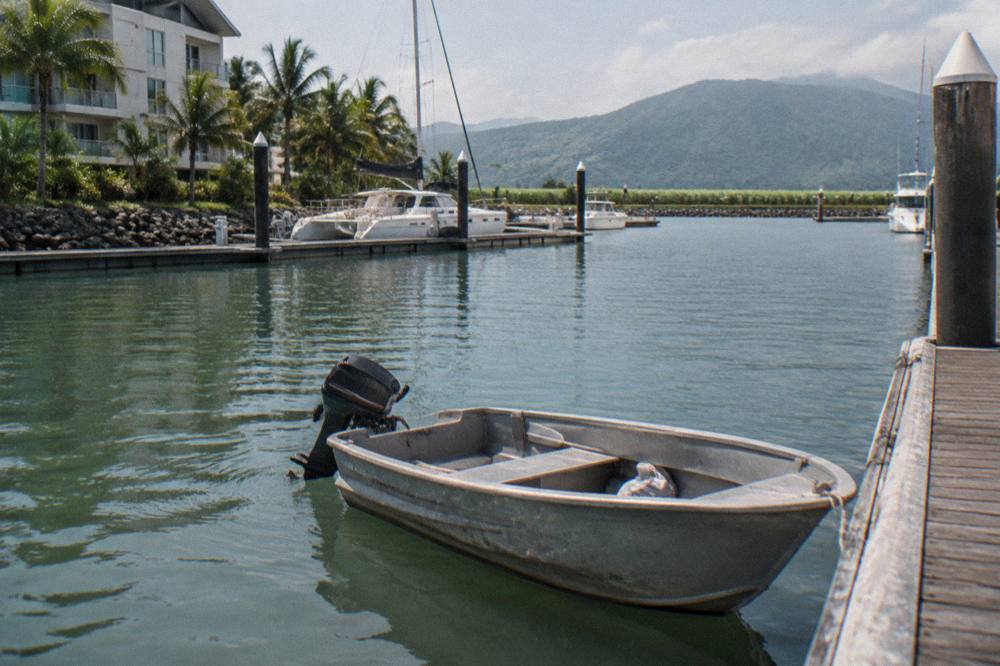
A simple self-drive tide plan for the inlet: start against the flooding tide along the mangrove banks east of the marina, where rising water covers the roots and jacks and cod hunt; move to the channel edges as the tide peaks; then follow the drain back toward the mouth, where outgoing water funnels bait past holding fish. If the southeast wind is up, the lee banks and the upper creeks stay fishable when the open stretches do not. The tide tables tell you which hours those are; the briefing tells you which banks.
Which Departure Window Suits Your Trip?
Match the window to your tolerance for early starts and weather risk: the guided estuary morning at 6.30am is the lowest effort and the most tide optimised, the reef full day is the weather dependent big trip, and the self-drive boat is the flexible middle option that lets you shift with the forecast.
If you want the tide read for you, take the guided estuary morning. The 6.30am meet is not a quirk, it is the whole product: a guide who knows which bank fishes on which tide, on a boat that handles the trades, for 4.5 hours and from AUD 150 per person. It suits first timers, families with patient kids and anyone who would rather not study a tide table on holiday. The Fishing For Beginners In Cairns guide expands on the guided versus self-drive choice.
If you want the biggest day and accept the weather call, take the reef charter, from AUD 395 per person, and book it early in your stay so a wind day can be rescheduled rather than lost. If you want control, take the self-drive boat and build your own window around the tide and the trades, which is exactly the flexibility the pontoon sells: from AUD 249 per group for up to 8, half or full day, free cancellation, and a briefing that doubles as a local fishing report.
There is also a middle path worth naming for families: the Hook-A-Barra pond sessions at Wonga Beach, about 1.5 hours north of Cairns, are stocked-pond catch and release, which means tides and wind barely touch them at all. The 1.5 hour session runs from AUD 70 per person, 4.5 from 25 reviews, with tackle, lures and an intro from the guides included. It is a farm experience, not a wild-barra trip and not a reef trip, and it is the one product on the roster where the forecast genuinely does not matter. The Family Fishing In Cairns guide covers it fully.
Whichever window you pick, the night-before routine is the same: official tide tables for the timing, Bureau of Meteorology forecast for the wind, and a call or message to the operator if anything looks marginal. Every trip on this roster carries free cancellation, so the routine costs nothing but attention. Fishing Tours Cairns keeps the full roster with prices and inclusions side by side, and the What To Bring On A Fishing Charter guide covers the bag.
Common Questions About Cairns Fishing Tides
Do tides or wind matter more for fishing in Cairns?
Both matter, but for different things. Tides decide when fish feed and where they can be reached, and they are predictable well in advance from the official tide tables. Wind decides whether your boat can get to the fish at all, and it is the usual reason a day is moved or cancelled, so check the Bureau of Meteorology forecast in the 48 hours before you go.
Why does the estuary charter meet at 6.30am?
The 6.30am meet at Cairns Marina, Finger D berth 2, puts the boat on Trinity Inlet for the morning tidal run and the coolest, lowest light part of the day, when barramundi, mangrove jack and trevally feed hardest. Tropical estuary fishing slows in the midday heat, so the early start is a fishing decision, not a scheduling one.
Do reef charters in Cairns depend on the tide?
Less than creek trips. The reef grounds sit in deeper water where current sets the drift rather than the tide level, and the skipper reads the run on the day. Reef bookings should be planned around the October and November species closures instead: in 2026, reef finfish take closes 8 to 12 October and 6 to 10 November, and Spanish mackerel close 8 to 29 October and 6 to 27 November.
Is there a bad tide for a self-drive boat day on Trinity Inlet?
No tide is bad, but each suits a different plan. A rising tide fishes the flooded mangrove edges, the drain concentrates fish in the channels, and the slack around the turn is usually the slowest hour. Ask at the collection briefing where fish have been holding on that morning's tide, and plan your route around the turn rather than fighting it.
Where do I find official tide times and the wind forecast for Cairns?
Use the official Queensland tide tables for tide times and heights, and the Bureau of Meteorology's Cairns coastal waters forecast for wind and sea conditions. This guide deliberately prints no tide times or heights, because they change daily; both sources are free and updated regularly, and checking both the night before a trip takes two minutes.
Does stinger season or the barramundi closure affect tide planning?
Stinger season runs 1 November to 31 May, with lower risk from June to October and lower risk again offshore than on inshore beaches, so it changes what you wear more than when you fish. The barramundi closed season, 1 November to 31 January in tidal waters, changes what you target: estuary trips in that window fish mangrove jack, grunter, queenfish, cod and flathead instead.