What To Bring On A Cairns Fishing Charter
Most Cairns charter listings already include the fishing gear, so what you pack comes down to sun protection, food, footwear and a few reef-day extras. Here is what each product on this roster supplies, and what to bring yourself.
Short answer
Cairns estuary and reef charters supply rods, reels, bait and tackle, and the AUD 395 reef day adds lunch, afternoon tea, reef taxes and bagged catch. Bring sun protection, a hat, non-slip shoes, your own food on short trips, seasickness tablets for the reef day, and a bag for the catch. No fishing licence is needed in tidal waters.
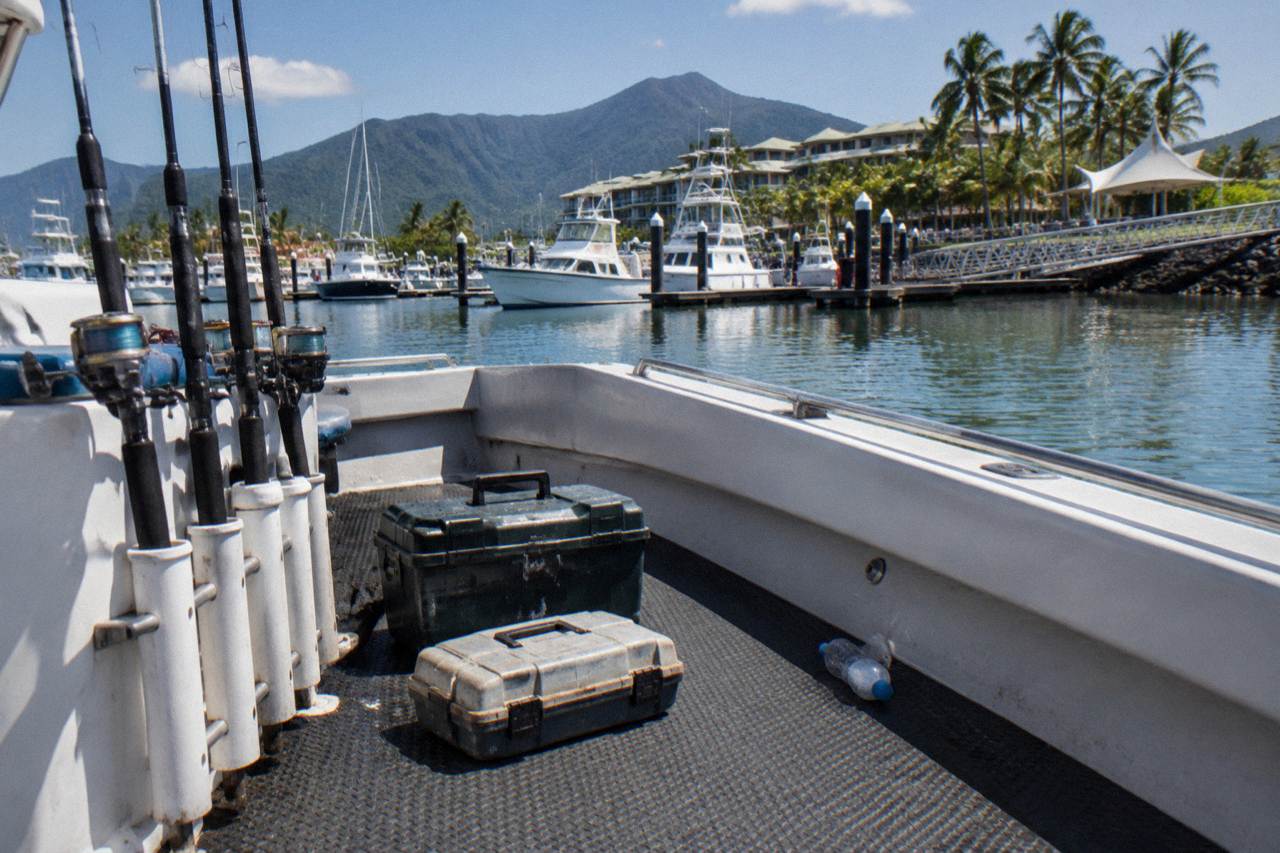
Packing for a fishing charter in Cairns is mostly about what the listing already covers. Every crewed product on this site's roster supplies the fishing kit: rods, reels, bait and tackle come with the estuary and reef charters, and the pond sessions at Wonga Beach include tackle, lures and an intro from the guides. The real packing decisions are the human things, sun protection, food, footwear and seasickness management for the long offshore run. Get those right and the day takes care of itself. Once your bag is sorted, the guide to what you can catch deep sea fishing in Cairns gives you a realistic picture of what might end up on your line.
This guide works through the roster product by product, listing what is supplied and what to bring, then covers the rules that catch visitors out: no licence is needed in tidal waters, glass bottles are off the table on the reef boat, and the barramundi closed season changes what you do with a rod between 1 November and 31 January.
What Do The Cairns Charters Already Supply?
The estuary charter supplies rods, reels, bait and tackle, plus bottled water and an esky with ice, and the reef charter adds a buffet lunch, afternoon tea, bottled water and reef taxes, with the catch cleaned, chilled and bagged to take home. Neither includes food beyond what is listed, and neither offers hotel pickup in Cairns: both depart from the Cairns Marlin Marina. If you're wondering how far the boat actually runs to reach the black marlin grounds, this guide on how far out you go to catch marlin from Cairns explains what is known about the trip beyond the reef.
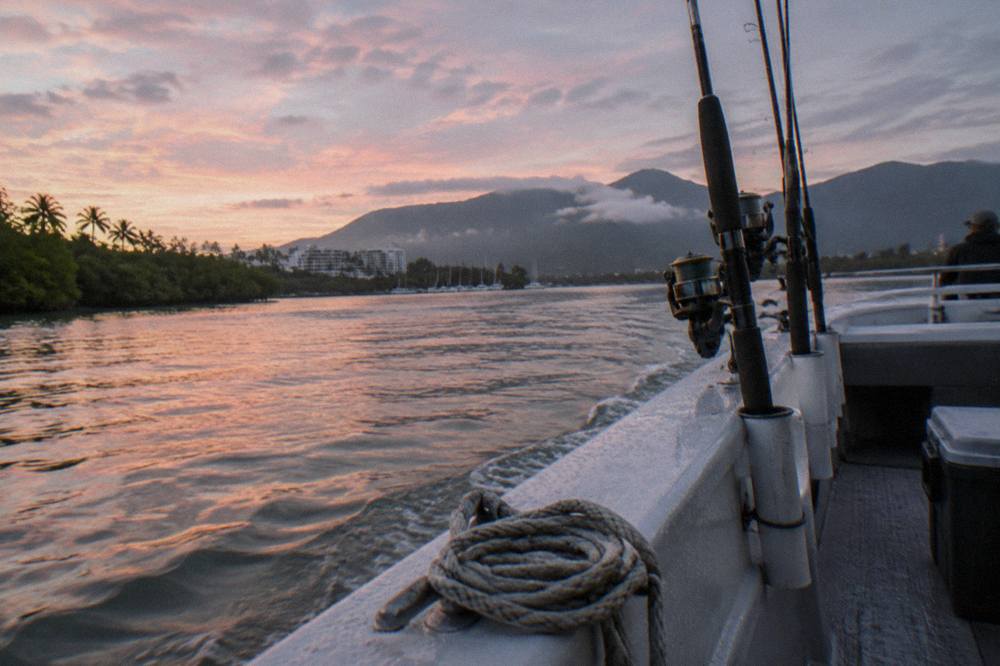
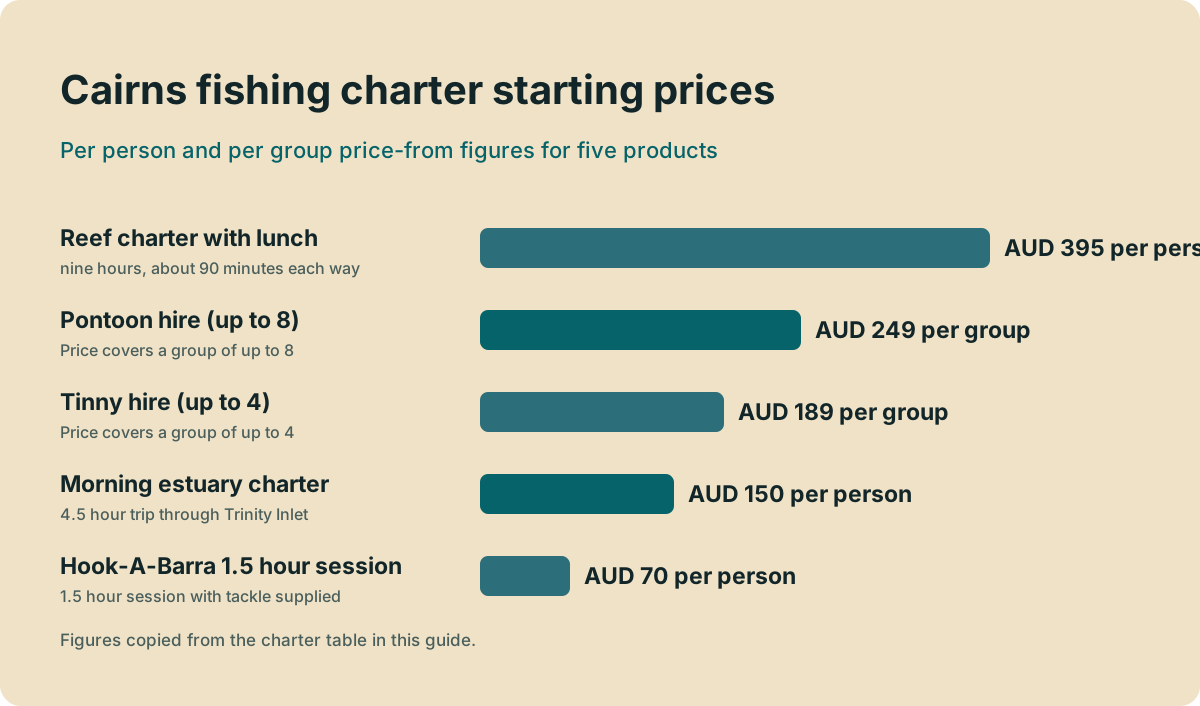
Start with the crewed trips, because they carry most of the load. The morning estuary charter, a 4.5 hour trip through Trinity Inlet from AUD 150 per person, includes rods, reels, bait and tackle, bottled water and an esky with ice, but no food. The listing rates 4.6 from 22 reviews, a small pool but a consistent one. It meets at 6.30am at Marina Finger D berth 2, which means an early alarm and breakfast eaten on the run or at the marina.
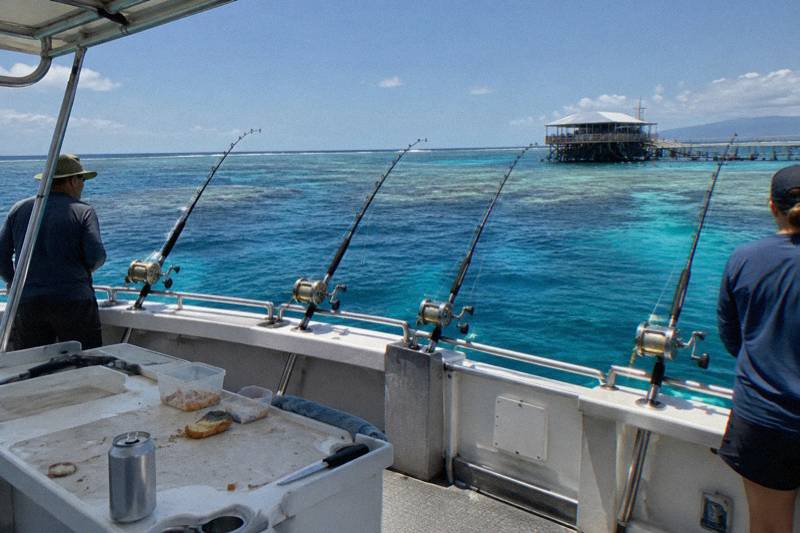
The reef day, the Cairns Great Barrier Reef charter with lunch, is the most inclusive product on the roster at from AUD 395 per person. Rods, reels, tackle and bait are supplied, lunch is a buffet, afternoon tea and bottled water come with it, and reef taxes are already in the price. The crew cleans, chills and bags your catch for the trip home, which is why a small cooler bag or an insulated shopping bag belongs in your day pack. It rates 4.3 from 39 reviews. Alcohol and soft drinks are not included: own cans only, and no glass anywhere on the boat.
The pond sessions at Hook-A-Barra, Wonga Beach, supply tackle, lures and a guide intro, so the only packing question there is clothing and a camera. The self-drive boat hire products invert the whole equation: fuel is in the price, but rods, bait, ice and an esky cost extra on the tinny listing, so a hire day is a supermarket-and-tackle-shop morning before you even reach the berth.
| Product | Listing supplies | You bring | Price from |
|---|---|---|---|
| Morning estuary charter | Rods, reels, bait, tackle, bottled water, esky with ice | Food, hat, sunscreen, non-slip shoes | AUD 150 per person |
| Reef charter with lunch | Rods, tackle, bait, buffet lunch, afternoon tea, water, reef taxes, catch cleaned and bagged | Snacks if wanted, cans only, seasickness tablets, cooler bag for the catch | AUD 395 per person |
| Hook-A-Barra 1.5 hour session | Tackle, lures, guide intro, viewing tanks | Hat, water, closed shoes | AUD 70 per person |
| Tinny hire (up to 4) | Boat, fuel | Rods, bait, esky, ice, food and drink, all fishing gear | AUD 189 per group |
| Pontoon hire (up to 8) | Boat, fuel, life jackets, safety briefing | Rods and bait unless added, food and drink | AUD 249 per group |
What Should Every Angler Pack For A Cairns Charter?
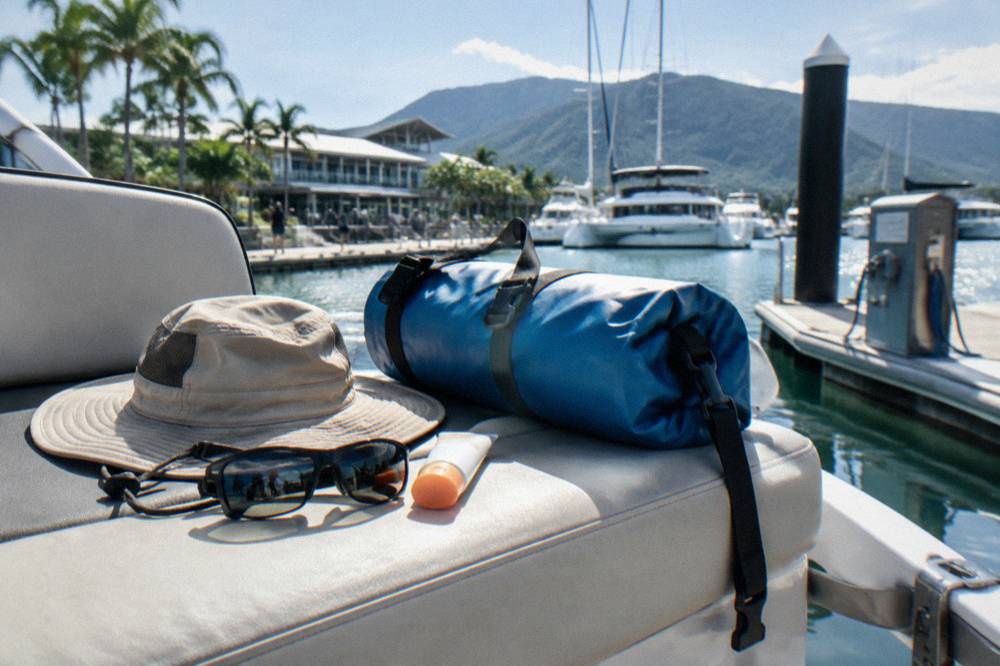
Pack sun protection first: SPF 50+ sunscreen, a wide-brim hat, polarised sunglasses and a long-sleeve fishing shirt, because the tropical sun burns through cloud and reflects off the water. Add non-slip enclosed shoes, a light rain jacket, your own food and drink where the listing excludes it, and a small insulated bag for fillets.
The tropical packing list is short but unforgiving. UV in Far North Queensland is extreme year round, and on the water you get direct sun plus reflection off the deck and the sea surface. A buff or neck gaiter earns its place, and reapplying sunscreen matters more than the initial application. Polarised sunglasses are not a luxury here: they cut surface glare and genuinely help you see bait schools and structure in the inlet's tannin-stained water.
Footwear is the item people get wrong. Thongs are fine for the pontoon ride and terrible for a rocking deck with hooks in play; non-slip enclosed shoes protect your feet from dropped sinkers and give you grip on a wet floor. A light rain jacket handles the tropical showers that roll through even in the dry season, roughly May to October, when southeast trades dominate. A dry bag or zip-lock for phone, keys and wallet rounds out the essentials, and a small towel never hurts.
Food is your own problem on everything except the reef day and the Port Douglas lunch session. The estuary charter includes water and ice but nothing to eat, and the boat hire products expect you to bring everything, food and drink included. A reasonable approach is a sandwich, fruit, and more water than you think you need, because tropical dehydration presents as headaches and clumsiness, which are exactly the wrong symptoms on a boat.
| Item | Why it matters | Applies to |
|---|---|---|
| SPF 50+ sunscreen, hat, sunglasses | Tropical UV reflects off water all day | All products |
| Long-sleeve shirt, buff | Sun and wind protection on the run offshore | Estuary, reef |
| Non-slip enclosed shoes | Grip and foot protection on deck | All products |
| Light rain jacket | Tropical showers any month | All products |
| Food and snacks | Only the reef day and Port Douglas session include food | Estuary, boat hire, pond sessions |
| Water beyond what is supplied | Hydration in heat | All products |
| Dry bag for phone and keys | Spray and rain | All products |
| Insulated bag and ice | Carrying cleaned catch home | Reef, estuary, boat hire |
If you are still choosing between trip types rather than packing for one, the Cairns fishing charters compared guide breaks the whole roster down by price and format.
What Changes On The Full-Day Reef Trip?
The reef day is nine hours, about 90 minutes each way to grounds within 50 km of Cairns, so pack seasickness tablets taken before departure, warmer layers for the wind on the way home, cans only with no glass, and a decent insulated bag, because the crew bag your catch and it needs to survive the trip back to accommodation.
Seasickness is the packing item that decides whether the day is good. The boat is back at the marina around 3:30 to 4:00pm, which means a long day on open water, and the outward leg crosses water that moves even in calm conditions. Tablets work best taken before you board, not once you feel unwell, and ginger tablets or acupressure bands are the common non-drug backup. Sit midships, near the centre of the boat, and keep your eyes on the horizon on the run out.
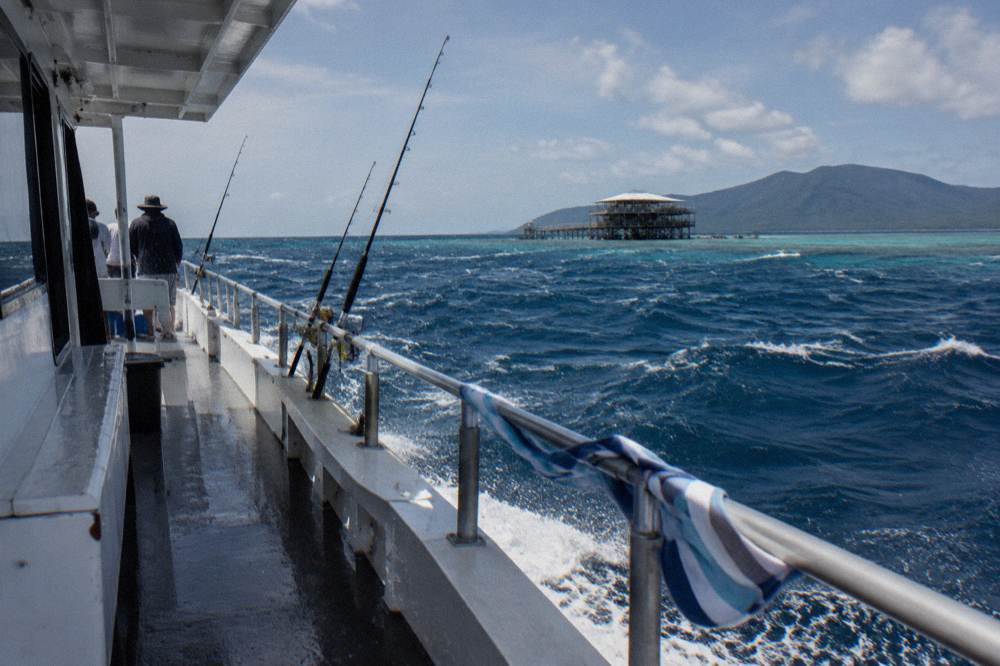
Drinks deserve their own paragraph because the rule is absolute: alcohol and soft drinks are not included, you may bring your own cans, and glass is banned. Cans travel better on a boat anyway, they chill faster and they cannot shatter on a deck. Bring more water than the supplied bottles cover if you are a heavy drinker in the heat, and remember that reef taxes are already in your AUD 395 ticket, so there is nothing extra to pay on the dock for the fishing itself.
The catch side of the day is genuinely convenient: fish that come aboard are cleaned, chilled and bagged by the crew, and species limits still apply, coral trout must be 38 cm or better with a combined trout limit of 7, and red emperor 55 cm with a limit of 5, per the Queensland tidal fishing rules. Pack a hard cooler or insulated bag in your hotel fridge for the fillets, and plan a dinner around them, because a bag of coral trout is the best souvenir Cairns offers.
One timing note worth checking before you book: coral reef finfish spawning closures close reef fishing for two five-day windows each October and November, in 2026 those are 8 to 12 October and 6 to 10 November, and the closures bind charters too. Full details sit in the reef fishing Cairns guide.
Do You Need A Fishing Licence Or Permit?
No. Recreational fishing in Queensland tidal waters, which includes Trinity Inlet and the Great Barrier Reef, requires no licence, and a charter supplies the licensed vessel, so there is nothing to arrange before an estuary or reef trip. The only permit in the region is a Stocked Impoundment Permit, needed from age 18 for Lake Tinaroo, at AUD 13.60 a week or AUD 64.58 a year.
This is the packing-list answer that saves you an hour of internet searching. There is no fishing licence to buy, no online registration, nothing to print. Turn up at the Cairns Marlin Marina, at 1 Spence St a short walk from the Esplanade and about 7 km from the airport per Ports North, with your booking confirmation and your sun gear, and you are legally equipped. The self-drive hire products work the same way for the licence question: the listing states the driver must be 18 or older with a driver's licence, and no marine licence is needed.
The exception is Lake Tinaroo, inland on the Atherton Tablelands, which is not on this roster but comes up in every barramundi conversation because it is exempt from the saltwater barramundi closed season. Anyone 18 or older line fishing there needs a Stocked Impoundment Permit, AUD 13.60 a week or AUD 64.58 a year, AUD 46.45 with an eligible concession, and under-18s fish permit-free. If a Tinaroo detour is on your itinerary, that permit is the one piece of paper worth buying in advance.
Barramundi rules themselves matter more to what you do than what you pack: the east coast closed season runs 1 November to 31 January, and during that window you cannot target barra in tidal or fresh waters, not even catch and release, per the Queensland closures page. Legal barra outside the closure must measure 58 to 120 cm, with 5 per person or 10 per boat.
| Rule | What it says | Affects your packing or plan |
|---|---|---|
| Tidal fishing licence | None required in Queensland tidal waters | Nothing to buy or print for charter trips |
| Stocked Impoundment Permit | AUD 13.60 a week, AUD 64.58 a year, from age 18 | Lake Tinaroo only, buy before you go |
| Barramundi closed season | 1 November to 31 January, no targeting | Estuary trips shift to jacks, grunter and queenfish |
| Barramundi size and limit | 58 to 120 cm, 5 per person or 10 per boat | Bring a measuring tape on self-drive days |
| Coral reef finfish closure | 8 to 12 October and 6 to 10 November in 2026 | Reef bookings may shift around these windows |
| Spanish mackerel closure | 8 to 29 October and 6 to 27 November in 2026 | Check dates before a mackerel-focused trip |
What Do You Bring On A Self-Drive Boat Hire Day?
Bring everything but the boat. The tinny listing includes boat hire and fuel only: rods, an esky, bait, ice and a skipper all cost extra, and you bring your own food and drink, while the pontoon includes fuel and life jackets with rods, bait, a BBQ and a skipper as optional extras, so a hire day starts with a tackle shop and a supermarket stop.
Self-drive hire flips the charter packing list on its head. The driver needs to be 18 or older with a driver's licence, though no marine licence is required, and collection is at Berth A1, Marlin Marina. On the shaded tinny, from AUD 189 per group of up to 4 for a half or full day, the fishing kit is yours to source: pack rods if you own travel gear, or budget for hire rods and bait as extras, and bring an esky with ice for drinks and any keepers.
The pontoon, from AUD 249 per group for up to 8 people, includes fuel and life jackets and adds a safety briefing with fishing-spot tips at collection. Rods, bait, a BBQ and a skipper are optional extras on that listing, so confirm what your booking includes before you shop. One related listing with a different review pool, 4.6 from 13 reviews, includes rods, bait and a BBQ in its price, and one reviewer reported receiving a smaller boat than booked, so the operator's live listing is the place to confirm both the boat and the inclusions for your date.
Trinity Inlet from your own tinny means you supply the local knowledge too. The pontoon collection briefing helps, and the general safety rules for Far North Queensland estuaries apply doubly when there is no skipper aboard: stand well back from the water's edge at ramps, never clean fish or dump scraps near the water, and keep arms and legs inside the boat, because crocodiles live in this water and no water body in croc country is guaranteed clear.
What Should Families Bring To The Barramundi Pond Sessions?
Families pack light for Hook-A-Barra at Wonga Beach, about 1.5 hours north of Cairns: the session includes tackle, lures and a guide intro, all fishing is catch and release in stocked ponds, so bring hats, closed shoes, water and snacks, with no licence and no gear needed, and there is no Cairns pickup, so a hire car and a full fuel tank are part of the plan. If the ponds spark a taste for bigger fish, the roundup of offshore species you can target from Cairns covers the deep water side of the region.
The 1.5 hour session, from AUD 70 per person, is the cheapest paid product on the roster and rates 4.5 from 25 reviews. The packing list is genuinely short: sun protection, closed shoes for grassy pond banks, water, and a camera for the moment a metre-class barramundi inhales a lure two metres from the bank (see Best Barramundi Lure). Access to the barramundi viewing tanks is included, which is a nice cool-down activity for kids between casts.
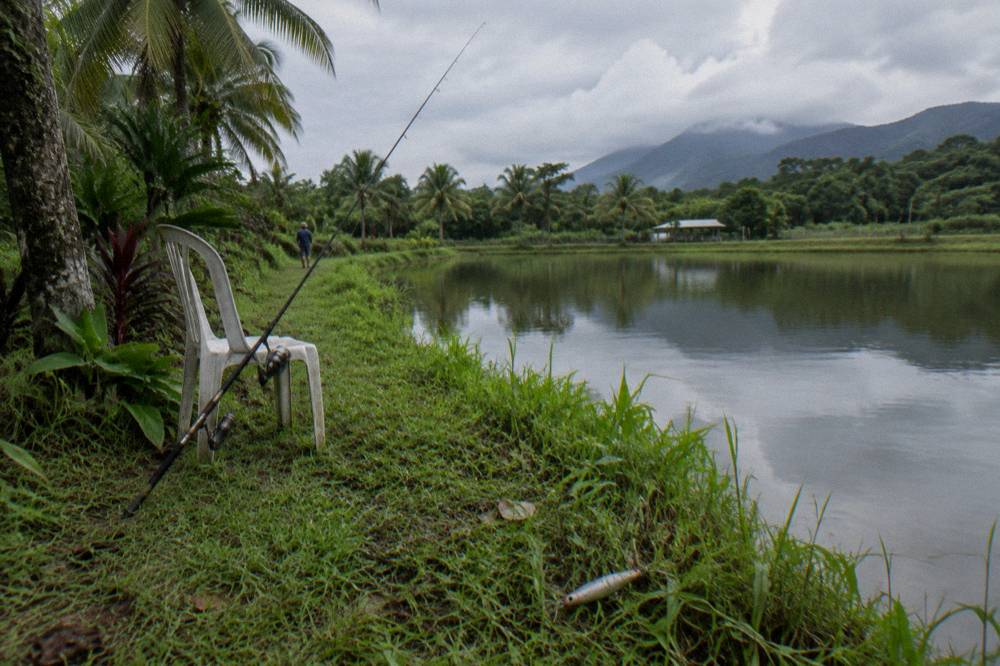
Two planning notes. First, these are farmed fish in managed ponds, not wild barramundi, so the saltwater closed season does not decide whether you can fish here, but the listing is the place to confirm session dates. Second, the only roster product with hotel pickup is the Port Douglas lunch session, from AUD 175 per person, which collects from Port Douglas, not Cairns, so anyone staying in Cairns drives. If your group splits between the two towns, that pickup boundary is worth knowing before you book.
A hat and sunscreen still matter at the farm, and insect repellent earns its place near the ponds at dawn and dusk. The farm sells whole fish or fillets on at least one listing, so a small cooler bag in the car is useful there too, and it doubles as the drink carrier for the drive north.
What Sun, Stinger And Crocodile Gear Does The Region Demand?
Pack for three hazards: extreme UV year round, marine stingers from 1 November to 31 May with lower risk June to October, and crocodiles in every estuary and river, which means stinger suits or protective clothing in the wet season, no swimming outside designated areas, and serious distance between you and the water's edge when fishing from shore.
Stinger season overlaps almost exactly with the barramundi closure, both starting 1 November, and runs to 31 May. On a boat the practical response is a rash vest or stinger suit if you plan any water contact, though outer reef trips carry lower risk than inshore beaches and June to October is the lower-risk window generally. Charters in the dry season rarely require suits; the wet season is when the long-sleeve shirt earns double duty.
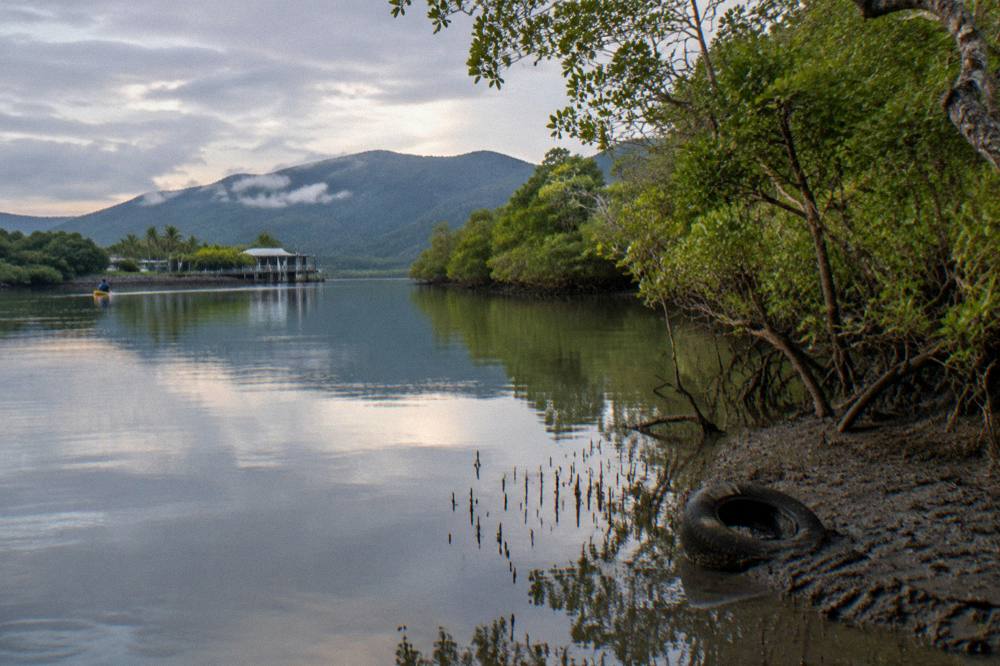
Crocodile safety is behaviour, not gear, but repellent-grade attention matters. Queensland Government guidance is blunt: obey signs, stand well back from the water's edge when fishing from shore, never wade in to retrieve a snagged lure, never clean fish or dump scraps near the water or boat ramps, and be extra careful at dusk, dawn, after rain and after high tides. Sightings can be reported on 1300 130 372. On a crewed charter the skipper manages this; on a self-drive tinny in Trinity Inlet it is your responsibility, which is a real argument for the briefing you get at pontoon collection.
Marine park zoning is the last layer, mostly relevant to self-drive days: about one third of the Great Barrier Reef Marine Park is no-take green zone, and travelling through one with fish aboard is legal only if gear is stowed and nothing is in the water, per the Reef Authority zoning maps. Charter crews handle zoning automatically; hire skippers should grab a free zoning map from a tackle shop before launch.
The Short Version: A Copy-And-Pack Checklist
Pack in four groups: sun gear, SPF 50+ sunscreen, wide-brim hat, polarised sunglasses, long-sleeve shirt; food and drink, your own on everything except the reef and Port Douglas lunches, cans only and never glass on boats; comfort items, non-slip shoes, rain jacket, seasickness tablets for the reef day, dry bag for electronics; and catch logistics, an insulated bag and cooler space at your accommodation for bagged fillets.
That is the whole list for a crewed trip. The reef day is the most supplied product on the roster, the estuary morning needs only breakfast and sun gear added, and the pond sessions need almost nothing. Boat hire days need the most: the full food, drink, ice and fishing-kit load lands on you, and forgetting bait is the classic Wonga Beach and Trinity Inlet mistake.
If the budget question is still open, the Cairns charter cost guide puts these prices beside the wider market ranges, and the timings piece on Fishing Tours Cairns covers how the day's schedule shapes what you can leave on shore.
Common Questions About Packing For A Cairns Fishing Charter
Do I need to bring my own fishing rod on a Cairns charter?
No. The estuary charter supplies rods, reels, bait and tackle, the reef charter supplies the same plus lunch and catch bagging, and the Hook-A-Barra sessions include tackle and lures. Only the self-drive hire products expect you to source rods and bait, and even there they are sold as extras rather than assumed.
Is food included on Cairns fishing charters?
On the reef charter, yes: a buffet lunch, afternoon tea and bottled water are included, with reef taxes in the ticket price. The morning estuary charter includes water and an esky with ice but no food, and boat hire and pond sessions expect you to bring your own food and drink.
Can I bring beer or soft drink on the reef charter?
Alcohol and soft drinks are not included, but you can bring your own cans. Glass is not allowed on the boat, so pack cans or plastic only, and bring extra water beyond the supplied bottles on a nine-hour day.
Do I need a fishing licence for a charter in Cairns?
No licence is required for recreational fishing in Queensland tidal waters, including the reef and Trinity Inlet, and the charter supplies the licensed vessel. The only permit in the region is a Stocked Impoundment Permit, needed from age 18 for Lake Tinaroo at AUD 13.60 a week.
What shoes should I wear on a fishing charter?
Non-slip enclosed shoes. They protect your feet from dropped sinkers and hooks and give grip on a wet, moving deck. Thongs are a poor choice on any boat and especially on the reef day's offshore run.
Should I bring seasickness tablets for the reef trip?
Yes. The reef day runs about nine hours with roughly 90 minutes of travel each way to grounds within 50 km of Cairns. Tablets work best taken before boarding, and ginger or acupressure bands are common non-drug backups for the run out.