What Is The Best Lure For Catching Barramundi In Cairns?
Soft plastics, hard-body minnows and surface lures for Cairns barramundi, plus the size limits, closed seasons and guided options where tackle is supplied.
What Is The Best Lure For Catching Barramundi In Cairns?
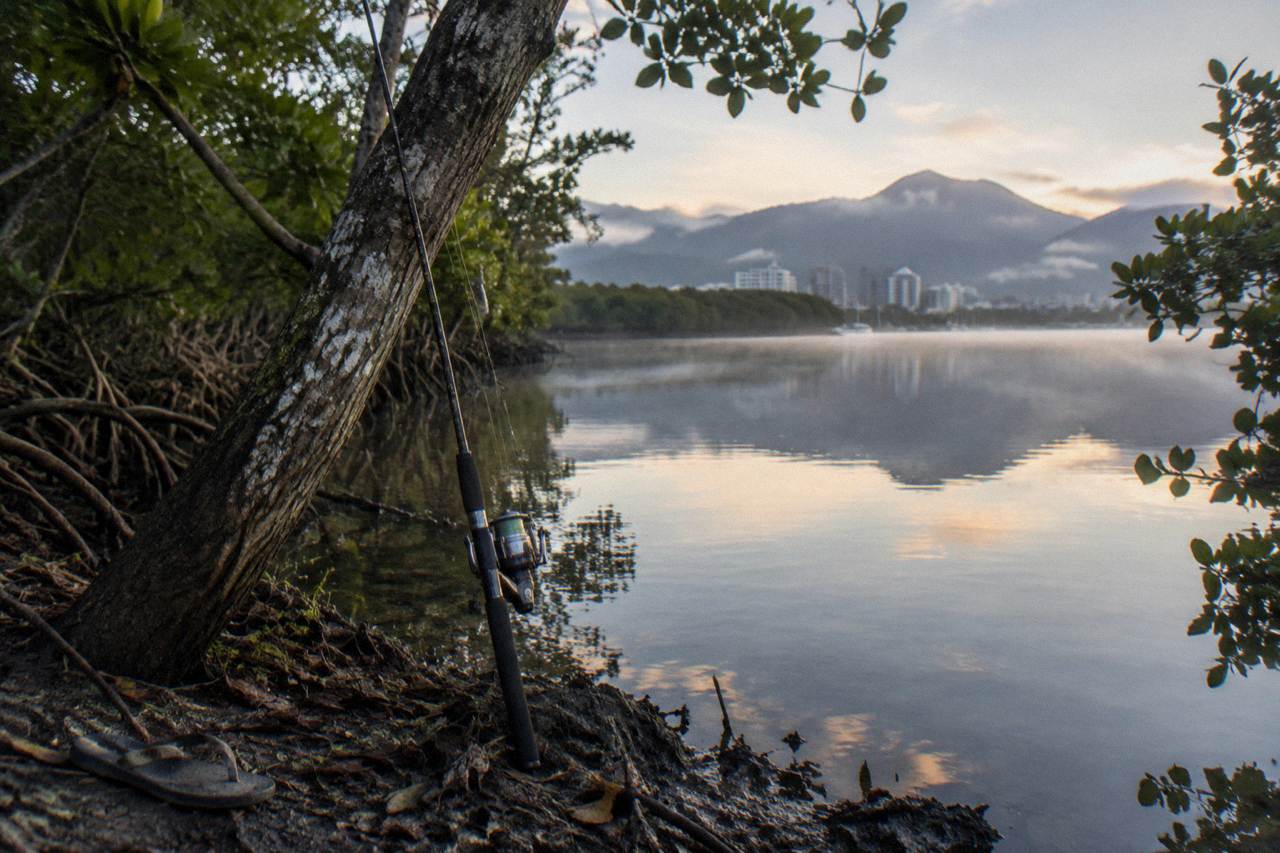
The best lure for barramundi in Cairns depends on the water you are fishing: soft plastics in the 3 to 5 inch range are the most reliable all-round choice in Trinity Inlet's deeper channels, hard-body minnows suit snaggy edges and river bends, and surface lures come into their own during the October to November build-up. No single lure covers every situation, which is why local anglers carry all three classes. If you would rather put bait on the hook instead, the guide to live and dead baits for barramundi in Cairns covers what local charters actually supply and the size and season rules that decide what goes on.
That answer frustrates people who want one name and one colour, but barramundi change their behaviour with the seasons, the tide and the water clarity, and a lure that fires in October can be ignored in February. What you can do is match a lure class to the conditions in front of you, and that decision matters more than brand or colour.
Before getting into lure classes, one practical point deserves the first word: if you are fishing with a guide or at a stocked pond near Cairns, you may not need to own a single lure. The morning estuary charter on Trinity Inlet supplies rods, reels, bait and tackle for its guests, and the Hook-A-Barra pond sessions at Wonga Beach include tackle, lures and an introduction from the guides before you cast. Buying lures matters most for the self-drive end of the market, covered later in this article, and for anglers building their own kit between trips.
The lure question also sits inside a legal frame that many visitors miss. Barramundi in Queensland tidal waters must measure between 58 and 120 cm to be kept, and the east coast closed season runs from 1 November to 31 January, when targeting barra is off the menu in tidal and most fresh waters. Those rules shape lure choice too, because barbless or single-hook patterns make release easier on a fish you legally cannot keep outside that slot.
Do You Even Need Your Own Lures On A Cairns Trip?
Many visitors do not need to bring lures at all: the Trinity Inlet morning estuary charter supplies rods, reels, bait and tackle, and the Hook-A-Barra pond sessions at Wonga Beach include tackle and lures with an intro from the guides. Lure shopping only becomes a real task if you are fishing unguided, hiring a self-drive boat, or building a personal kit for return trips.
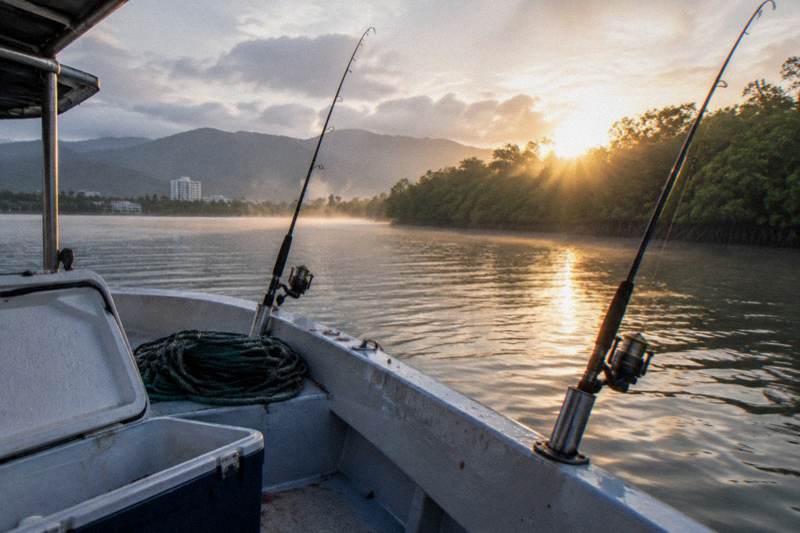
On the guided side of the ledger, the inclusions are stated clearly. The morning estuary charter out of Cairns Marlin Marina, rated 4.6 from 22 reviews and from AUD 150 per person, lists rods, reels, bait and tackle among its inclusions, along with bottled water and an esky with ice. It is a 4.5 hour small-group or private trip on a 19-foot river boat, maximum six guests, meeting at 6.30am at Marina Finger D berth 2. The listing does not name target species, but the trip fishes Trinity Inlet, one of the region's noted barramundi and mangrove jack systems. If the inlet's calm water has you wondering about the bluewater alternative, the real distance to Cairns's black marlin grounds sorts out what that run genuinely involves before you book anything.
The pond sessions go a step further. The Hook-A-Barra Wonga Beach Fishing Experience, from AUD 70 per person and rated 4.5 from 25 reviews, includes tackle, lures and an intro from the guides, plus access to the barramundi viewing tanks. Every fish is caught and released, and the stocked ponds mean the usual challenge of finding a wild barra in a kilometre of snaggy river is replaced by the challenge of tempting one that sees lures every day. That is a genuinely useful place to practise a lure retrieve before spending money on your own tackle.
The table below sets out what each guided option covers on the tackle front, so you can see at a glance whether a lure purchase is necessary for your plans.
| Option | Tackle and lures | Other notable inclusions | Price from |
|---|---|---|---|
| Morning estuary charter, Trinity Inlet | Rods, reels, bait and tackle | Bottled water, esky with ice | AUD 150 per person |
| Hook-A-Barra 1.5-hour pond session | Tackle, lures, guide intro | Barramundi viewing tanks | AUD 70 per person |
| Hook-A-Barra Port Douglas session with lunch | Pond fishing gear via the farm | Hotel pickup from Port Douglas, lunch, farm tour | AUD 175 per person |
| Self-drive tinny hire | Not included, rods and bait are extras | Boat and fuel | AUD 189 per group of up to 4 |
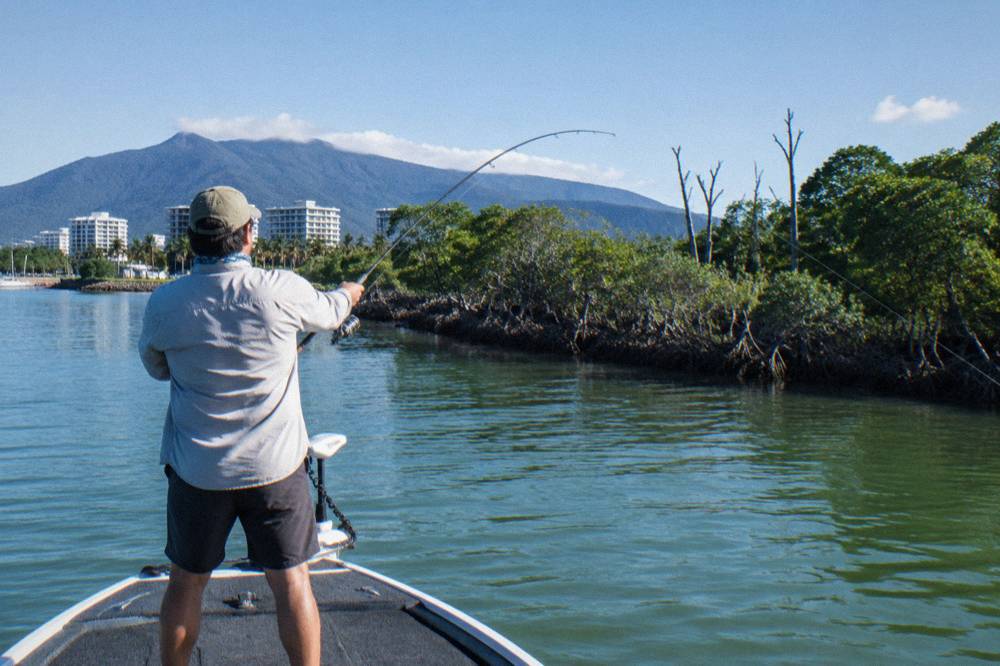
For the self-drive crowd the maths flips. Boat hire products on this site, such as the shaded tinny that takes up to four people from AUD 189 per group, include the boat and fuel but sell rods, bait and tackle as extras. If that is your plan, the rest of this article is written for you: the lure classes below are described in generic terms, with no invented brands and no promised success rates, because lure choice is condition-dependent and anyone quoting a fixed catch rate is guessing.
For more on where these fish actually live, see the companion guide to barramundi fishing around Cairns, which covers the Trinity Inlet, Barron, Mulgrave, Russell and Daintree systems in detail.
Soft Plastics: The Reliable Choice For Deeper Water
Soft plastics are the most consistent lure class for Cairns barramundi because they can be fished slowly along the bottom where barra hold in deeper holes and channel edges. A plastic in the 3 to 5 inch range on a weighted jig head, worked with lifts and pauses, imitates the baitfish and prawn that barra feed on in Trinity Inlet and the river systems.
The strength of a soft plastic is control. You can let it sink to the exact depth where fish are holding, then work it back with a slow hopping action that stays in the strike zone far longer than a fast-moving hard body. Barramundi are ambush feeders that sit tight to structure, and a plastic that flutters down past a snag mimics a wounded baitfish, which is precisely the trigger they respond to.
In practical terms for Cairns water, deeper channel bends in Trinity Inlet, the holes at the bottom of creek mouths and the drop-offs along the Daintree are all soft-plastic territory. The retrieve is a simple rhythm: lift the rod tip, let the plastic sink on a slack line, repeat. Most strikes come on the fall, so watch the line where it enters the water, because a barra often takes the lure without any report to the rod.
Colour is where anglers overthink. In clear water, natural baitfish tones win. After rain, when the rivers carry tannin and sediment, darker silhouettes and brighter contrasting tones become easier for fish to find. The honest position is that presentation depth and retrieve speed matter more than any particular shade, and no colour guarantees fish.
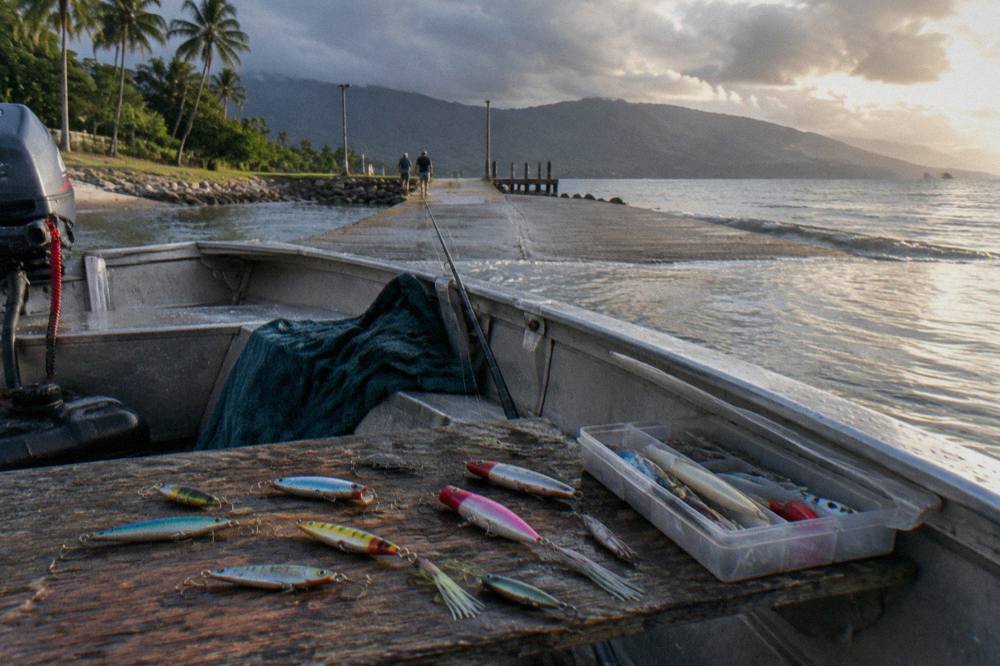
Hard-Body Minnow Lures: The All-Rounder For Snags And Edges
Hard-body minnow lures in the mid-sized range are the best general-purpose option for working the snaggy edges, rock bars and mangrove lines where Cairns barramundi ambush prey. A slow steady retrieve or a twitch-and-pause action lets the lure's built-in action do the work, and the diving bib pulls it down to where fish sit without needing weights or rigging skill. Once your lure box is sorted, the next step is picking your target, and the guide to the best fish to catch in Cairns covers everything from estuary species to reef favourites so you know what else might jump on.
The great advantage of a hard body is that it works straight out of the packet. Tie it on, cast it at a likely lie, and wind it back: the bib gives the lure its swimming action and its depth. That makes hard bodies the friendliest class for beginners, and the reason guides hand inexperienced clients a pre-tied minnow pattern rather than a soft plastic that needs a careful jig head match.
Around Cairns, hard bodies earn their keep along mangrove roots, over rock bars and through the timber in the upper reaches of the Russell and Mulgrave rivers. A floating or suspending model lets you pause the lure beside a snag without sinking into it, which matters in water where the bottom is a tangled log jam. Diving depth should roughly match the water you are fishing: a shallow diver for edges at high tide, a deeper diver for channel banks and rock bars.
Durability is the other selling point. Barramundi hit hard and their gill plates and raspy mouths punish soft plastics quickly, while a hard body survives fish after fish. The trade-off is price: losing three hard bodies in a morning of snag fishing stings more than losing three plastics, which is why many locals accept the slower plastic approach in the heaviest timber and reach for hard bodies on the cleaner edges.
For anglers weighing the alternative, the article on the best bait for barramundi covers the live and dead bait approach, which some Cairns guides prefer when the water is dirty and barra refuse to chase a lure.
Surface Lures: The Build-Up Special
Surface lures, including poppers and walkers, produce the most visual barramundi fishing in Cairns during the build-up months of October and November, when warm water and pre-wet-season activity bring fish up to boil on top. Worked with pops and pauses across shallow flats and snag edges at dawn or dusk, a surface lure draws explosive strikes that no other class matches. To time your trip around both the build-up and the run-off bite, check the month-by-month barramundi season calendar for Cairns before you lock in your dates.
The build-up is the noted peak alongside the March to May run-off, and surface lures belong almost entirely to it. As humidity builds ahead of the wet season, barramundi become more aggressive and more willing to attack a lure sitting on the surface, especially in the low light of first and last light. Poppers chug and push water; walk-the-dog style lures slide side to side with wrist action. Both imitate a trapped baitfish.
The technique is patience in both directions. Work the lure fast enough to draw attention but leave long pauses, because barra often track a surface lure for several metres before committing. When the strike comes it is loud and mostly water, and the classic mistake is striking too early: let the fish take the lure and turn before setting the hooks.
Surface fishing also demands realistic expectations. It is the least consistent class, brilliant on the right morning and completely ignored on the wrong one, and the middle of the day in bright sun is usually dead time for it. Treat surface lures as a weapon for specific windows, dawn and dusk in the build-up, rather than a daily default.
Matching Lure Class To Water And Season
The right lure class is a matter of matching water and calendar: plastics own the deep holes, hard bodies own the snags, and surface lures own the build-up mornings. The table below is the short version of everything above, a generic guide to which class suits which Cairns situation, with no brands and no promised results, because those depend entirely on the day and the conditions in front of you.
| Lure class | Typical Cairns situation | Suggested action | Best seasonal window |
|---|---|---|---|
| Soft plastics, 3 to 5 inch | Deep holes, channel bends, creek mouths | Lift and pause, watch the line on the fall | Year round in the open season |
| Hard-body minnows, mid-sized | Mangrove edges, rock bars, snaggy banks | Slow steady wind or twitch and pause | Year round, strong in the dry season |
| Surface poppers and walkers | Shallow flats, snag edges at dawn and dusk | Pop, pause long, then pop again | Build-up, October and November |
| Any class, natural colours | Clear dry-season water | Slower, more subtle retrieves | Roughly May to October |
| Any class, high-contrast colours | Dirty water after rain | Louder action and brighter profiles | Wet season and run-off |
Seasonality deserves one honest caution: the barramundi closed season from 1 November to 31 January removes the option entirely for those months in tidal and most fresh waters, with targeting banned, not just keeping, because the stress of capture can prevent spawning. The build-up surface bite and the closed season nearly overlap, which is why October is so prized among locals: it is the last full month of legal barra fishing before the shutters come down. Lake Tinaroo is exempt from the closure, and anglers 18 and over need a Stocked Impoundment Permit there, at AUD 13.60 a week or AUD 64.58 a year.
Rules That Shape Lure Fishing For Barramundi
Queensland rules affect lure fishing directly: barramundi must measure 58 to 120 cm in tidal waters, the closed season runs 1 November to 31 January with no targeting allowed, and possession is capped at 5 per person or 10 per boat with two or more aboard. Lure choice and rigging should reflect that most wild fish will be released, which favours single hooks and barbless patterns. If you're also chasing reef species on the same trip, our guide to Queensland's coral reef finfish limits off Cairns covers minimum sizes, spawning closures, and what applies when you fish from a charter.
The size window is unusually generous on the upper end: a barramundi over 120 cm must go back, which surprises visitors used to maximum-size rules being higher or absent. In practice, the majority of wild Cairns barra that take a lure sit inside or below the window anyway, but the rule rewards quick handling, and lure anglers who crush barbs or swap trebles for singles lose fewer fish to deep hooking and do less damage on release.
The closed season is the other hard edge. Fisheries Queensland publishes the closure windows on its official closures page, and the limits themselves, including the 58 to 120 cm slot and the combined reef finfish rules that can apply on mixed trips, sit on the Queensland tidal fishing limits page. Charters are bound by the same closures as private anglers, so a trip booked inside the closure window will simply not be a barra trip.
One wrinkle worth repeating for lure anglers: stocked impoundments are treated differently. The Hook-A-Barra ponds at Wonga Beach are private stocked ponds, and the site's position is simply that the listing is the place to confirm session dates rather than assuming anything about the closure. Lake Tinaroo, the public stocked dam, is exempt and fishes year round for barra under its permit system.
Where To Practise A Lure Retrieve Near Cairns
The fastest place to practise a barramundi lure retrieve near Cairns is a stocked pond, because the Hook-A-Barra sessions at Wonga Beach put anglers over barramundi in calm ponds with guides on hand and tackle included. For wild fish, the Trinity Inlet estuary charter is the lowest-friction option, since it supplies all gear and fishes a system that holds barra, jacks and grunter.
The pond route deserves a longer look for anyone new to lure fishing, because the hardest part of learning is not the retrieve, it is finding fish to practise on. The 1.5 hour Wonga Beach session, from AUD 70 per person, includes tackle, lures and a guide intro, and is rated 4.5 from 25 reviews. There is also a longer Port Douglas version with lunch and hotel pickup from Port Douglas at AUD 175, rated 4.9 from 25 reviews, the one product on this site that collects guests from anywhere.
The same operator sells an approximately one-hour pond session through a separate listing, from USD 54.52 per person, rated 4.9 from 293 reviews, the deepest review pool on this roster, with a maximum of 18 travellers per session. It covers the same pond fishing with rod, tackle, lures and bait provided, and whole fish or fillets can be bought at the farm afterwards.
For wild fish, the estuary charter remains the reference point. It runs 4.5 hours from AUD 150 per person with a 6.30am meet at the Cairns Marlin Marina, a short walk from the Esplanade and about 10 minutes from the airport, and it is free to cancel. No Cairns product on this roster offers hotel pickup, so plan a self-arrival at the marina.
Anglers who want the full picture of the water these lures are thrown into can read where to catch barramundi in Cairns, and the planning guide at Fishing Tours Cairns compares every estuary, reef and pond product in one place.
Common Questions About Barramundi Lures In Cairns
What Is The Best Lure For Catching Barramundi In Cairns?
There is no single best lure. Soft plastics in the 3 to 5 inch range are the most reliable for deeper water in Trinity Inlet, hard-body minnows suit snaggy edges and river bends, and surface lures dominate the October and November build-up. Match the class to the water and season rather than searching for one magic pattern.
Do Cairns fishing charters supply lures and tackle?
On this site's roster, yes, for the guided products. The Trinity Inlet morning estuary charter lists rods, reels, bait and tackle as included, and the Hook-A-Barra pond sessions include tackle, lures and an intro from the guides. Self-drive boat hire is the exception, where rods and bait are paid extras.
Can I fish for barramundi with lures all year in Cairns?
No. The Queensland east coast closed season runs from 1 November to 31 January, and during it you may not target barramundi at all, including catch and release, in tidal or most fresh waters. Lake Tinaroo is exempt and fishes year round under a Stocked Impoundment Permit.
What size do barramundi need to be to keep in Cairns?
Barramundi in tidal waters must measure between 58 and 120 cm, with a possession limit of 5 per person or 10 per boat when two or more people are aboard. Fish outside that slot must be released promptly, which is one reason single-hook and barbless lure setups are popular.
Are soft plastics or hard bodies better for beginners?
Hard-body minnows are usually friendlier for beginners because they swim correctly on a straight retrieve with no rigging or jig head choice. Soft plastics catch plenty of fish but need a matched weighted head and a deliberate lift-and-pause retrieve to work properly.
Where can I practise lure fishing for barramundi near Cairns?
The Hook-A-Barra stocked ponds at Wonga Beach, about 1.5 hours north of Cairns, run sessions from AUD 70 per person with tackle, lures and guides included, all catch and release. For wild fish, the Trinity Inlet morning estuary charter supplies all gear and fishes one of the region's best-known barra systems.