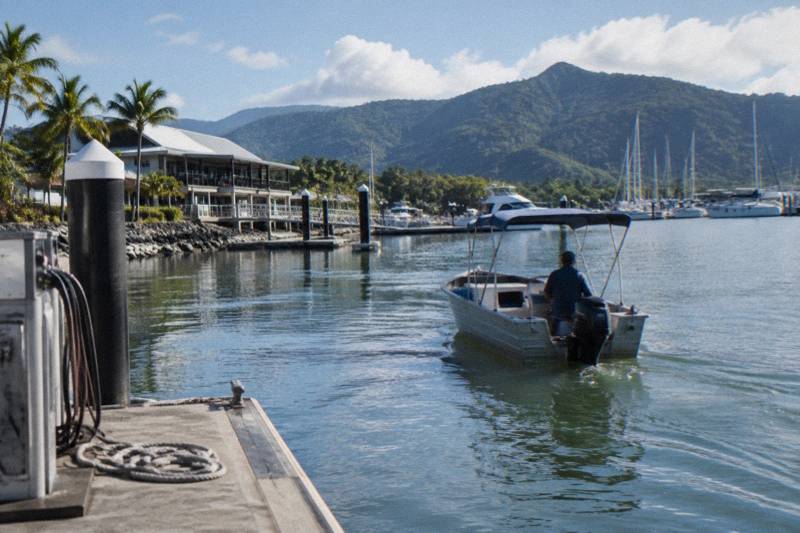
Free Fishing Spots In Cairns: Land-Based Options
Fishing from the bank in Cairns costs nothing but a rod and your time. Here is what land-based fishing actually delivers, the rules that bind it, and the cheapest paid steps up when the shore stops producing.
Short answer
No fishing licence is needed in Queensland tidal waters, so shore fishing in Cairns is genuinely free once you own gear. Jetty and foreshore spots deliver smaller estuary species rather than reef fish, and barramundi are closed 1 November to 31 January. The cheapest paid option is a 1.5-hour Hook-A-Barra pond session at AUD 70 per person at Wonga Beach.
Fishing in Queensland tidal waters needs no licence of any kind, which makes Shore fishing around Cairns is free: no recreational licence is required to fish Queensland tidal waters. The catch is access: the fish people come here for, barramundi, coral trout, red emperor and Spanish mackerel, mostly live where a land-based caster cannot reach them. This page sets out honestly what jetty and foreshore fishing delivers, the rules that apply to every line you wet, and the cheapest paid steps up when the bank stops producing. If you have never wet a line before, the beginner's guide to fishing in Cairns walks you through the basic rods, rigs and species to start with.
What Land-Based Fishing In Cairns Actually Looks Like
Land-based fishing around Cairns splits into three broad types: jetty and pier fishing over deeper water, foreshore casting along Esplanade-style parkland edges, and river and creek bank fishing at the mangrove line. Each costs nothing to fish, each carries real crocodile risk, and none of them reach the offshore reef where the marquee table fish live.
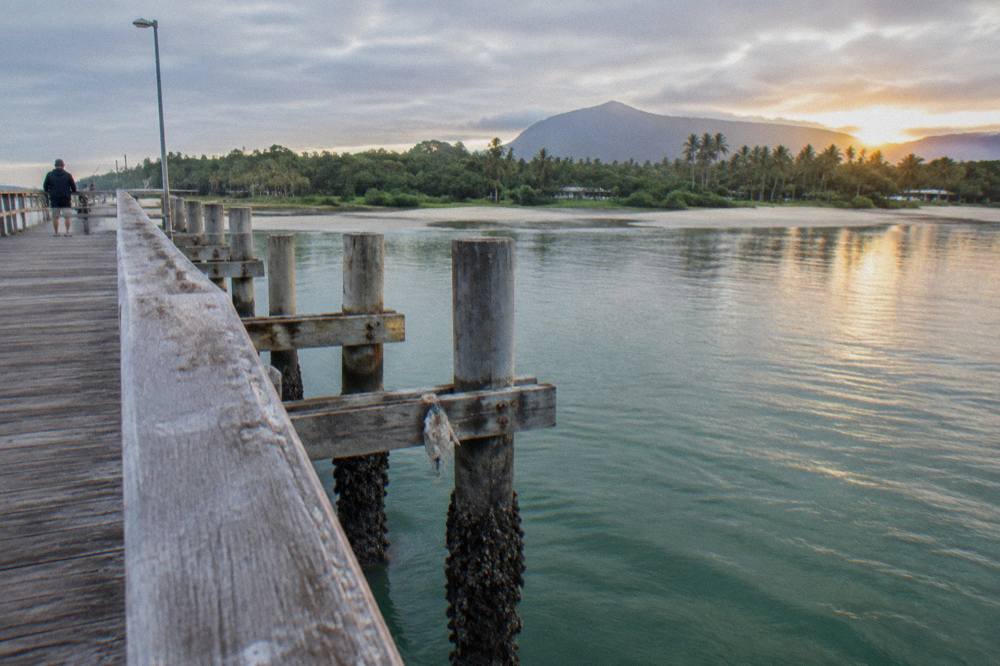
Jetties are the most productive of the three because they put your bait over water deep enough to hold fish at some stages of the tide. Structures of this type around tropical North Queensland ports typically produce small trevally, queenfish, grunter, mangrove jack at dusk and, in the warmer months, the odd barramundi when bait is working the lights. The fishing is real but it is not the postcard. What you mostly catch from a jetty is modest, and what most visitors picture, coral trout and red emperor, simply never comes within casting range of land.
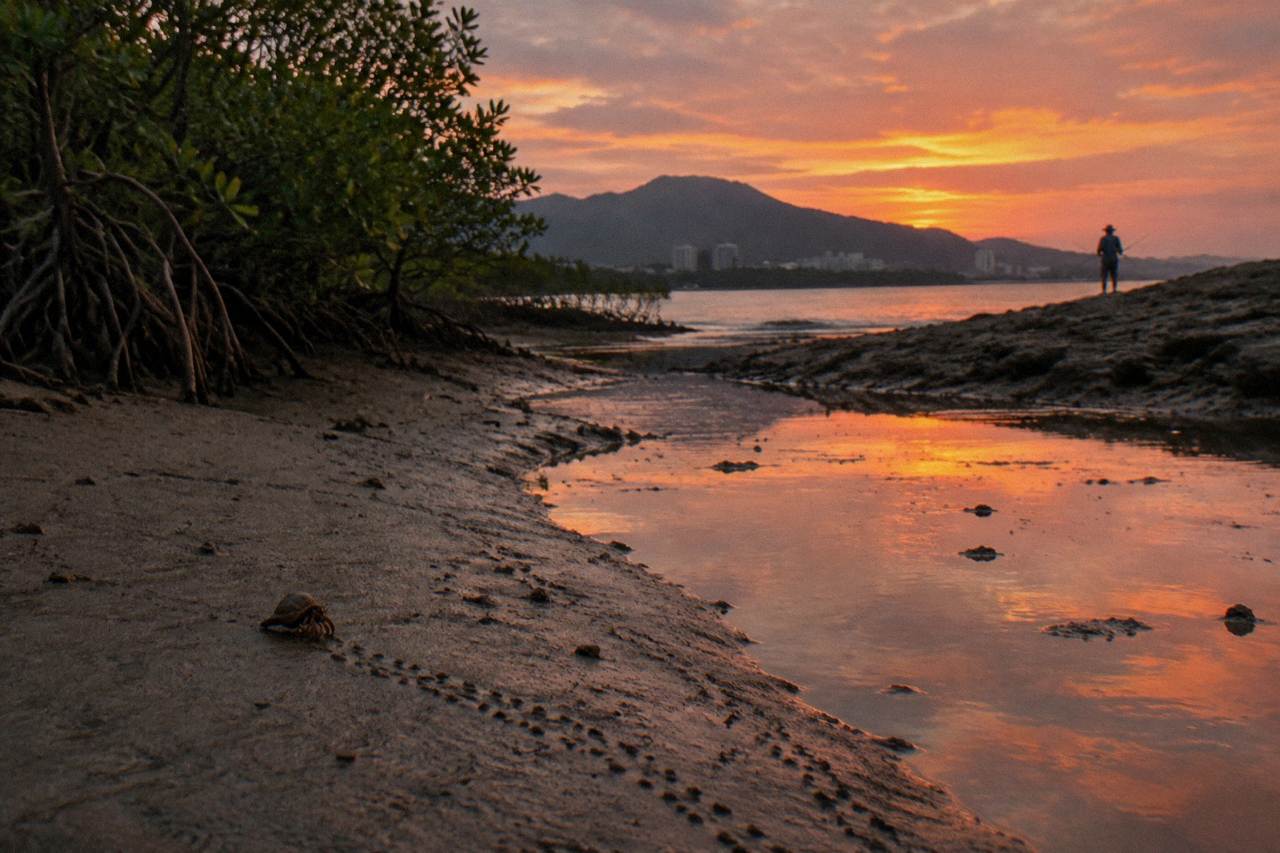
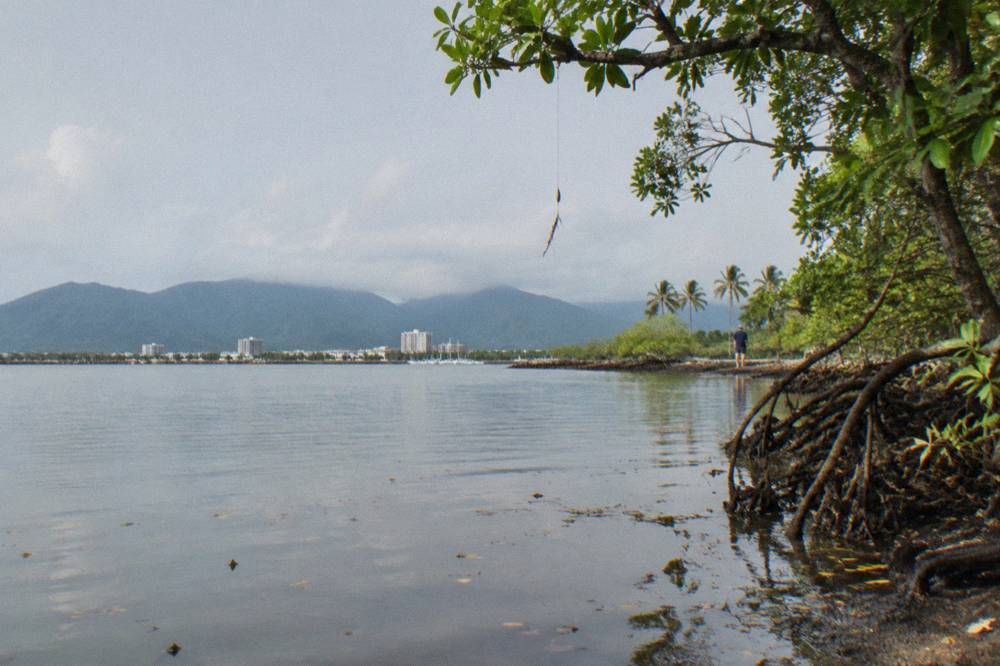
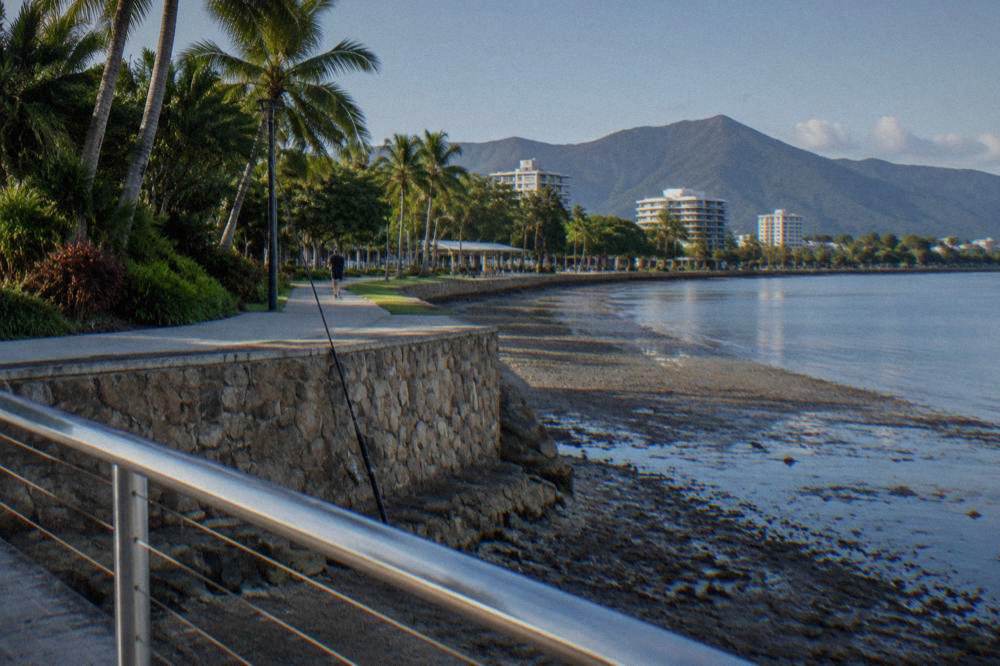
Foreshore casting along the Cairns Esplanade-style parkland edges is the most convenient and the least productive. The mudflats off the city front are shallow, weedy and exposed at low water, and they fish best around the top of the tide at dawn or dusk for small trevally, flathead and the occasional grunter. Mangrove creek banks further north hold better fish, barramundi and mangrove jack among them, but they are also prime crocodile habitat, which shapes how you should behave there.
The honest summary is this: free fishing in Cairns is a pleasant few hours with light gear, not a shortcut to a feed of reef fish. If a catch matters to you, the paid options later in this guide start at AUD 70 per person, which is less than many visitors spend on a dinner in the city. If your ambitions run bigger than a few hours with light gear, the guide to how far offshore the Cairns marlin grounds actually sit explains what that run really involves.
The Rules That Apply To Every Free Line You Cast
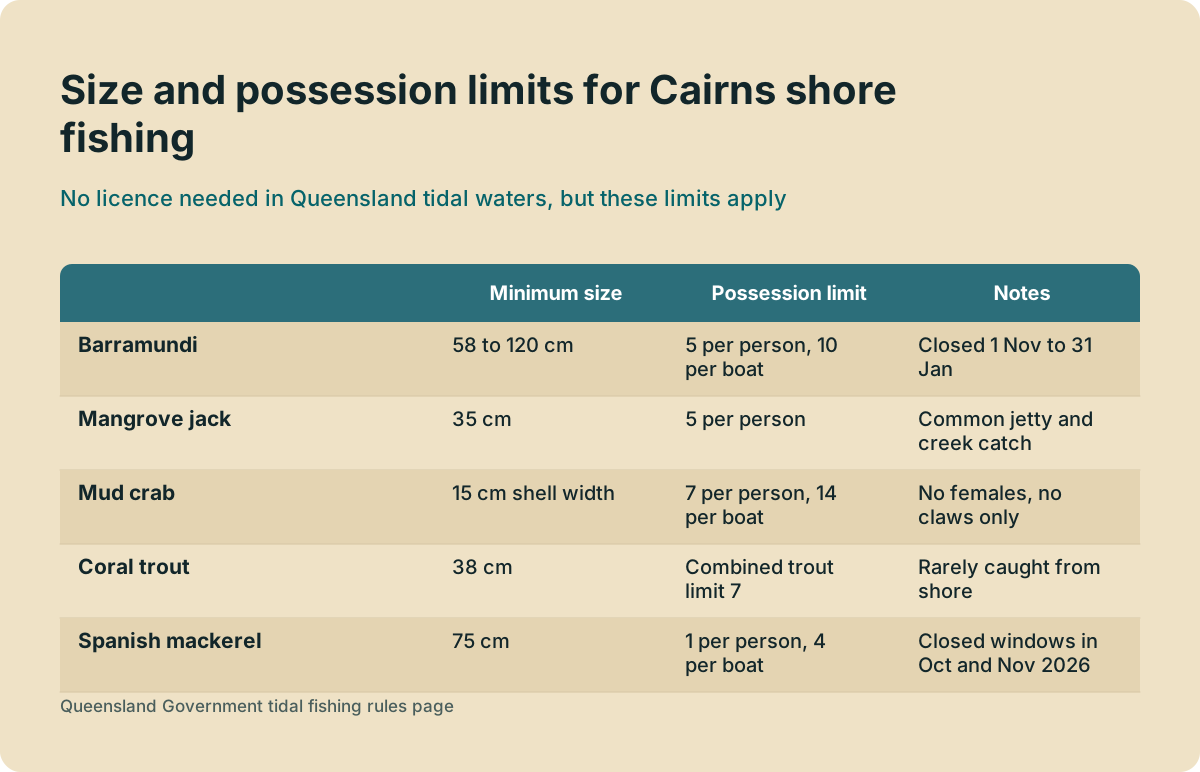
No licence is required to fish recreationally in Queensland tidal waters, including from shore, so there is no permit to buy before you start. What does bind you are size limits, possession limits and closed seasons: barramundi must be 58 to 120 cm with a limit of 5 per person, coral trout must be at least 38 cm, and barramundi are closed to all targeting from 1 November to 31 January.
The licence-free rule is confirmed on the Queensland Government tidal fishing rules page, which also carries the full size and possession tables. There is one exception worth knowing: if you ever fish a stocked impoundment such as Lake Tinaroo, anglers 18 and over need a Stocked Impoundment Permit, AUD 13.60 for a week or AUD 64.58 for a year. That permit rule never applies to tidal shore fishing around Cairns.
| Species | Minimum size | Possession limit | Notes |
|---|---|---|---|
| Barramundi | 58 to 120 cm | 5 per person, 10 per boat | Closed 1 Nov to 31 Jan, no targeting |
| Mangrove jack | 35 cm | 5 per person | Common jetty and creek catch |
| Mud crab | 15 cm shell width | 7 per person, 14 per boat | No females, no claws only |
| Coral trout | 38 cm | Combined trout limit 7 | Reef species, rarely caught from shore |
| Spanish mackerel | 75 cm | 1 per person, 4 per boat | Closed windows in Oct and Nov 2026 |
Closed seasons matter more here than most visitors expect. The east coast barramundi closure runs from 1 November to 31 January and it bans targeting entirely, catch and release included, because the stress of capture can prevent spawning. The official closures page lists every window, including the coral reef finfish spawning closures on 8 to 12 October and 6 to 10 November 2026 and the northern Spanish mackerel closures on 8 to 29 October and 6 to 27 November 2026. These bind shore anglers and charter boats alike.
If you want the full rule set in one place, the companion guide on Queensland fishing rules for visitors covers limits, closures and permits in more detail than this page needs.
What Shore Fishing Delivers Versus What The Boats Reach
Shore fishing around Cairns delivers small to mid-size estuary species: trevally, queenfish, grunter, flathead and mangrove jack, with barramundi a genuine but seasonal chance at dawn and dusk. It does not deliver coral trout, red emperor or Spanish mackerel in any reliable way, because those fish live on reef grounds roughly 90 minutes offshore or in channel water only a boat reaches.
The dividing line is distance and depth. Trinity Inlet and the river systems around Cairns hold barramundi, mangrove jack, grunter, queenfish, trevally including GT, estuary cod and flathead, and local reports through 2026 describe solid estuary action in the inlet and the Russell and Mulgrave systems. A jetty or bank caster touches the edges of that fishery. A boat fishes its heart, the channels, the snag fields and the drop-offs where the bigger animals feed.
That gap is exactly what the cheapest paid options on this site are for, and none of them require you to buy a thing. The Hook-A-Barra session at Wonga Beach is the least expensive: a 1.5-hour stocked-pond experience from AUD 70 per person, rated 4.5 from 25 reviews, with tackle, lures, an introduction from the guides and access to the barramundi viewing tanks included. It is a farm experience rather than wild fishing, about 1.5 hours north of Cairns with no pickup, and it is catch and release, but it puts a bent rod in the hands of anyone who cannot or will not buy gear. You can read the details on the Hook-A-Barra Wonga Beach pond session page.
The next step up is the shared estuary charter, and the roster's morning trip is a good fit for the shore angler who wants to see what the inlet holds beyond casting range. It runs 4.5 hours on Trinity Inlet from AUD 150 per person, rated 4.6 from 22 reviews, with rods, reels, bait and tackle supplied and a maximum of six guests.
Crocodile Safety At Every Free Spot
Crocodiles live in both fresh and salt water across northern Queensland, and no water body in croc country can be considered free of them, so land-based anglers must fish well back from the water's edge, never wade in to retrieve a snagged lure, and never clean fish or dump scraps near the water or a boat ramp. Extra care is needed at dawn, dusk, after rain and after high tides.
This is not boilerplate. Bank fishing puts you exactly where crocodiles hunt, at the times of day they hunt. Queensland Government guidance is blunt: obey warning signs, stand well back from the edge and use a solid object like an esky as a barrier, keep arms and legs inside any boat, stay clear of slide marks and nesting mounds, and report sightings through the QWildlife app or on 1300 130 372. The advice sits behind the official dangerous marine animals page.
Two habits cover most of the risk for a shore angler. First, fish from an elevated or open position, not tucked into mangroves at the waterline, and keep a few metres and a barrier between you and the water. Second, take your catch well away to clean it, and bin the scraps; scraps in the water train crocodiles to associate people with food. Sightings around populated Cairns spots are monitored, but monitored is not the same as safe, and the signs deserve to be read rather than photographed.
Seasons That Reshape The Free Fishing Calendar
Free shore fishing in Cairns follows two calendars: the fish calendar, where run-off from March to May and the October to November build-up are the noted estuary peaks, and the legal calendar, where barramundi close 1 November to 31 January and reef finfish close for two five-day windows in October and November. Plan around both or you may fish legally but fruitlessly. If barra are your main target, our month by month barramundi timing guide walks you through the whole season in detail.
The peaks are consistent across local reporting. Run-off, when wet-season rain drains off the floodplains from roughly March to May, concentrates barramundi and jack at creek mouths and drains. The build-up, October to November, brings warming water and aggressive feeding ahead of the wet, which is also when the closure arrives on 1 November. Between those bookends, the dry months from May to October are the comfortable time to stand on a jetty: southeast trades, lower humidity, and lower stinger risk, with marine stinger season running 1 November to 31 May and the risk lower from June to October. If you want to line your trip up with those peak windows instead of landing in a quiet stretch, our month by month barramundi fishing calendar walks through the whole year on the water.
| Period | What changes | Effect on free fishing |
|---|---|---|
| March to May | Run-off peak | Best barra and jack window at creek mouths |
| May to October | Dry season, lower stinger risk | Most comfortable shore fishing |
| 8 to 12 Oct 2026 | Reef finfish spawning closure | No reef finfish take, charters too |
| 1 Nov to 31 Jan | Barramundi closed | No targeting barra from shore |
| November to May | Marine stinger season | Higher Irukandji risk inshore |
One planning note that surprises visitors: the barramundi closure and stinger season start on the same day, 1 November, so the wet-season bank session that looks appealing in the warmth is both the least legal time for barra and the least comfortable time to stand near murky water. The monthly breakdown on Cairns fishing season by month picks the timing apart week by week.
Gear Costs Versus Trip Costs, From Listed Figures Only
On the listed figures, the guided options beat buying gear for a short trip: the Hook-A-Barra pond session runs AUD 70 per person and the shared estuary charter AUD 150 per person, both with every piece of tackle included, while a shore-fishing setup means paying a local tackle shop for a rod, reel, line and a handful of lures or bait before you cast once, single-purpose luggage with a real price tag.
The comparison below uses only figures listed on this site's tour roster, plus the plain fact that gear has to be bought somewhere at some price. The point is not that free fishing is a trap; it is that "free" has an entry cost, and for a visitor staying a week the arithmetic usually favours a trip with gear included.
| Option | Upfront cost | Gear included | What you fish | Time |
|---|---|---|---|---|
| Shore fishing, own gear | Rod, reel, tackle bought separately | No, you buy it | Jetty, foreshore, creek bank | Any time |
| Hook-A-Barra 1.5-hour session | From AUD 70 per person | Tackle, lures, guide intro | Stocked ponds, Wonga Beach | 1.5 hours |
| Morning estuary charter | From AUD 150 per person | Rods, reels, bait, tackle | Trinity Inlet by boat | 4.5 hours |
| Tinny hire, self-drive | From AUD 189 per group of up to 4 | Boat and fuel only, rods extra | Trinity Inlet, your own skipper | 4 to 8 hours |
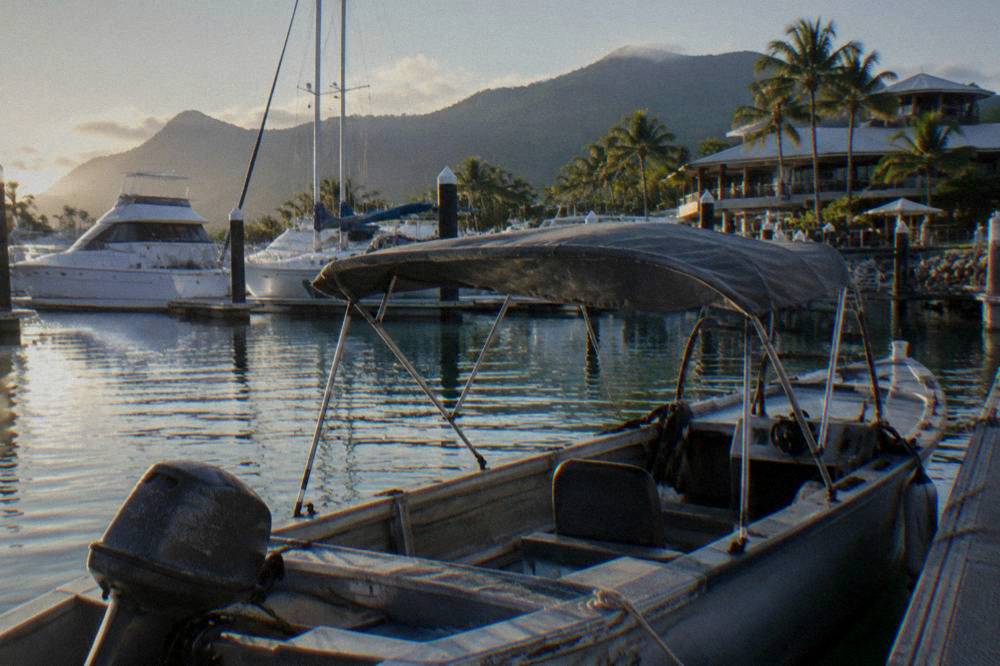
The tinny line deserves its own word. Cairns Boat Hire offers a shaded self-drive tinny from AUD 189 per group of up to four, rated 4.4 from 17 reviews, for a half or full day, with the driver needing to be 18 or older with a driver's licence. Fuel is included, but rods, bait, ice and an esky cost extra, so a family of four splits the boat cost four ways and still lands near the charter price once gear is added. It is the interesting middle option for confident groups who want to fish the inlet on their own clock, and it collects from Berth A1 at the Marlin Marina, a short walk from the Esplanade.
Where Free Fishing Fits In A Cairns Trip
Free land-based fishing fits a Cairns trip as a low-commitment morning activity, an evening at the water's edge, or a budget day with kids, provided you accept small fish, obey the crocodile guidance and avoid the closed seasons. It does not fit as a plan to catch a feed of reef fish or a trophy barramundi; those need a boat, and the boats start at AUD 70 per person. If you would rather chase bigger fish than the land-based spots can offer, our guide to the best fishing spots in Cairns compares Trinity Inlet, the reef grounds and Lake Tinaroo by target species and season.
For families especially, the arithmetic and the safety both point the same way. A jetty session with cheap handlines is a fine way to spend an hour with children, but a stocked-pond session where tackle is provided, guides are on hand and a bite is close to certain, is a better use of a family morning, and it is the cheapest paid fishing product anywhere on this site (see Family Fishing). The pontoon hire option, from AUD 249 per group for up to eight people, rated 4.8 from a small pool of 8 reviews, suits a larger family that wants to drive itself, with rods and bait as optional extras and a safety briefing plus fishing-spot tips at collection.
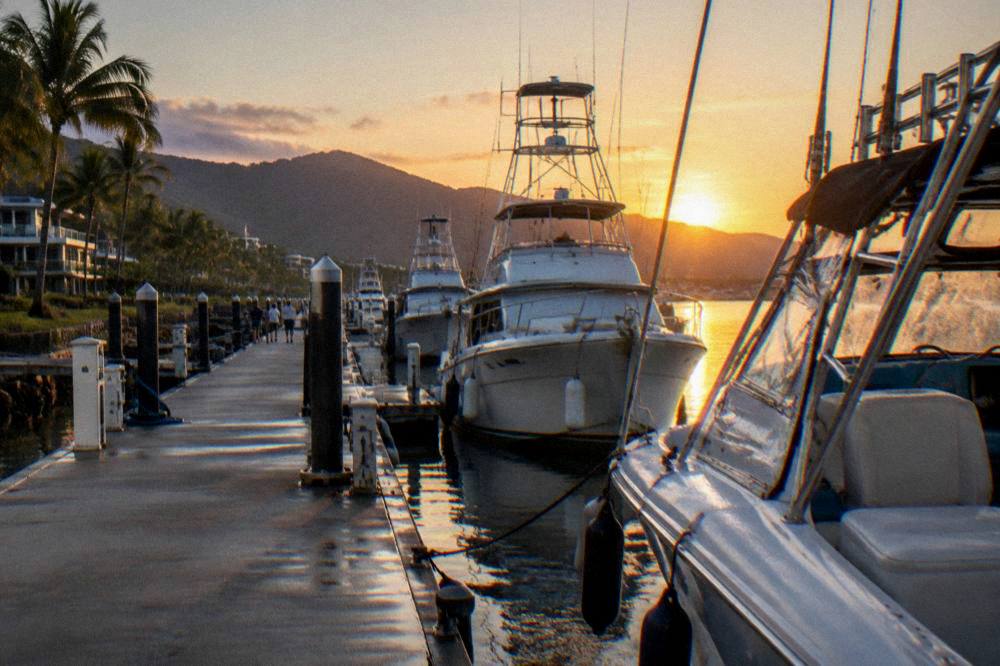
Choosing between them is mostly a transport question. Everything that departs Cairns leaves from the Cairns Marlin Marina at 1 Spence St, a Ports North marina with 261 berths about 7 km and 10 minutes from the airport and a short walk from the Esplanade, so the estuary charter and the boat hires involve no driving at all. The Hook-A-Barra sessions are the reverse: the ponds are at Wonga Beach, about 1.5 hours north of Cairns, with no Cairns pickup, so they suit a day that already includes the Daintree or Port Douglas. The one product that does pick up is the Hook-A-Barra Port Douglas lunch session, from AUD 175 per person, with hotel pickup and drop-off in Port Douglas rather than Cairns.
If you are weighing free options against the rest of the paid menu, the broader comparison on Cairns fishing charters compared prices every category on this site, from estuary half days to full-day reef trips. And if your interest in free spots is really an interest in budget fishing generally, start with the cheapest session and work upward from there; Fishing Tours Cairns keeps the full roster in one place.
Common Questions About Free Fishing Spots In Cairns
Can you fish for free in Cairns without a licence?
Yes. No licence is required for recreational fishing in Queensland tidal waters, including from jetties, foreshores and creek banks around Cairns. The only permit in the region is the Stocked Impoundment Permit, needed from age 18 at Lake Tinaroo, which costs AUD 13.60 for a week.
What can you actually catch from the shore in Cairns?
Small to mid-size estuary species: trevally, queenfish, grunter, flathead and mangrove jack, with barramundi a seasonal chance at dawn and dusk outside the 1 November to 31 January closure. Coral trout, red emperor and Spanish mackerel live on offshore reef grounds and are not realistic shore targets.
Is it safe to fish from the bank in Cairns?
It is safe if you follow crocodile guidance: stand well back from the water's edge, use a barrier such as an esky, never wade in to retrieve lures, never clean fish or dump scraps near the water, and take extra care at dawn, dusk, after rain and after high tides. Report crocodile sightings on 1300 130 372.
What is the cheapest paid fishing option in Cairns?
The Hook-A-Barra 1.5-hour pond session at Wonga Beach, from AUD 70 per person, with tackle, lures and guide instruction included. It is a stocked-pond catch-and-release experience about 1.5 hours north of Cairns with no pickup, not a wild-barra or reef trip.
When is barramundi fishing closed in Cairns?
The Queensland east coast barramundi closed season runs from 1 November to 31 January each year, and it bans targeting altogether, including catch and release, in tidal and most fresh waters. Lake Tinaroo is exempt. The Hook-A-Barra ponds are a private farm experience; confirm session dates on the live listing.
Do free shore anglers need to worry about reef zoning rules?
Only if fishing from a vessel in the Great Barrier Reef Marine Park. Green zones, about one third of the park, are no-take, and zoning maps are free from bait and tackle shops and visitor centres. Shore fishing inside Cairns tidal waters is not affected by marine park zoning.