Queensland Fishing Rules For Visitors
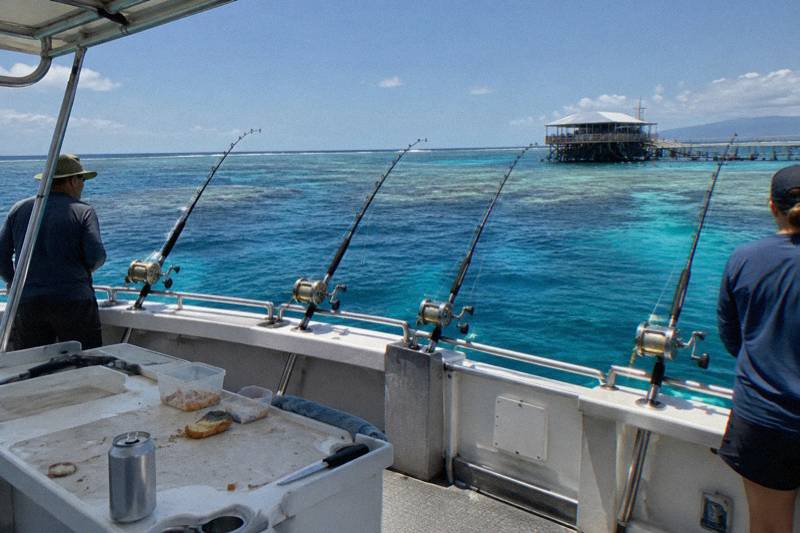
Queensland needs no fishing licence for tidal waters or the reef, but size limits, possession limits, closed seasons and green zones still apply to every visitor. Here is what the official rules say, and what a charter handles for you.
Short answer
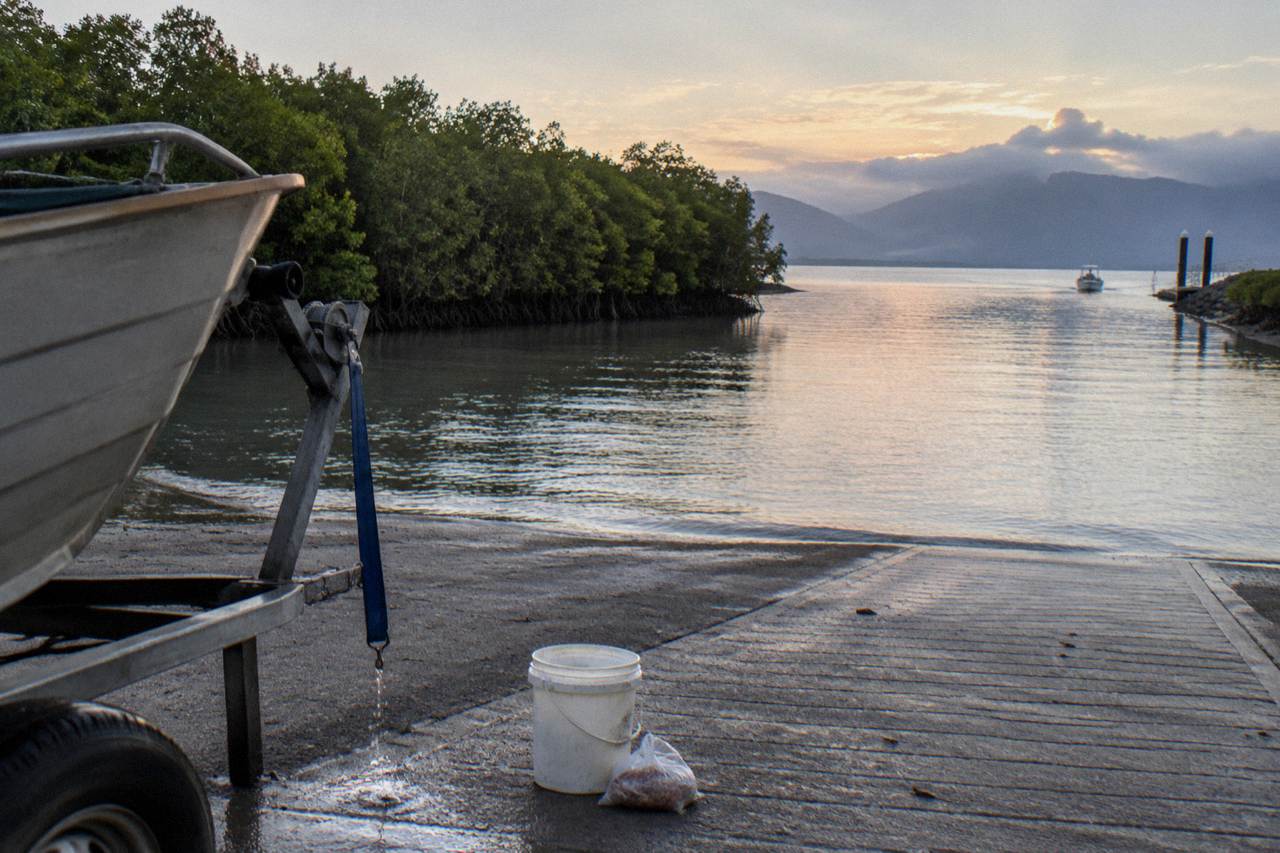
No fishing licence is required in Queensland tidal waters or on the Great Barrier Reef. A Stocked Impoundment Permit costing AUD 13.60 a week is needed from age 18 only for stocked dams such as Lake Tinaroo. Size and possession limits, closed seasons and green zones apply to everyone, including charter guests.
Queensland is one of the easiest places in the world to go fishing as a visitor, because the state asks for no general recreational fishing licence in tidal waters. That single fact surprises most travellers arriving in Cairns, and it is confirmed on the official Queensland Government rules pages. The catch, and it is a real one, is that everything else still binds you: minimum and maximum sizes, possession limits, closed seasons, marine park zoning and a permit scheme that applies only to stocked dams such as Lake Tinaroo. Ignore those and the fines are genuinely steep.
This guide sets out the rules from official sources only. It covers the licence question first, then the size and bag limits for the species you are most likely to catch around Cairns, the closed seasons that can close a fishery for weeks at a time, green zones, the dam permit, and what a charter operator handles on your behalf. If you want the short licence answer, the blog post can you fish in QLD without a licence covers that question on its own.
Do You Need A Fishing Permit In Queensland?
No general fishing licence or permit is required for recreational fishing in Queensland tidal waters, which includes Trinity Inlet, the rivers, the beaches and the Great Barrier Reef. The only permit most visitors will ever encounter is the Stocked Impoundment Permit, required from age 18 for line fishing in listed stocked dams such as Lake Tinaroo, at AUD 13.60 for a week or AUD 64.58 for a year.
The official wording from the Queensland Government is that you do not require a licence to fish recreationally in Queensland except in some stocked impoundments. For a visitor fishing the Cairns Esplanade, casting at queenfish in Trinity Inlet or joining a reef trip, that means there is nothing to buy, nothing to register and nothing to carry. Interstate and overseas visitors are treated the same as locals.
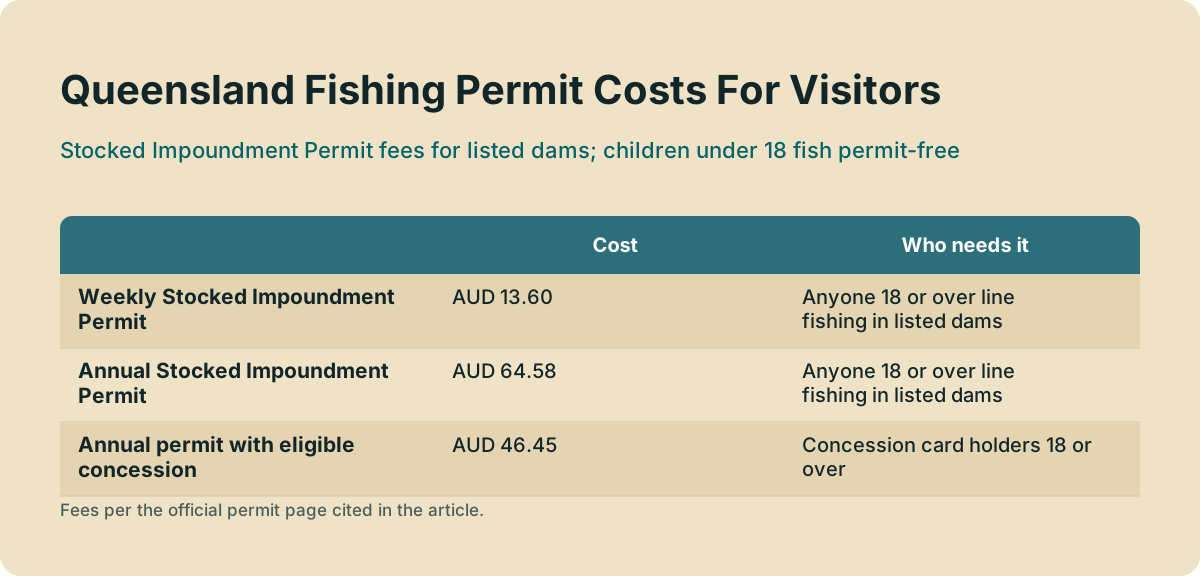
The exception matters if your plans include Lake Tinaroo, the stocked dam on the Atherton Tablelands about an hour and a half west of Cairns. Everyone aged 18 and over line fishing there must hold a Stocked Impoundment Permit. The fees, per the official permit page, are AUD 13.60 per week, AUD 64.58 per year or AUD 46.45 per year with an eligible concession card, and children under 18 fish permit-free. The dam is exempt from the east coast barramundi closed season, which is precisely why it stays busy through the tropical summer.
| Permit option | Cost | Who needs it |
|---|---|---|
| Weekly Stocked Impoundment Permit | AUD 13.60 | Anyone 18 or over line fishing in listed dams |
| Annual Stocked Impoundment Permit | AUD 64.58 | Anyone 18 or over line fishing in listed dams |
| Annual permit with eligible concession | AUD 46.45 | Concession card holders 18 or over |
| Tidal water fishing | No permit required | All ages, visitors included |
| Great Barrier Reef fishing | No permit required | All ages, visitors included |
The practical takeaway is simple. Fishing salt water in Queensland is free of licence paperwork, and fishing stocked impoundments is not. If your whole trip is charter-based, the permit question never arises at all, because charters fish tidal water and the reef.
Size And Bag Limits For The Main Cairns Species
Barramundi must measure between 58 and 120 cm with a limit of 5 per person or 10 per boat, coral trout have a 38 cm minimum with a combined trout limit of 7, red emperor a 55 cm minimum with a limit of 5, and Spanish mackerel a 75 cm minimum with a limit of 1 per person or 4 per boat. Limits apply to everyone, visitors included.
These figures come from the Queensland Government's tidal fishing rules page, and they apply to charter guests as much as to locals in tinnies. A possession limit is exactly what it sounds like: the maximum number of fish of that species you may have in your control, including fillets in the esky, not just what is on the hook at that moment. For mixed reef fishing there is also a combined coral reef finfish possession limit of 20 in total across all reef species. If you're chasing reef species off Cairns, our guide to reef fish limits off Cairns covers minimum sizes, spawning closures and how the rules apply on a charter.
| Species | Minimum size | Possession limit | Notes |
|---|---|---|---|
| Barramundi | 58 cm min, 120 cm max | 5 per person, 10 per boat | Closed 1 Nov to 31 Jan |
| Coral trout | 38 cm | Combined 7 (all trout species) | Blue spotted trout 50 to 80 cm |
| Red emperor | 55 cm | 5 | Part of reef finfish total of 20 |
| Mangrove jack | 35 cm | 5 | Estuary and reef catches |
| Spanish mackerel | 75 cm | 1 per person, 4 per boat | Northern closures in Oct and Nov |
| Black jewfish (east coast) | 75 cm | 2 per person, 4 per boat | Closed 1 Nov to 31 Jan, keep whole |
| Mud crab | 15 cm (widest shell point) | 7 per person, 14 per boat | No females |
The measure for a finfish is from the tip of the snout to the end of the tail, and undersized fish go back whether or not they will survive. For mud crabs, measure across the widest part of the shell, and remember that female crabs and crabs missing their shell or claws cannot be taken at all. If you are planning around what you can realistically keep, the blog post how many reef fish per person in QLD works through the reef numbers in detail.
A useful habit on any trip is to photograph the measuring board with your catch. Charter crews measure everything before it goes in the box, and on the reef trips the crew also cleans, chills and bags the day's legal catch for you, which removes most of the guesswork. If you want the rules handled end to end, the shared reef charter is the closest fit: a 9 hour day on grounds within 50 km of Cairns, from AUD 395 per person, with tackle, bait, lunch and reef taxes included in the listing price. You can also check availability alongside the full reef charter rundown.
Closed Seasons That Affect Your Trip
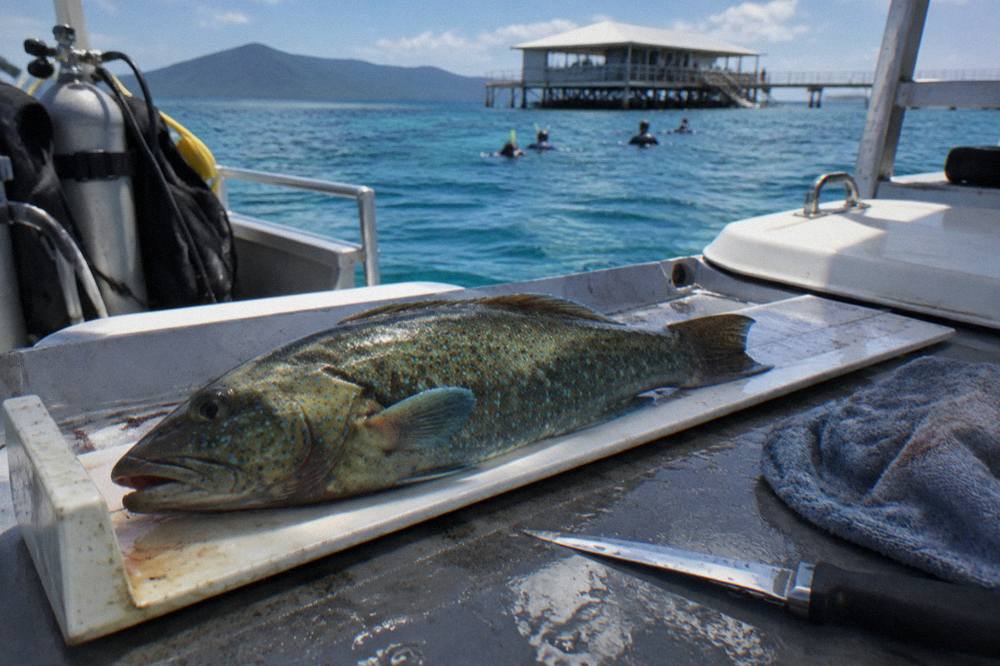
The east coast barramundi closed season runs from 1 November to 31 January, with no targeting or catch and release in tidal or fresh waters except listed stocked impoundments. Coral reef finfish face two five day closures, 8 to 12 October and 6 to 10 November in 2026, and Spanish mackerel are closed 8 to 29 October and 6 to 27 November 2026 north of 22 degrees south.
Closed seasons are the rule category most likely to collide with a holiday, because several of them sit inside the peak spring and early summer travel window. The barramundi closure is the big one: during it you may not target barra anywhere in tidal or fresh Queensland water, and the official reasoning is that the stress of capture can prevent spawning. Lake Tinaroo is the listed exemption in this region.
| Closure | 2026 dates | Who it binds |
|---|---|---|
| Barramundi, east coast | 1 Nov to 31 Jan | No take, no targeting, no release fishing; Tinaroo exempt |
| Coral reef finfish spawning | 8 to 12 Oct and 6 to 10 Nov | All recreational and charter reef finfish fishing in affected waters |
| Spanish mackerel, north of 22 S | 8 to 29 Oct and 6 to 27 Nov | Includes Cairns waters; charters must comply |
| Black jewfish, east coast | 1 Nov to 31 Jan | Same window as barramundi |
The closures bind charter boats too, and operators plan around them. One Cairns operator publicly notes that during the coral reef finfish closures it switches to private sport and game trips only, with no reef finfish targeting. What that means for a visitor is that a reef booking in October or November may shift species, move dates or convert to another style of trip, and it is worth asking the operator how they handle the windows before you book.
The five day reef closures also interact with the weather calendar, which is a genuinely non-obvious planning point. October and November sit inside the drier trade wind months and are prime coral trout season, so the closures fall at some of the best fishing of the year. If your dates are flexible, aiming at the gaps between the windows, late October into early November between closures, buys you the good season without the shutdown. The guide to best months to fish in Cairns maps the seasons month by month.
If you are travelling in the closure window and still want to fish, the stocked-pond option is the honest workaround, because the barramundi closure applies to wild fish in tidal and fresh waters, not to listed impoundments or farm ponds. The Hook-A-Barra sessions at Wonga Beach, about 1.5 hours north of Cairns, run catch and release in stocked ponds; the listing is the place to confirm session dates.
What A Fishing Charter Handles For You
A charter operator supplies the licensed vessel, the tackle, bait and local knowledge of open grounds, and on the reef trip the listing includes reef taxes in the price. You still personally owe the size, possession and closure rules, but in practice the crew measures, identifies and legally processes the catch, which is why first time visitors mostly fish with one. If you're wondering how far the boat might run on a big game day, our guide to how far out the marlin grounds sit from Cairns explains what the skippers know and what they can't promise.
Splitting responsibility fairly: the operator's side is the boat, the safety gear, the fishing equipment and the judgement about where you can legally fish that day. Your side is accepting the crew's call when a fish goes back, and not quietly overfilling a personal possession limit because the boat limit differs from the per person one. On shared reef trips the crew will also clean and bag your legal catch to take home, a service the listing states plainly.
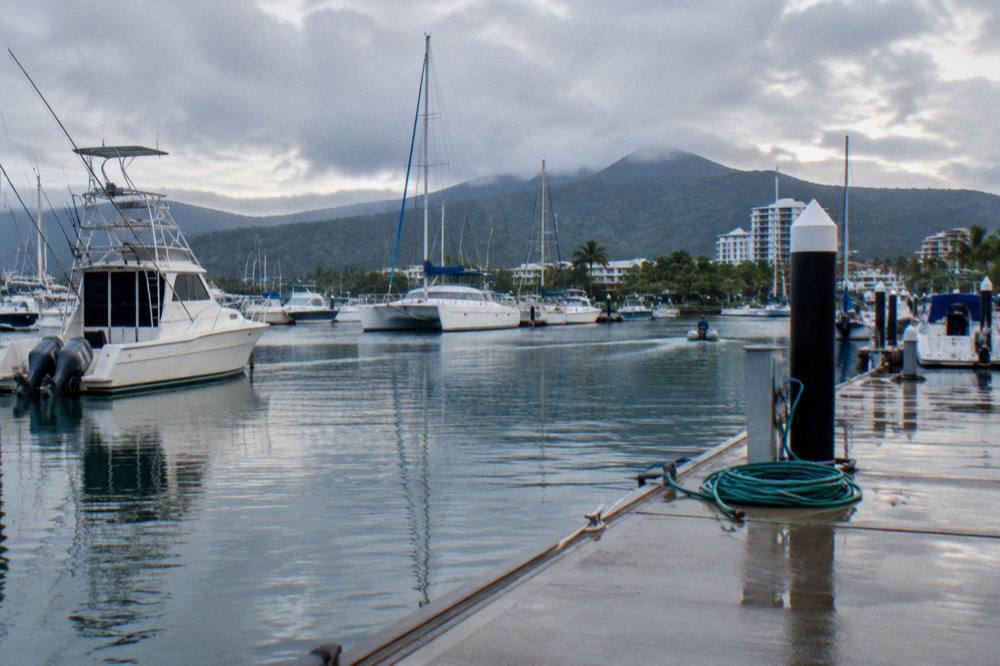
For the estuary option, the morning Trinity Inlet charter supplies rods, reels, bait and tackle, an esky with ice and bottled water, on a 19 foot river boat carrying a maximum of 6 guests. It runs 4.5 hours from a 6.30am meet at the Marlin Marina, from AUD 150 per person, rated 4.6 from 22 reviews. Note the listing does not name target species: it fishes Trinity Inlet, where the common catch includes barramundi outside the closure, mangrove jack, grunter, queenfish, trevally, estuary cod and flathead.
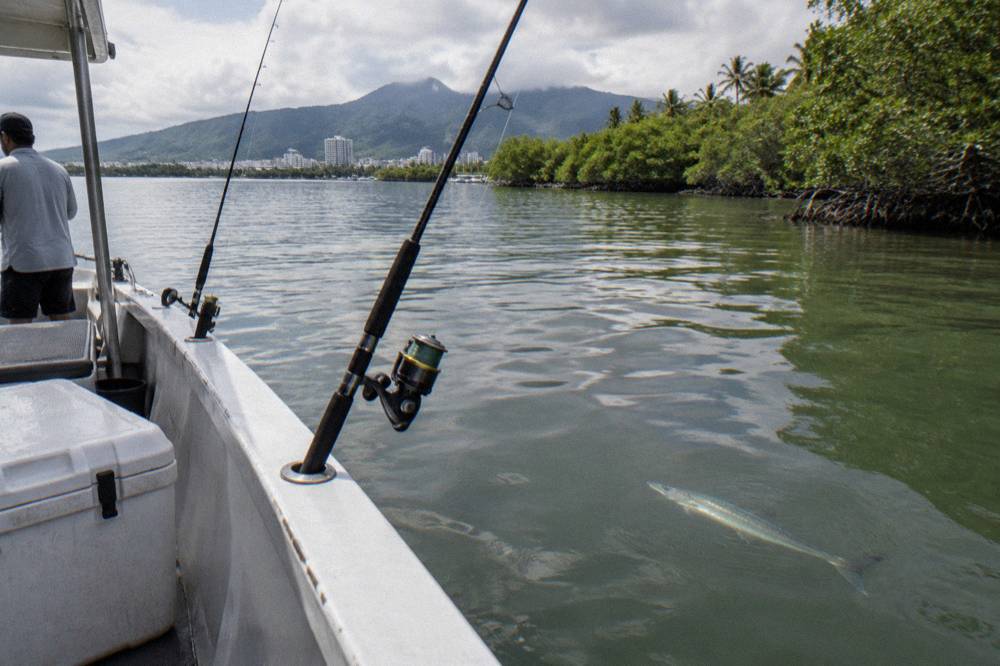
The other way visitors take on the rules alone is self-drive boat hire, where nobody measures your fish but you. Cairns Boat Hire runs from Berth A1 at the Marlin Marina, with the driver required to be 18 or older holding a driver's licence, though no marine licence is needed per the listing. The tinny option is a shaded 4 person boat from AUD 189 per group for a half or full day, with fuel included and rods, bait and ice as extras.
The relevant rules read differently when you are your own skipper. You choose the grounds, so green zone awareness is on you, and Trinity Inlet is the practical playground since the boats stay in the inlet. The hirer gives fishing spot tips at collection, which helps, but the size limits in the table above are yours to apply fish by fish.
Green Zones And Where You Can Legally Fish
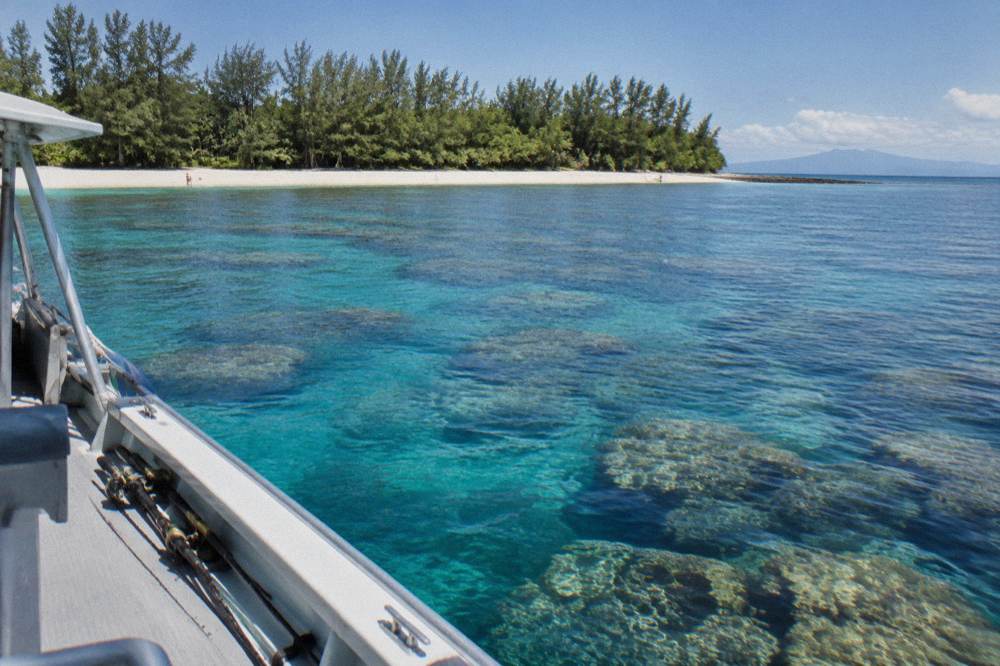
About one third of the Great Barrier Reef Marine Park is Marine National Park green zone, where all fishing is prohibited, and the zoning rules apply to charter boats and private boats alike. Line fishing is allowed in General Use and Habitat Protection zones with up to three hand held rods or handlines per person and a combined maximum of six hooks.
Zoning is the rule visitors most often did not know existed, and it is enforced on the water. The Reef Authority's zoning pages set out the breakdown: roughly 33 per cent of the Marine Park is no take green zone, about 28 per cent is Habitat Protection, around 3 per cent is Buffer zone, and Conservation Park yellow zones allow fishing but with a tighter gear limit of one rod or handline and one hook per person. A full explanation lives in the guide to Great Barrier Reef fishing zones.
| Marine Park zone | Share of the park | Fishing allowed |
|---|---|---|
| Marine National Park (green) | About 33 per cent | No, all extractive activity prohibited |
| Habitat Protection (dark blue) | About 28 per cent | Yes, general line fishing within gear limits |
| Buffer (olive green) | About 3 per cent | Trolling only, with restrictions |
| Conservation Park (yellow) | Not stated as a percentage | One rod or handline, one hook per person |
| General Use (light blue) | Remainder of the park | Yes, up to 3 rods or handlines per person |
Two practical details soften the picture for anglers. First, you may travel through a green zone with fish aboard provided they were caught outside it and your gear is stowed inboard or in rod holders, with nothing in the water. Second, charter crews fish these waters daily and simply do not drop a line in the wrong place, which is one of the quieter arguments for a shared trip over a bareboat. Free zoning maps are available from bait and tackle shops, visitor centres and the national park service.
Stingers, Crocodiles And Water Safety Rules
Marine stingers are present in tropical Queensland waters year round, with the higher risk season running from November to May, and crocodiles live in both fresh and salt water across northern Queensland, so swimming and wading are only safe in designated areas. These are government safety rules rather than fishing rules, but they shape where and how you fish.
The stinger season starts on 1 November, the same day the barramundi closure begins, which makes early November a genuine line in the calendar: barra fishing shuts, stinger risk rises, and the wet season approaches. Risk is lower from June to October and lower on outer reef trips than at inshore beaches in any month, and stinger suits are the standard precaution through the season. Reef charters operating in the warmer months generally have suits available; confirm with the operator before the day.
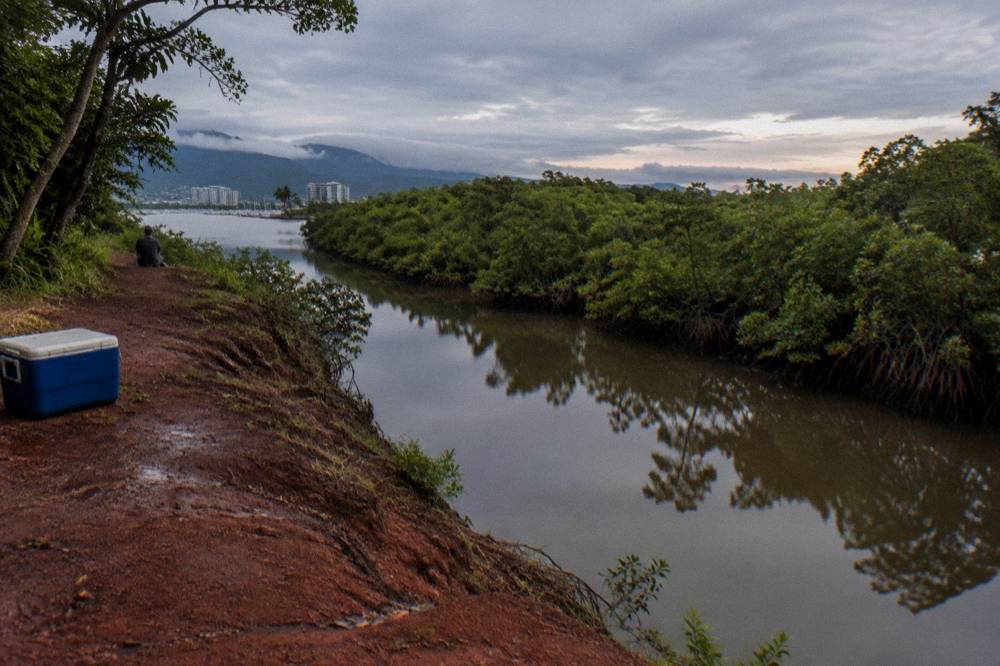
Crocodile guidance for estuary fishing is blunt and worth quoting in spirit: no water body in croc country is considered free of crocodiles. The official advice is to obey signs, stand well back from the water's edge when fishing from shore, use a solid object like an esky as a barrier, never wade in to retrieve a lure, never clean fish or dump scraps near the water or at boat ramps, and take extra care at dawn, dusk, after rain and after high tides. Sightings can be reported on 1300 130 372. On a charter this is largely managed for you; from a riverbank it is entirely on you.
Which Rules Apply To Catch And Release Fishing
Closed season species cannot even be targeted for catch and release: the barramundi closure from 1 November to 31 January prohibits targeting in tidal and fresh waters because capture stress can prevent spawning, and the reef finfish closures are outright take bans. Outside closures, catch and release is legal and undersized fish must be released regardless.
This distinction trips up experienced visiting anglers more than beginners. In many countries a closed season means you cannot keep the fish, and release fishing continues. In Queensland, during the barra closure you may not target the species at all, so a charter will not take you barra fishing in tidal water in those months, and dropping a lure at a known barra hole in December is an offence even if you planned to release everything. The stocked impoundment exemption, Lake Tinaroo and the farm ponds, is the lawful route to barra fishing through summer.
For everything else, release fishing is normal practice and in some fisheries the expectation. Undersized and oversized barra go back by law, since the slot is 58 to 120 cm, and many reef anglers release coral trout at the margin rather than argue a centimetre. If your interest is the fight rather than the fillet, the pond sessions at Wonga Beach are entirely catch and release by design, and the farm sells whole fish or fillets separately if you want a feed.
How The Rules Change Your Trip Planning
Plan around three calendars at once: the wet and dry seasons, the closed seasons, and the stinger season, because they overlap in ways that concentrate the best legal fishing into May to October. The drier southeast trade months also carry the lowest stinger risk, while October and November offer prime coral trout action interrupted by the short reef closures.
A visitor with completely free dates should look hard at August to early October. Coral trout season peaks from August to October, the weather sits in the drier trade wind pattern with typically lighter southeasterlies, stinger risk is at its annual low, and the only interruption is the first five day reef closure from 8 to 12 October. Spanish mackerel run May to November, but the northern closure takes out most of late October and November for them.
Travellers locked into the tropical summer face a different trip. From 1 November the barra and black jewfish fisheries close, stinger season begins, and the wet season runs roughly November to April, yet the reef itself stays fishable year round for red emperor and mixed reef species, with red emperor noted as productive in the cooler dry months but available in all seasons. This site's own month by month breakdown, Cairns Fishing Season By Month, carries the full calendar detail.
The practical summary for Fishing Tours Cairns readers is that the rules reward a booked trip over a solo attempt, not because the rules are hard to read, but because a local crew applies them daily without you needing to. Free cancellation on the roster's listings means locking a date early costs little, and the operator can shift you if a closure lands on your day.
Common Questions About Queensland Fishing Rules
Do You Need A Fishing Permit In Queensland?
No. Recreational fishing in Queensland tidal waters, including the reef, requires no licence for visitors or locals. The only permit is the Stocked Impoundment Permit, needed from age 18 for listed stocked dams such as Lake Tinaroo, at AUD 13.60 a week or AUD 64.58 a year.
Can You Fish In QLD Without A Licence?
Yes, in tidal waters and on the Great Barrier Reef you can fish without any licence. You must still follow size limits, possession limits, closed seasons and marine park zoning. The blog post can you fish in QLD without a licence covers this question in full.
What Is The Bag Limit For Reef Fish In Queensland?
There is a combined coral reef finfish possession limit of 20 in total across all reef species. Within that, coral trout have a combined limit of 7, red emperor 5, and mangrove jack 5, each with its own minimum size.
When Is Barramundi Season Closed In Queensland?
The east coast barramundi closed season runs from 1 November to 31 January each year. During it you cannot target barra in tidal or fresh waters, not even for catch and release, except in listed stocked impoundments such as Lake Tinaroo.
Do Fishing Rules Apply To Charter Boat Guests?
Yes. Size limits, possession limits, closed seasons and zoning all apply to people fishing from a charter. In practice the crew measures catch, fishes legal grounds and handles reef taxes, which is why the rules rarely cause problems on a guided trip.
Where Can You Not Fish On The Great Barrier Reef?
Marine National Park green zones, about one third of the Marine Park, are no take areas where fishing is prohibited. Fishing is allowed in General Use and Habitat Protection zones with up to three rods or handlines per person, and in yellow Conservation Park zones with one rod and one hook per person.