What Is The Best Time To Fish For Barramundi In Cairns?
Run-off from March to May and the October to November build-up are the peak barramundi windows in Cairns, and the wild season closes 1 November to 31 January. Here is the month by month calendar.
Barramundi are the fish most visitors to Far North Queensland want on the end of a line, and they are also the fish with the most complicated calendar. The wild season has two genuine peak windows, a hard three-month closure, and a set of size and possession rules that catch out plenty of first-time visitors. This page works through all of it: when barra feed hardest around Cairns, what the closed season means for a November or January trip, what tides and times of day matter, and the one place in the region where the calendar barely applies at all. Barra fishing keeps you around the rivers and inshore systems, but if the big blue water is calling too, our guide to how far out you go to reach the black marlin grounds off Cairns explains what that offshore run actually involves.
Planning a barra trip well is mostly about reading this calendar honestly. Some months reward an early start with aggressive fish, others reward switching species entirely, and one stretch of the year rewards going nowhere near a tidal creek. The reward for getting the timing right is one of the best light-tackle sportfish in the country; the cost of getting it wrong is a fine, or a long day of casting to water that is legally or biologically asleep.
What Is The Best Time To Fish For Barramundi In Cairns?
The best time to fish for wild barramundi around Cairns is the run-off from March to May, followed closely by the build-up from October to November. The wild season then closes completely from 1 November to 31 January, so late October is the last legal window before a three-month shutdown. Lake Tinaroo is exempt and fishes year round with a permit.
Those two peaks come straight from the local fishing calendar rather than from marketing copy. The run-off is when the wet season floodwaters drain back out of the swamps and floodplains into the rivers and creeks, and barramundi gather at the creek mouths to feed on everything the receding water carries past them. The build-up is the opposite rhythm: heat and humidity climb toward the wet, barra feed aggressively ahead of spawning, and the first monsoon showers have not yet muddied the systems.
Both windows put you in Trinity Inlet, the Barron, the Mulgrave, the Russell or the Daintree with a real chance at a metre-plus fish. The rest of the year is not a write-off, far from it, but the feeding intensity drops and you work harder for the same result.
For visitors who cannot line a trip up with either peak, there is a second, simpler answer: the stocked ponds at Wonga Beach. They sit outside the wild season entirely, and we come back to them later in this article.
If you want a guided wild-water morning in the peak windows, the shared estuary charter through Trinity Inlet runs from AUD 150 per person, and there is more detail in the estuary charters around Cairns guide.
Why Run-Off And Build-Up Are The Peak Windows
Run-off, roughly March to May, delivers the year's most consistent barra fishing because falling floodwater concentrates bait and predators at creek mouths. Build-up, October to November, brings pre-spawning aggression as humidity climbs. Both beat the dry season middle months for numbers, though barra remain catchable year round outside the closure.
The run-off is the famous one. When the wet season finally eases, usually from March, the water that spread across the floodplains drains back through the mangroves into the main channels. Barramundi know this better than any guide does, and they station themselves where the current funnels food out of the swamps. Anglers who time a trip to a falling river after good rain can find fish stacked in surprisingly small areas.
The build-up works on a different urge. October and November are hot, humid and often windless months, and barra feed hard in the lead-up to spawning. Early starts matter here: first light and last light are the productive edges, with the middle of the day largely dead. The Daintree, the Russell and the Mulgrave all fire in this window, and local fishing reports through early October 2026 described solid numbers of barra and jacks across exactly those systems.
Between the two peaks sits the dry season. June to September delivers the southeast trades, cooler mornings and clear water. Barra are still there, but they spread out, feed less predictably and go quieter in the cooler spells. Plenty of fish get caught in these months, especially around live bait at night, but the hit rate per hour drops and most guides will steer you toward jacks, grunter and queenfish instead.
The pattern matters for trip planning more than it matters for technique. A visitor with one free morning in August should probably fish for whatever is biting rather than stubbornly chasing barra, while a visitor with a week in April can build the whole trip around them.
The Closed Season: 1 November To 31 January
Wild barramundi fishing on the Queensland east coast, including all Cairns tidal waters, is closed from 1 November to 31 January. Targeting, catching and even catch and release are prohibited, because the stress of capture can prevent spawning. Lake Tinaroo is exempt. Book an October trip to legally fish the build-up peak. If you'd rather fish offshore while the barra season rests, our guide to reef fish limits off Cairns covers possession caps, minimum sizes and spawning closures that still apply.
The closure is the single most important date in the Cairns barra calendar, and it lands awkwardly for visitors. The build-up peak runs through October and November, but the season shuts on 1 November, meaning only one of those two months is legally fishable for wild barra. The rule is not a grey area either: Fisheries Queensland states plainly that you cannot target barramundi during the closed season even for catch and release, in tidal or fresh waters, outside listed stocked impoundments.
The reason is biological. Barramundi spawn over the summer months, and a fish fought to exhaustion during that period may not spawn at all. The closure applies to everyone, charter operators included, and no Cairns guide will take you barra fishing inside it. The official closure dates are published by Fisheries Queensland on its seasonal closures page.
So what happens to a barra plan in, say, December? It changes species. Through the closure, the same estuary systems produce mangrove jack, grunter, queenfish, trevally, estuary cod and flathead, all of which remain open. Trinity Inlet in particular fishes well through summer for jacks in particular. The size and possession rules for barra still matter the moment the season reopens on 1 February: fish must measure between 58 and 120 cm, and the limit is 5 per person or 10 per boat with two or more aboard.
One exemption deserves its own section, and it gets one further down: Lake Tinaroo, the stocked impoundment up on the Atherton Tablelands, is exempt from the closure and fishes for barra year round.
Month By Month: The Cairns Barramundi Calendar
March to May is the run-off peak, June to September is the quieter dry season, October is the last month of the build-up peak, and 1 November to 31 January is closed to all wild barramundi fishing. February reopens the season with fish still finishing spawning. The table below summarises every month.
Reading the year as a table makes the planning decisions obvious. If your dates are fixed, find your month, then match your expectations to it. If your dates are flexible, the two peak rows are where to aim.
| Month | Barra Outlook | Notes For Visitors |
|---|---|---|
| January | Closed | No targeting or catch and release in tidal or fresh waters |
| February | Reopens 1 Feb | Post-spawn fish, systems often still muddy from the wet |
| March | Run-off building | Falling floodwater starts concentrating fish at creek mouths |
| April | Run-off peak | Arguably the best month of the year for numbers |
| May | Run-off tail | Still strong early in the month, clearing water |
| June | Quiet | Southeast trades arrive, cooler mornings, fish scatter |
| July | Quiet | Good month for jacks, grunter and queenfish instead |
| August | Quiet | Clear water, early starts needed for barra |
| September | Warming | Fish start feeding harder as the build-up approaches |
| October | Build-up peak | Hot, humid, aggressive pre-spawn feeding; last legal month |
| November | Closed from 1 Nov | Tinaroo still open |
| December | Closed | Outer-reef species and jacks are the summer options |
The calendar also interacts with the tidal fishing rules visitors trip over most often. Mud crab, a common by-catch plan on estuary trips, has a minimum of 15 cm across the shell with a limit of 7 per person or 14 per boat, and no females can be taken. Mangrove jack must be 35 cm with a limit of 5. The Queensland fishing rules for visitors guide covers the full set, and there is also a deeper dive in why barramundi are hard to catch that explains the feeding behaviour behind this calendar.
Tides And Time Of Day For Barramundi
Barramundi feed hardest at first light, last light and through the night, with big tides moving water into and out of the mangroves doing the concentrating. Dawn on a building spring tide in the peak months is the classic recipe. Midday neap tides are the worst combination.
The monthly calendar gets you into the right fortnight, but the daily one gets you a fish. Barra are ambush predators that hold in snags, rock bars and mangrove roots and let the tide deliver food, so the fishable windows are the edges: the hour either side of dawn and dusk, and night fishing around lights for those who enjoy it.
Tide direction matters too. On the rising tide, bait moves into the mangroves and barra follow; on the fall, everything funnels back out of the drains and creek mouths and the fish wait at the exit. The first and last of the tide, when water is moving fastest, are usually better than the dead top or bottom of it. Spring tides, around the new and full moon, push more water and generally fish better for barra than the smaller neap tides, though some anglers swear by the darker nights around the new moon specifically.
| Condition | Effect On Barra Feeding | Best Use |
|---|---|---|
| First light | Peak ambush window, fish active around snags | Cast lures tight to structure at dawn |
| Last light | Second peak, warm water keeps fish hunting | Work drain exits as the tide starts to fall |
| Night | Consistent in warmer months, especially around lights | Live bait or slow-rolled lures |
| Rising spring tide | Bait pushed into mangroves, barra follow it in | Fish the snag lines and mangrove edges |
| Falling spring tide | Water drains from the flats, food funnels out | Anchor at creek mouths and drain exits |
| Slack water, midday neaps | Feeding drops away, fish hold deep and sulk | Rest, or switch to jacks and grunter |
Time of day interacts with season. In the build-up months of October and November, midday is brutally hot and the fish shut down completely, so a 4.30am start is not dedication, it is basic technique. In the cooler dry months, barra will sometimes feed later into the morning, especially if it is overcast.
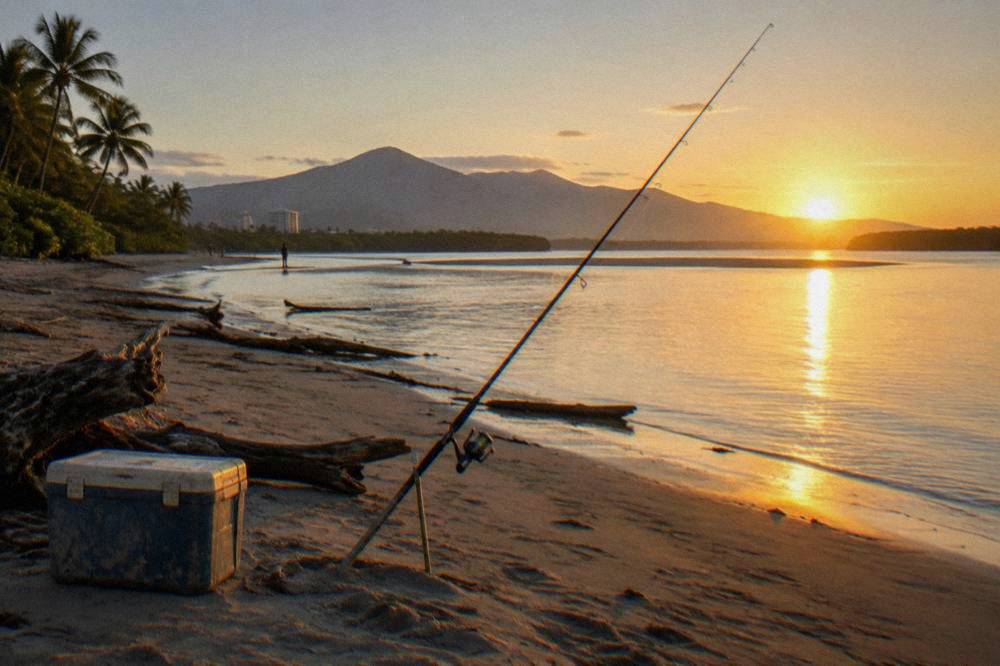
Safety deserves one paragraph in any Cairns estuary fishing article. These are crocodile waters, and the Queensland government guidance is blunt about it: obey signs, stand well back from the water's edge, never wade in to retrieve a snagged lure, never clean fish or dump scraps near the water or boat ramps, and take extra care at dawn, dusk, after rain and on high tides. Sightings can be reported on 1300 130 372. A guided charter handles this sensibly by keeping you on the boat; the official crocodile safety advice is worth reading before any land-based fishing.
Lake Tinaroo: The Year-Round Exemption
Lake Tinaroo, on the Atherton Tablelands, is exempt from the barramundi closed season and holds stocked barra that fish year round. Anglers 18 and over need a Stocked Impoundment Permit, at AUD 13.60 for a week or AUD 64.58 for a year. It is the only legal wild-style barra fishing in the region from November to January.
Tinaroo Falls Dam is the loophole in the calendar, written into the regulations on purpose. Because the dam is a stocked impoundment with no spawning migration, targeting barramundi there does not interfere with the east coast breeding cycle, so the closure does not apply. The lake holds barramundi and sooty grunter, and it produces genuinely big fish, including metre-plus animals, in the middle of summer when every tidal water in the state is off limits.
The catch is the permit. Unlike tidal waters, where no licence of any kind is needed, stocked impoundments require a Stocked Impoundment Permit from age 18, at AUD 13.60 for a week, AUD 64.58 for a year, or AUD 46.45 a year with an eligible concession card. The official Tinaroo permit page lists the current fees and rules, and under-18s fish permit-free.
Tinaroo is not a Cairns day trip in the casual sense: the dam sits up on the Tablelands behind a winding range road, and fishing it properly means a full day or an overnight stay. The rewards are real though, and January anglers chasing barra have exactly one legal destination in the region, and this is it.
Hook-A-Barra: Pond Fishing Outside The Wild Calendar
The stocked ponds at Hook-A-Barra, Wonga Beach, are a farm experience rather than a wild fishery, so the barramundi closed season does not govern them the way it governs tidal waters. Sessions run year round in catch-and-release ponds, and the listing is the place to confirm dates before booking.
Hook-A-Barra is the Daintree Saltwater Barramundi Farm at Wonga Beach, about 1.5 hours north of Cairns, and it offers the thing no wild fishery can: a barramundi on the line in December or January. The ponds are stocked, the fishing is catch and release with guides on hand, and tackle, lures and an introduction are included in the session price. It is honest to call it a farm experience rather than a barra expedition, and it is equally honest to say visitors catch real, hard-fighting fish there in every month of the year.
The simplest option is the shared one-hour pond session, 4.9 from 293 reviews, the deepest review pool on this site's entire roster, from USD 54.52 per person with a maximum of 18 travellers per session. It is the same operator as the AUD 70 listing at the same ponds, and rod, tackle, lures and bait are provided, with whole fish or fillets available to buy at the farm afterwards. There is no pickup; guests make their own way to Lot 3 Vixies Road.
A step up is the two-and-a-half-hour fishing and farm activity, 5.0 from 51 reviews, from USD 88.51 per person in a small group of at most 8. It pairs a behind-the-scenes farm tour with the pond fishing and finishes with a barramundi tasting board. Travellers based in Port Douglas can also take the four-hour lunch session, from AUD 175 per person, the one product on the roster that includes hotel pickup, from Port Douglas only.
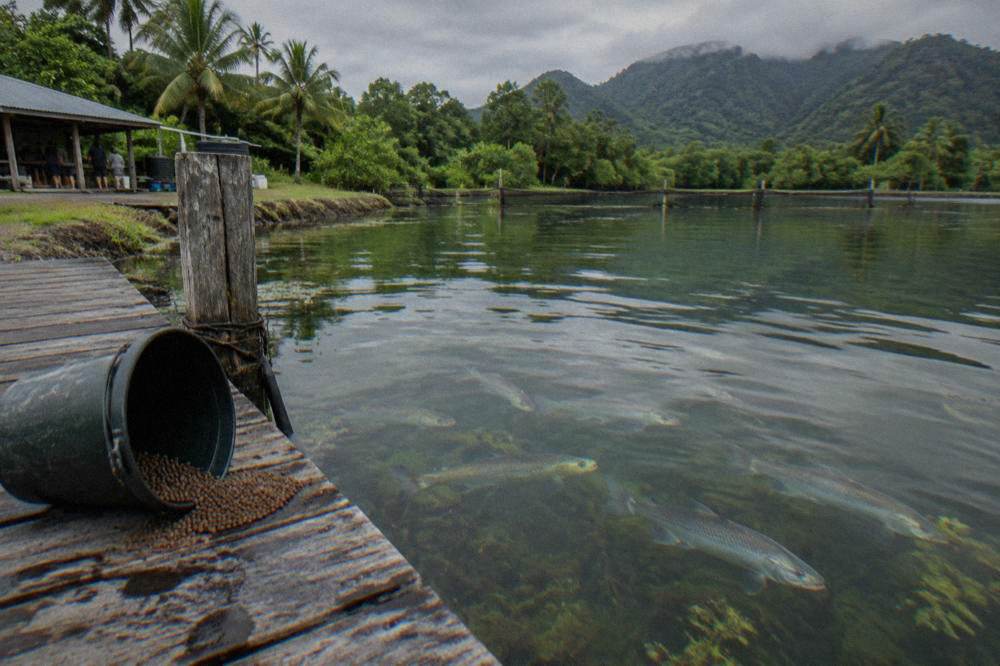
The timing question for these sessions is the reverse of the wild-fishery one. Because the ponds sit outside the closed-season framework, the best time to visit is simply whenever it suits your itinerary, with the farm's own listing the place to confirm session dates and availability. Early sessions beat the worst of the coastal heat in summer, and the viewing tanks make the visit worthwhile even for family members who would rather not cast a line. For everything else on the calendar, from estuary mornings to reef days, Fishing Tours Cairns compares the full range of trips departing the region.
Common Questions About Barramundi Timing In Cairns
What Is The Best Time To Fish For Barramundi In Cairns?
The run-off from March to May is the strongest window, with falling floodwater concentrating fish at creek mouths, followed by the October to November build-up. The wild season closes completely from 1 November to 31 January, so book April or October for the peaks.
Can you catch barramundi in Cairns during the closed season?
Not in tidal or fresh waters. From 1 November to 31 January targeting barramundi is prohibited, including catch and release, everywhere except listed stocked impoundments such as Lake Tinaroo. The stocked ponds at Hook-A-Barra also operate through summer as a farm-based catch-and-release experience.
What time of day do barramundi bite best?
First light and last light are the prime feeding windows, with night fishing productive around lights. Barramundi are ambush feeders that work the moving tides, so the hours when water is pushing into or draining out of the mangroves fish best.
Do you need a permit to fish for barramundi in Cairns?
No licence is needed for tidal waters or the reef in Queensland, including Trinity Inlet and the river systems. A Stocked Impoundment Permit is required from age 18 only for Lake Tinaroo, at AUD 13.60 for a week or AUD 64.58 for a year.
Is October or November better for barramundi in Cairns?
Both sit inside the build-up peak, but the season closes on 1 November, so October is the practical answer. Late October delivers hot, pre-spawn feeding action and is the last legal chance at wild barra before the three-month closure.
Where can I fish for barramundi legally in summer?
Lake Tinaroo is exempt from the closed season and holds stocked barramundi year round with a permit. The Hook-A-Barra ponds at Wonga Beach also run catch-and-release barra sessions through summer as a farm experience; confirm dates on the listing.