What Are The Best Months To Fish In Cairns?
A month by month answer to the best fishing seasons in Cairns, covering barramundi closures, coral trout peaks, Spanish mackerel windows, black marlin season and stinger months.
What Are The Best Months To Fish In Cairns?
The best months to fish in Cairns are May through November for the driest, calmest conditions, with August to October prime for coral trout, October and November the black marlin peak, and March to May the barramundi run-off. Two things block the calendar: barramundi are closed 1 November to 31 January, and reef closures fall on 8 to 12 October and 6 to 10 November 2026. Because the barramundi calendar swings between run-off feeding frenzies and closed-season quiet spells, our month by month barramundi fishing calendar helps you pin down exactly when to be on the water.
That one sentence hides a lot of nuance, because "best" depends entirely on what you want to catch and how you want to catch it. A family wanting a calm morning on Trinity Inlet has a different best month than a visiting angler chasing prime reef table fish, and both differ again from someone whose whole trip is built around marlin season. The good news is that Cairns genuinely fishes in every month. The tropical location means the water never goes cold, and the local species list simply rotates through the year rather than switching off.
The calendar breaks into four broad blocks. The dry season, roughly May to October, brings southeast trades, low rainfall and the calmest inshore water: this is when reef charters run most reliably and when coral trout fishing hits its prime window of August to October. The build-up, October and November, heats up both the weather and the fishing, with barramundi feeding hard ahead of the closure and black marlin arriving on the outer reefs in numbers (see Why Barra Are Hard). The wet season proper, roughly December to April, means heat, humidity and possible storms, but also the run-off period from March to May when the rivers pump bait and barramundi fishing is at its noted peak. And threading through all of it are the regulatory windows, the barramundi closure and the two five-day reef spawning closures, which bind charter boats just as they bind private anglers.
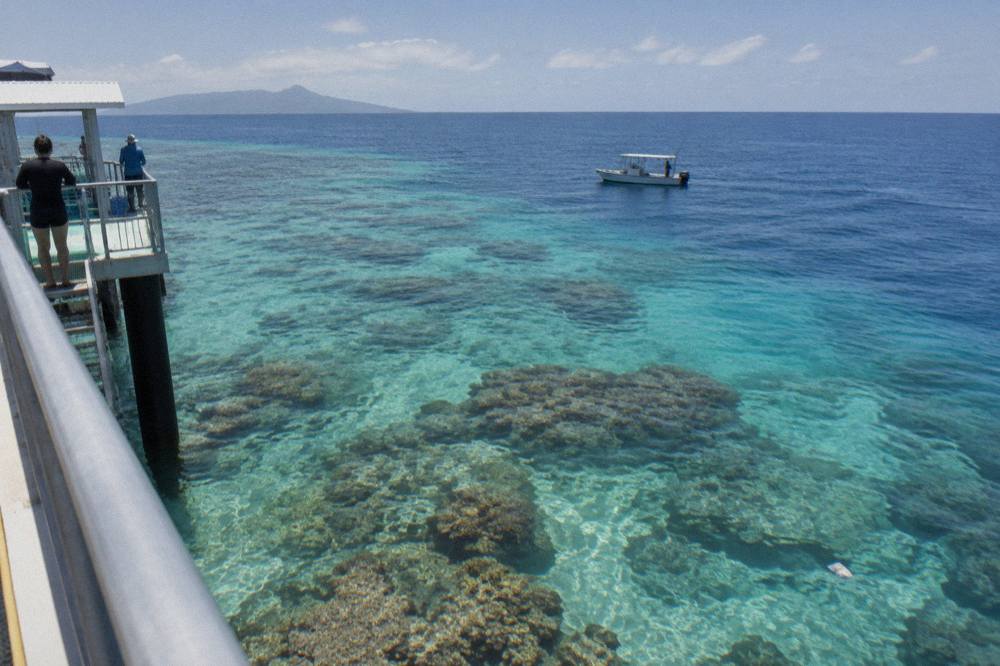
The practical answer for most visitors is to anchor the trip between May and November, then fine-tune around the species you care about. If coral trout and red emperor are the goal, aim for August to October. If barramundi in the wild are the goal, come between February and late October, ideally in the March to May run-off, and be finished before 1 November. If you simply want a good day on the water with the highest chance of calm conditions and a full esky, almost any dry-season month will do, and a shared reef charter is the most reliable way to spend it.
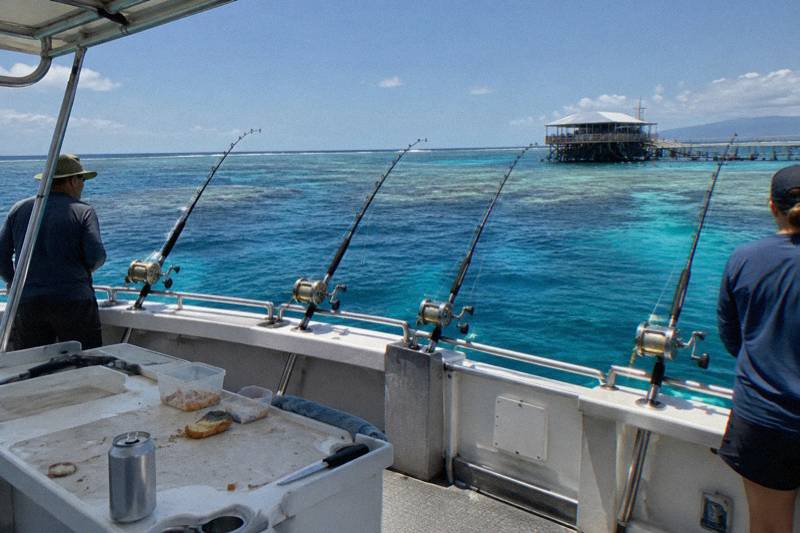
Three trips cover most of these scenarios. The full-day reef charter runs about 90 minutes offshore to grounds within 50 km of Cairns and targets coral trout, red emperor and large mouth nannygai, with lunch and gear included. The morning estuary charter fishes Trinity Inlet on a small boat with everything supplied. And a self-drive pontoon lets you fish the inlet on your own schedule. The right pick depends on the month as much as the budget, which is exactly what the rest of this article works through.
For the complete month-by-month calendar, including water conditions and what to expect in each individual month, the companion Cairns fishing season by month guide carries the full breakdown. This article covers the headline months and the rules that shape them without duplicating that calendar page for page.
Which Months Are Best For Each Key Species?
Coral trout are prime from August to October within a March to November season. Spanish mackerel run May to November but close 8 to 29 October and 6 to 27 November 2026. Black marlin peak October and November, late September to December overall. Barramundi fish best in the March to May run-off and the October to November build-up, but are fully closed 1 November to 31 January. If you want to drill into that species in more detail, our month by month barramundi fishing calendar for Cairns shows exactly how the run-off and build-up windows play out around the closed season.
Putting the headline species side by side makes the calendar easier to plan around than any single-species discussion. The table below lists the commonly targeted fish off Cairns, their best months as reported by local operators, and the windows where rules close or restrict the take.
| Species | Best months | Season notes | Closure to watch |
|---|---|---|---|
| Barramundi | March to May run-off, October to November build-up | 58 to 120 cm size window, 5 per person or 10 per boat | Closed 1 November to 31 January, tidal and most fresh waters |
| Coral trout | August to October prime, March to November overall | Minimum 38 cm, combined trout limit 7 | Reef closures 8 to 12 October and 6 to 10 November 2026 |
| Red emperor and nannygai | Year round, best in the cooler dry months | Red emperor minimum 55 cm, limit 5 | Same two reef closure windows |
| Spanish mackerel | May to November | Minimum 75 cm, 1 per person or 4 per boat | Closed 8 to 29 October and 6 to 27 November 2026 |
| Mangrove jack | Warmer months, strong through the build-up | Minimum 35 cm, limit 5 | No species closure, but barra closure slows estuary trips |
| Black marlin | Late September to December, peak October and November | Tag and release fishery on the outer reefs | No recreational closure, but no game product is bookable on this roster |
Two things in that table deserve emphasis. First, the reef closures are short but absolute: for five days in October and five days in November, coral reef finfish cannot be taken in the waters off Cairns, and charter operators must comply alongside everyone else. Some Cairns operators switch entirely to other styles of fishing during those windows. Second, the Spanish mackerel closure is longer than many visitors expect, running three full weeks in October and again in November north of 22 degrees south, which covers Cairns. A reef trip booked in mid-October can still catch and keep trout, emperors and nannygai outside the five-day closure, but any mackerel has to go back. For a month by month picture of what is actually biting around Cairns, from reef species to estuary targets, our seasonal guide to what fish are biting in Cairns covers each fishery at its peak.
The species mix also explains why the "best month" question has no single answer. October looks like the dream month on paper: prime coral trout, the start of the marlin peak, and barramundi feeding hard in the build-up before the closure. It is also the month carrying the first reef closure and the start of the mackerel closure, so the exact dates inside October matter a lot. May sits at the opposite end of the scale, with no closures at all, calm drying weather, mackerel arriving and the tail of the barra run-off, which is why many locals quietly rate it the best all-round month on the coast.
For visitors who want the highest-probability single day rather than a species-specific mission, the full-day reef fishing charter from Cairns is the steadiest option across the widest set of months. It runs from Cairns Marlin Marina, about 7 km and 10 minutes from the airport, targets coral trout, red emperor and large mouth nannygai on grounds within 50 km of Cairns, and includes rods, tackle, bait, a buffet lunch, afternoon tea, water and reef taxes, with the catch cleaned, chilled and bagged to take home. It is rated 4.3 from 39 reviews and costs from AUD 395 per person, and it fishes in every month of the year outside the two five-day spawning closures.
When Is Barramundi Season Open In Cairns?
Barramundi fishing in tidal waters is open from 1 February to 31 October each year, and closed from 1 November to 31 January. The best open-season months are the March to May run-off and the October to November build-up. Lake Tinaroo is exempt from the closure and fishes for barra year round with a Stocked Impoundment Permit.
The closure is the single most important date on the Cairns fishing calendar, and it catches out visitors every summer. From 1 November to 31 January you cannot target barramundi in tidal or fresh waters, and that includes catch and release: Fisheries Queensland's stated reason is that the stress of capture during the spawning period may prevent fish from spawning. So a trip in December cannot legally be a barra trip in the wild, full stop, whatever a social media video suggests. The rule binds charter operators exactly as it binds shore anglers.
Inside the open season, the two peaks matter. The run-off, March to May, follows the wet season as floodplain water drains back into the rivers and inlet, concentrating bait and feeding fish. Local reporting on the Trinity Inlet, Barron, Mulgrave, Russell and Daintree systems consistently names this the noted peak. The build-up, October to November, brings heat and pre-monsoonal activity, with barra feeding aggressively before the closure, though the usable window ends abruptly on 31 October.

What the closure does not cover is stocked ponds. The Hook-A-Barra farm at Wonga Beach, about 1.5 hours north of Cairns, runs catch-and-release sessions in stocked ponds year round, and because these are farmed fish in an impoundment, the wild-season calendar does not apply the same way; the listing is the place to confirm session dates. It is a farm experience rather than a wild-barra trip, but for a family visiting in December or January it is the one way to actually fish for barramundi during the closure. Note there is no Cairns pickup for any of those sessions: the Port Douglas lunch product is the only roster trip that collects from anywhere.
Outside the closure, a guided morning on Trinity Inlet is the simplest way to fish the estuary. The Morning Estuary Charter from Fish Tales runs 4.5 hours from a 6.30am meet at the marina, on a 19-foot river boat carrying a maximum of 6, with rods, reels, bait and tackle supplied, from AUD 150 per person, rated 4.6 from 22 reviews. The listing does not name target species, so treat it as an inlet fishing morning, with whatever the season is producing, rather than a guaranteed barra trip.
A planning note on what the estuary produces month to month: the same systems that hold barra through the open season also carry mangrove jack, grunter, queenfish, trevally and GT, estuary cod and flathead, so an inlet trip in the closed months is far from a write-off, it simply is not a barramundi trip. Jacks in particular fish strongly through the warmer months and have a straightforward rule set: minimum 35 cm, possession limit 5. Mud crab are another option, minimum 15 cm across the widest part of the shell, 7 per person or 14 per boat, no females.
What Are The Reef Closures In October And November?
The 2026 coral reef finfish spawning closures run 8 to 12 October and 6 to 10 November, two five-day windows in which no coral reef finfish may be taken in the Cairns region, including by charter boats. The northern Spanish mackerel closures run longer, 8 to 29 October and 6 to 27 November 2026. In 2027 the reef windows move to 26 to 30 October and 25 to 29 November.
These closures protect fish while they aggregate to spawn, and they are shorter and sharper than most visitors expect. The reef finfish closure lasts five days each time and covers the coral reef finfish suite as a whole, the trout, emperors, tropical snappers and cods that make up most of a Cairns reef charter's table catch. The Spanish mackerel closure is a separate, longer window that sits around the same new-moon periods, because mackerel also aggregate to spawn on the east coast north of 22 degrees south. A boat can still fish during the mackerel closure for other species, and can still fish during the reef closure for species outside the coral reef finfish definition, but a standard reef trip's bread and butter is off the table for those five-day stretches.
The combined possession limit is the other rule worth knowing before a reef day: 20 coral reef finfish in total per person, within which coral trout have a combined limit of 7 and a minimum of 38 cm, and red emperor a limit of 5 and a minimum of 55 cm. Charters enforce these on the water, and the crew will measure and sort the catch; the fish that come home are cleaned, chilled and bagged, which is standard practice on the Cairns reef day trips. For a fuller rundown on how these rules apply species by species, including spawning closures, our Queensland reef fish limits guide for Cairns anglers covers what you need before you board.
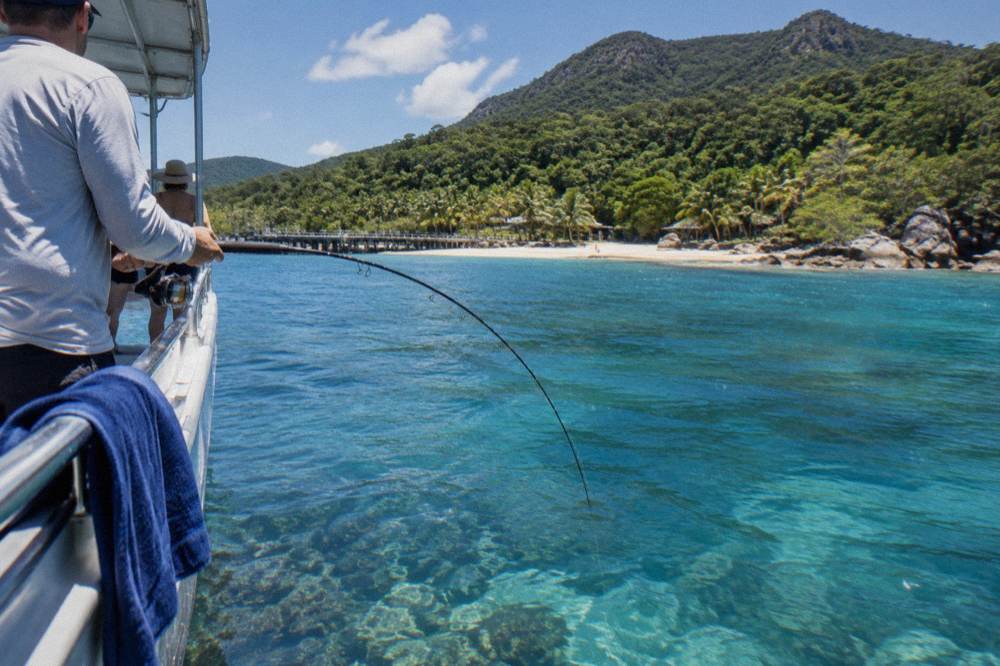
For planning, the cleanest months for a reef trip are those with no closures at all: May through September is the safest stretch, with the August to October prime trout window beginning in August and carrying through September before the October dates arrive. If your travel dates are locked to mid-October or mid-November, check the exact closure dates against your planned day before booking, because a trip on 9 October and a trip on 15 October are completely different experiences on paper. The Fisheries Queensland closures page carries each year's dates.
When Is Black Marlin Season Off Cairns?
Black marlin season off Cairns runs from late September to December, with the peak in October and November on the outer reefs between the Ribbon Reefs and the Lizard Island area. It is a tag-and-release fishery, and there is no marlin or game-boat trip bookable on this roster: the nearest fit is the shared reef charter, which targets coral trout and red emperor, not marlin.
Cairns is one of the famous black marlin destinations in the world, and the season structure is well documented by the game-fishing fleet: the giant fish arrive on the outer reef edge from late September, numbers and sizes peak in October and November, and the season tapers through December. Blue marlin are reported as more common from November onward. Club fixtures mark the same rhythm, with the Lizard Island Black Marlin Classic on 18 to 23 October 2026 and the Port Douglas Marlin Challenge on 18 to 21 November 2026. Dedicated game boats exist in the Cairns fleet, and market planning: other operators' sites put full-day private game charters from around AUD 3,200, though that is other operators' listed pricing, not a bookable product here.
This site's roster is honest about what it sells: there is no marlin, game-boat or blue-water product on it. The nearest trip that fits a "big day on the blue water" itch is the shared Great Barrier Reef charter, and it should be booked for what it is: a 9-hour reef day about 90 minutes offshore, bottom fishing for coral trout, red emperor and large mouth nannygai, not a marlin trip. Anglers who specifically want to chase marlin should look at the dedicated game fleet directly, and Fishing Tours Cairns covers the reef and estuary options that can actually be booked here.
The marlin calendar still matters to this article because it shapes October and November travel. Those two months are simultaneously the marlin peak, the prime coral trout window and the start of the closure season, which makes them the busiest, most complicated and most rewarding months of the Cairns fishing year. If your dates are flexible and your goals are mixed, a reef day in late October, outside the closure windows, sits right in the middle of everything.
Which Months Need A Stinger Suit In Cairns?
Official stinger season in tropical Queensland runs 1 November to 31 May, when box jellyfish and Irukandji risk is higher and stinger suits are recommended for inshore and beach waters. Risk is lower from June to October, and outer-reef trips carry lower risk than inshore beaches year round, with suits often worn as a precaution.
Stinger season starts on exactly the same day as the barramundi closure, 1 November, which is a useful memory hook: the wet-season package arrives together. For fishing specifically, the practical exposure is highest for shore fishing, wading and swimming, and lowest on a boat well offshore. Reef charter crews carry and advise suits through the season, and many guests wear them on outer trips regardless, since the risk on the outer reefs is lower but not zero.
The dry season months, June to October, are the comfortable window on every axis: low stinger risk, southeast trades, minimal rainfall and the calmest inshore water. That is also the peak visitor season, and it is no coincidence that it overlaps the prime coral trout window of August to October. Families planning an inlet fishing morning or a self-drive boat day will find June to September the easiest months for children on the water, before the October heat builds.
How Do Weather And Tides Shape The Choice Of Month?
Southeast trades dominate the drier months of roughly May to October, bringing steadier inshore conditions, while the wet season runs roughly November to April with heat, storms and freshwater run-off reshaping the rivers. The dry months suit reef and family trips; the wet and run-off months suit anglers chasing the barra peaks.
The weather split maps almost perfectly onto the fishing split. In the dry season the southeast trade winds blow with a rhythm that locals plan around, strongest through the middle of the day, which is why estuary charters leave at 6.30am and reef boats time their runs to the tides and the forecast. Inshore waters like Trinity Inlet stay fishable through most of the dry season even when the breeze is up, because the mangrove-lined arms give shelter. The reef runs are longer commitments, about 90 minutes each way on the shared charter, and operators watch the forecast before committing to grounds.
In the wet season the calculus flips. Heat and humidity climb, afternoon storms become routine, and the rivers flood and then drain, which is precisely what makes the March to May run-off such a productive barra window. An estuary trip in February can be brilliant or flooded out depending on the week. A self-drive boat is the most weather-flexible option of the three, because a half day can be moved to the calm morning window on short notice.
| Month block | Conditions | What fishes best | Watch out for |
|---|---|---|---|
| May to July | Dry, trade winds, cooler nights | Spanish mackerel arriving, mixed reef, clear-water estuary | Windy afternoons on the reef run |
| August to September | Dry, calm spells, prime visitor weather | Coral trout prime window begins, reef table fish | Book early, peak season |
| October | Hot, build-up heat, first closures | Trout, marlin peak, barra feeding before closure | Reef closure 8 to 12 Oct, mackerel closed |
| November | Hot, storms begin | Marlin peak, jacks and estuary species | Barra closed, stinger season starts, reef closure 6 to 10 Nov |
| December to February | Wet season, storms, humid | Mangrove jack, grunter, estuary species, reef still runs | Barra closed, storms, heat |
| March to April | Run-off begins, rivers drain | Barramundi run-off peak, queenfish, trevally | Variable water conditions |
Tides add a second layer, and serious estuary anglers plan around them as much as the month. The incoming and turning tides concentrate bait in the inlet arms, and the Cairns fishing tides guide covers that planning in full. For a month-choice decision, the rule of thumb is simple: pick the month for the species and the rules, then pick the day inside it for the weather and tide.
For travellers who want independence on the water, the self-drive pontoon from Cairns Boat Hire works across most of the year, half or full day, from AUD 249 per group for up to 8, with fuel and life jackets included and rods, bait and a BBQ as optional extras. The driver must be 18 or older with a driver's licence, no marine licence needed per the listing, and it is rated 4.8 from a small pool of 8 reviews. Collect it at Berth A1, Marlin Marina, and fish Trinity Inlet on your own schedule.
One caution that applies in every month: crocodiles live in the estuaries around Cairns, and no water body in croc country is considered free of them. Queensland Government advice is to obey signs, stand well back from the water's edge when fishing from shore, use a solid object like an esky as a barrier, never wade in to retrieve lures, never clean fish or dump scraps near the water or boat ramps, and be extra careful at dusk, dawn and after rain or high tides. On a charter or a hired boat this is managed by simply staying aboard. From the bank, it changes how you fish.
The Short Version For Trip Planning
Pick May to September for the easiest all-round conditions and no closures, August to October for prime coral trout, late September to November for the marlin peak, and March to May for wild barramundi in the run-off. Avoid planning a barra trip between 1 November and 31 January, and check the reef closure dates before locking any October or November reef day.
Condensed to a single recommendation for a first-time visitor with no species agenda: September. The trade winds have usually eased from their winter peak, coral trout are in their prime window, Spanish mackerel are running ahead of their October closure, the marlin fleet is arriving, no closure windows fall in the month, stinger risk is low, and the weather is warm without the build-up heat. It is the month where the most doors are open at once, which is exactly why it books out first.
For a second or third visit, the calendar rewards specialisation. The angler who has already done the dry-season reef day should look hard at April, when the run-off concentrates feeding barramundi in the rivers and the crowds have gone. The family with small children should look at June or July, when the mornings are mild and the inlet is at its calmest. And the traveller locked into a summer trip should know that December to February is estuary species and stocked ponds, not wild barra, and plan accordingly.
Whatever month you land on, the three products that carry the most months of the year are the shared reef charter, the morning estuary charter and the self-drive boats, and all three depart from the Cairns Marlin Marina with no hotel pickup, so plan your own way to 1 Spence Street, a short walk from the Esplanade.
Common Questions About The Best Months To Fish In Cairns
What Are The Best Months To Fish In Cairns?
May to November offers the calmest conditions, with August to October prime for coral trout, October and November the black marlin peak, and March to May the barramundi run-off. Barramundi are closed 1 November to 31 January, and reef closures fall on 8 to 12 October and 6 to 10 November 2026.
Can you fish for barramundi in December or January in Cairns?
No. The east coast barramundi closed season runs 1 November to 31 January, and it bans targeting as well as keeping, including catch and release in tidal and most fresh waters. Lake Tinaroo is exempt and fishes year round with a Stocked Impoundment Permit, and the Hook-A-Barra stocked ponds at Wonga Beach run catch-and-release sessions, but there is no wild barra fishing in those months.
Do the reef closures stop charter fishing altogether?
Not entirely, but they stop the core reef table fish. For five days in October and five in November, coral reef finfish cannot be taken, and charter boats must comply. Spanish mackerel have a longer closure, 8 to 29 October and 6 to 27 November 2026. Some operators shift to other fishing styles during those windows; check your exact date before booking.
Is October a good month to fish in Cairns?
October is one of the best and one of the most complicated months: prime coral trout, the black marlin peak and pre-closure barramundi action all overlap, but the reef closure runs 8 to 12 October and Spanish mackerel are closed from 8 to 29 October. Book dates either side of those windows and October delivers on nearly everything.
Do I need a stinger suit on a Cairns fishing trip?
Official stinger season runs 1 November to 31 May, and suits are recommended for inshore and beach waters in that period. Risk is lower from June to October, and outer-reef trips carry lower risk than inshore beaches year round, though suits are often worn as a precaution. Charter crews advise on the day.