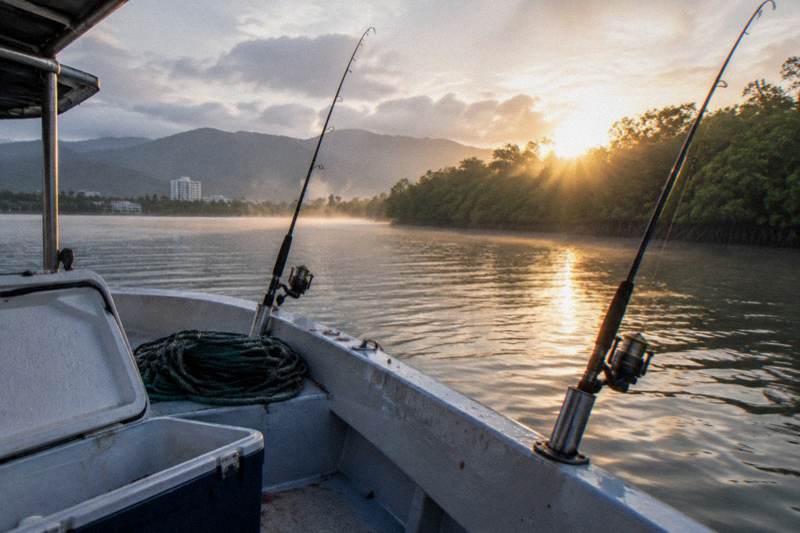
Why Are Barramundi So Hard To Catch Near Cairns?
Barramundi frustrate even experienced anglers around Cairns. Here is why they are hard to hook, the rules that shape the fishery, and the guided ways to actually catch one.
Why Are Barramundi So Hard To Catch Near Cairns?
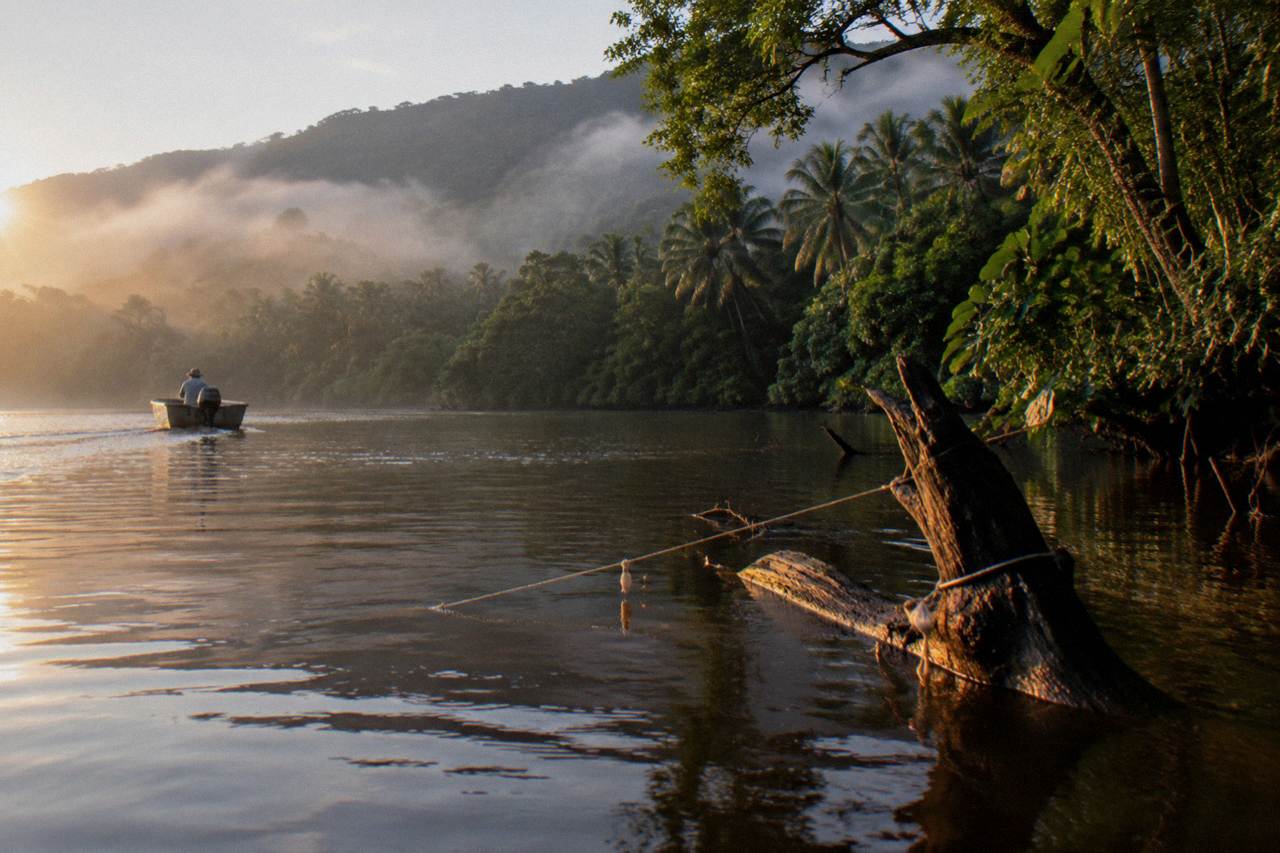
Barramundi are hard to catch near Cairns because they hold tight to snaggy structure, feed in short windows tied to tide and light, shut down during the annual closed season from 1 November to 31 January, and must measure between 58 and 120 cm to keep. An unguided angler with borrowed tackle is fishing a small slice of water at a random hour. A guide fishes the right snag on the right tide. Tackle choice is the other half of the equation, and the best lures for Cairns barramundi run through the soft plastics, hard-body minnows and surface options worth tying on when you do find a fishable window.
Ask around the Cairns marina and you will hear the same story in a dozen versions. Someone's cousin spent three days casting lures at the Barron River and hooked nothing but mangrove. A visiting angler bought a cheap rod, fished the Esplanade at midday and wondered why the fish ignored everything. Meanwhile the people on guided boats seem to hook barra often enough that it looks easy from the outside. It is not easy for them either, and that gap between perception and reality is the whole story.
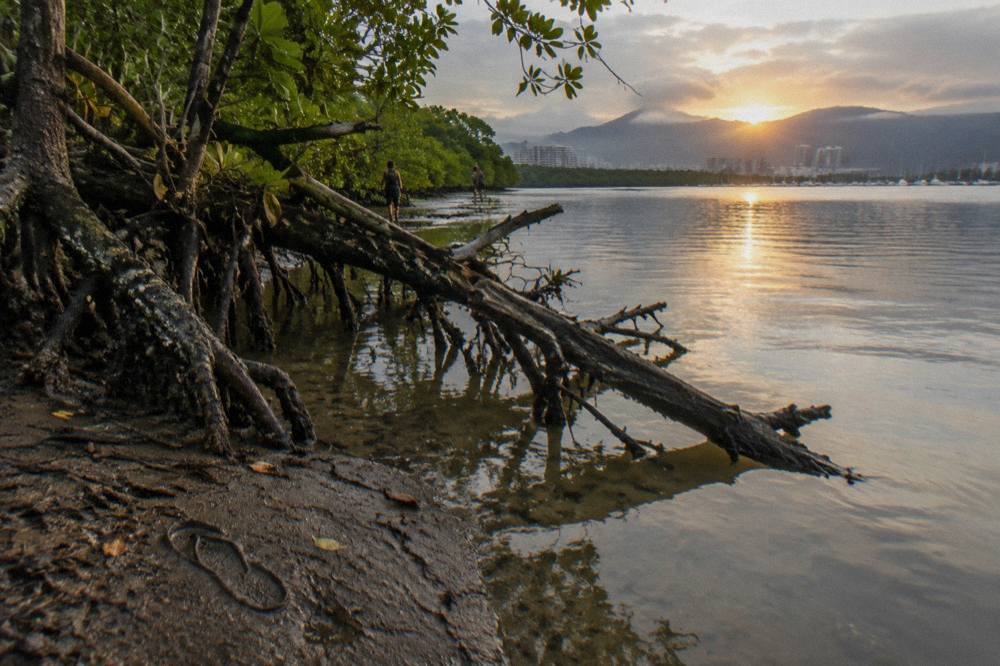
The short answer is that barramundi are a structure fish that feeds opportunistically in narrow windows, in a region where the fishable water is vast and the productive water is tiny. Trinity Inlet alone is a maze of creeks, drains and drowned timber. A barra might sit under one particular log on one particular bank, waiting for bait to wash past on a falling tide, and be completely uninterested two hours later when the water has slackened. Fishing for them without local knowledge is closer to lottery ticket buying than to hunting.
There is a second layer that visitors rarely hear about until they are already here: the rules. The east coast barramundi closed season runs from 1 November to 31 January each year, and during that window you may not even target them for catch and release in tidal or fresh waters, because the stress of capture can prevent spawning. Plenty of trip itineraries land right in the middle of that closure. The fish are also protected by size rules, 58 cm minimum and 120 cm maximum, which exists because large females carry the breeding stock. A barra that is undersized, oversized or out of season goes back no matter how hard you worked for it. Once the rules are clear, the next question is what to put on the hook, and our guide to bait and lure choices for Cairns barramundi explains what actually works once the season opens.
None of this means the challenge is impossible. It means the challenge has a shape, and once you understand the shape you can choose how to spend your money and time. The rest of this article walks through the habits that make barra difficult, the tide and structure puzzle, the rules that constrain the fishery, and the two practical shortcuts: a guided estuary charter, or a stocked-pond session where hookups are far more likely than in the wild. For the wider picture on the species around Cairns, see the barramundi fishing in Cairns guide.
What Barramundi Behaviour Does To Your Odds?
Barramundi are ambush predators that hold inside timber, rock bars and weed edges, strike at close range in low light, and go quiet for long stretches between feeding windows. They are also sequential hermaphrodites, starting life as males and becoming large females, so the big breeding fish are rare by design. Every one of those traits punishes casual angling.
Start with the ambush part. A barra does not cruise open water looking for food the way a trevally does. It parks itself in or beside structure, a fallen tree, a rock bar, a mangrove root line, and waits for baitfish, prawns or mullet to be pushed past by the current. That means your lure has to enter a strike zone often less than a metre wide, frequently at a specific depth, without snagging the timber that surrounds it. Anglers who are afraid to cast tight to structure simply do not get bites. Anglers who cast tight to structure lose tackle, and sometimes the fish, in the timber. That trade-off is the daily reality of barra fishing.
Then there is the light window. Barra feed hardest at dawn, dusk, through the night, and under dirty water or overcast skies that extend those low-light conditions. In bright midday sun, which Cairns delivers reliably for most of the year, they retreat deeper into cover and become reluctant. Visitors fishing on a tour schedule, or from the shore between sightseeing stops, are usually on the water at the worst possible hours. Local anglers fish dark mornings or night tides and sleep through the middle of the day.
The hermaphrodite biology matters too. Most barra mature as males around three to five years old, then change sex to female as they grow. The memorable metre-plus fish are nearly all females, and they are a small fraction of the population. The 120 cm maximum size limit exists precisely to protect those breeders. So the fish most anglers dream about is statistically rare, legally protected above a certain size, and behaviourally the wariest animal in the estuary. Stacking those three facts together explains a lot of blank days.
Their mood also swings with the seasons in ways that are visible in the catch reports. The two noted peaks around Cairns are the run-off from March to May, when rain flushes bait and hungry post-spawn fish down the creeks, and the build-up from October to November, when warm, humid weather ahead of the monsoon switches the fish on hard. Between those peaks there are productive days, but the margins are thinner and the fish more selective. If your trip falls outside the peaks, you are fishing the hard version of an already hard fishery.
How Do Tides And Structure Stack The Deck?
Tide and structure interact: barra feed when moving water carries bait past their ambush point, so each spot fishes well for a limited part of the tide cycle and is dead otherwise. Reading which bank, drain or snag to fish at which hour is the single biggest edge a local guide brings, and it is knowledge that takes years to build.
Big spring tides push more water, more bait and more feeding fish. Neap tides, with their smaller movement, often shut the bite down across whole systems. Within any tide there are further windows: the first and last hours of the run-in or run-out, when water moves fastest through narrow drains, are classic barra times. Slack water at the top or bottom of the tide is usually the slowest period of all. An angler who fishes a good spot at the wrong tide stage concludes the spot is bad. It probably is not, it is just time-shifted.
Structure adds the second layer. Cairns estuary systems, Trinity Inlet, the Barron, the Mulgrave-Russell and the Daintree, offer endless kilometres of potential holding water: rock walls, snag-lined banks, creek junctions, weed beds and mangrove roots. Fishable structure is a fraction of that, and productive structure on any given tide is a fraction of the fraction. Guides run the same circuits repeatedly and log which snags produce at which tide heights, then adjust daily for rainfall and clarity. After a big wet-season flush the fish relocate, and even experienced locals spend weeks relearning them.
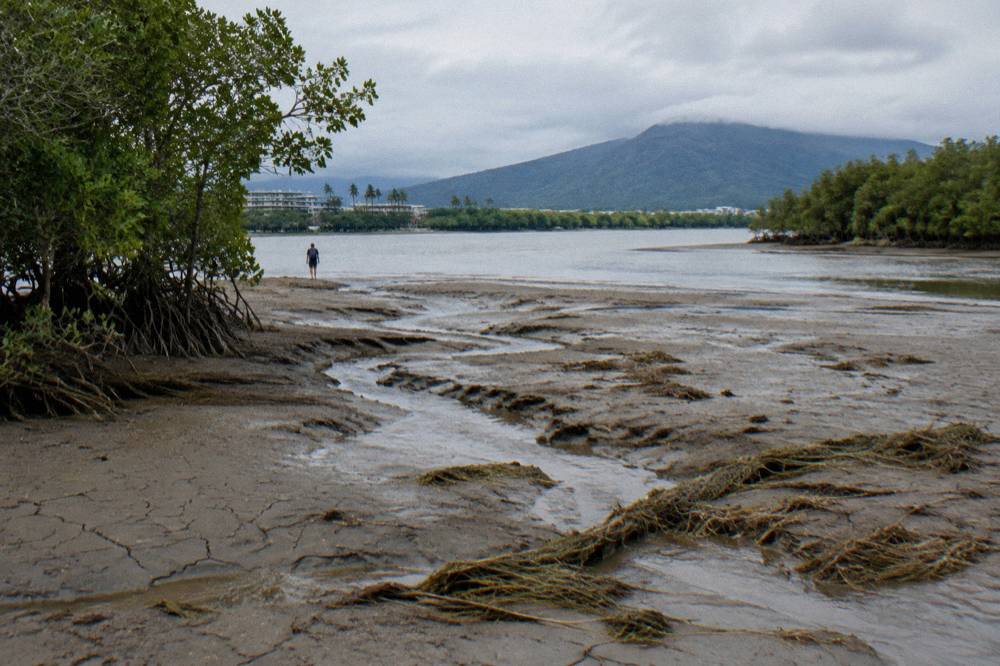
Water clarity deserves its own mention because it confuses visitors. Clear oceanic water looks inviting and is often terrible for barra, which use it to inspect your lure and refuse it. A coffee-coloured, tannin-stained or mildly dirty tide reduces their inspection time and triggers reaction strikes. Locals cheer dirty water. Visitors often avoid it. That single preference inversion accounts for a remarkable number of fishless sessions, and it is exactly the kind of judgement a guide applies without thinking about it.
There is a safety dimension to structure fishing here as well. Every estuary around Cairns is crocodile habitat, and the Queensland Government's guidance is blunt: stand well back from the water's edge, never wade in to retrieve a snagged lure, never clean fish or dump scraps near the water or boat ramps, and take extra care at dawn, dusk, after rain and on big tides. Fishing tight to barra structure from the bank means standing exactly where the guidance tells you not to. A boat, or a skipper's local knowledge of safe access, changes that calculation completely.
The tide puzzle is worth studying for its own sake, and the Cairns fishing tides guide breaks down how locals plan sessions around the movement. For anglers who want the estuary explained rather than solved solo, the estuary fishing charters in Cairns guide covers what a guided day actually delivers.
| Barra feeding trigger | What it looks like | Typical timing near Cairns |
|---|---|---|
| Falling tide draining flats | Bait pulled past snag-lined edges | First and last hours of the run-out |
| Rising tide filling drains | Prawns and mullet pushed into creek mouths | First and last hours of the run-in |
| Low light | Dawn, dusk, night, overcast or dirty water | Year round, strongest in the build-up |
| Run-off flush | Post-wet season bait movement through creeks | March to May |
| Build-up warmth | Humid, pre-monsoon conditions, active fish | October to November |
What Rules Make Wild Barramundi Even Harder?
Wild barramundi near Cairns face a closed season from 1 November to 31 January in which they cannot even be targeted, a 58 to 120 cm slot for kept fish, and a possession limit of 5 per person or 10 per boat with two or more aboard. Charters are bound by the closures too, so no guided trip can sidestep them. If barra are off the table during the closure, many Cairns anglers switch to reef species instead, and our guide to how many reef fish you can keep per person in QLD covers the coral reef finfish rules, sizes, and closures that apply offshore.
The closed season is the rule that most often blindsides visitors. It applies in tidal waters and, outside listed stocked impoundments, in fresh water as well, and it prohibits targeting barramundi at all, including catch and release, because hooked fish may be ripe with eggs or sperm and the stress can stop them spawning. Planning a barra-focused trip between November and January means planning around a fishery that is legally closed. The current closure windows are published by Fisheries Queensland on its seasonal closures page, and it is the authoritative place to confirm dates before you book anything.
The slot limit shapes the fishing in a subtler way. Legal barramundi are between 58 and 120 cm. Anything smaller goes back, which is common because barra grow through the mid-40s and 50s quickly and there are plenty of them around. Anything over 120 cm also goes back, and those are the trophy fish of a lifetime. Anglers chasing a keeper therefore need a fish in a specific size band, from a population where the memorable specimens sit at or beyond the protected upper boundary. The full size and possession rules sit on the Queensland tidal fishing limits page.
| Rule | Detail | How it affects anglers |
|---|---|---|
| Closed season | 1 November to 31 January, east coast | No targeting, not even catch and release, in tidal or fresh waters |
| Size slot | 58 to 120 cm | Undersize and oversize fish must be released |
| Possession limit | 5 per person, or 10 per boat with two or more aboard | Caps the kept catch on shared boats |
| Licence | None needed in tidal waters | No permit to organise for estuary or reef trips |
| Stocked dams | Stocked Impoundment Permit needed from age 18 | Lake Tinaroo is exempt from the closure but permit-controlled |
One genuine escape hatch exists in the rules, and it is worth knowing about. Lake Tinaroo, on the Atherton Tablelands behind Cairns, is a stocked impoundment that is exempt from the east coast closed season, so barramundi can be targeted there year round. Anglers 18 and over need a Stocked Impoundment Permit, which costs AUD 13.60 for a week or AUD 64.58 for a year, with a concession rate of AUD 46.45, and the permit details are on the Queensland Government's Tinaroo Falls page. There are no Lake Tinaroo guide products on this site's roster, but the exemption explains why so many locals head inland every November.
Why Does A Guide Change The Odds So Much?
A guide converts the barra problem from search to execution: they already know the productive snags, the tide windows and the safe access, and they supply rods, lures and the local read on water clarity. Around Cairns a guided estuary morning fishes Trinity Inlet on a small boat with gear included, which removes every variable except the fish's mood.
Consider what you are actually buying. A shared morning estuary charter out of the Cairns Marlin Marina costs from AUD 150 per person, runs about four and a half hours from a 6.30am meet, and includes rods, reels, bait and tackle plus water and ice, on a 19-foot river boat with a maximum of six guests. The listing does not name target species, the trip fishes Trinity Inlet, and Trinity Inlet holds barramundi alongside mangrove jack, grunter, queenfish, trevally, estuary cod and flathead. What you are paying for is the skipper's accumulated map of that inlet: which bank at which tide, which lure colour in which water, and where the fish were last week. If your sights are set further offshore, our guide to how far out the Cairns black marlin grounds actually sit explains what that run really involves.
The self-guided alternative means buying or transporting tackle, decoding tide charts, finding legal and crocodile-safe access, choosing lures for water you cannot read, and fishing the least productive daylight hours because that is when you are awake and free. Some people enjoy exactly that puzzle, and there is honour in it. But a visitor with two or three days in Cairns and a strong desire to feel a barra hit a lure is usually better served putting those days on a guided boat, or splitting them between a charter and a pond session.
What Is The Stocked-Pond Shortcut At Wonga Beach?
The Hook-A-Barra fishery at Wonga Beach, about 1.5 hours north of Cairns, fishes stocked ponds on a working barramundi farm, catch and release, with tackle and guidance included. It is not wild fishing and does not pretend to be, but it removes the closed season's targeting problem, the structure problem and the blank-day problem in one move.
This is the honest fine print: a pond session is a farm experience, not a wild-barra expedition. The fish are stocked barramundi in controlled ponds at the Daintree Saltwater Barramundi Farm, the sessions are catch and release, and the point is the tug, the jumps and the photos rather than the hunt. Because the ponds are privately stocked rather than tidal wild water, the east coast closed season logic does not apply the way it does to a wild fishery, though the listing is the place to confirm session dates over summer.
The one-hour Hook-A-Barra session is the deepest-reviewed product anywhere on this site's roster, rated 4.9 from 293 reviews, from USD 54.52 per person, with a maximum of 18 travellers per session. Rod, tackle, lures and bait are provided and guides give an intro before you fish. The same operator also runs a longer 1.5-hour session listed in AUD from AUD 70 per person, rated 4.5 from 25 reviews, which adds access to the barramundi viewing tanks. Neither has a Cairns pickup; you make your own way to the farm at Lot 3 Vixies Road, Wonga Beach.
For a fuller picture of the venue and its other sessions, including a Port Douglas pickup option with lunch, the barramundi fishing experiences category on this site covers how the farm fits a Far North Queensland itinerary, particularly for families.
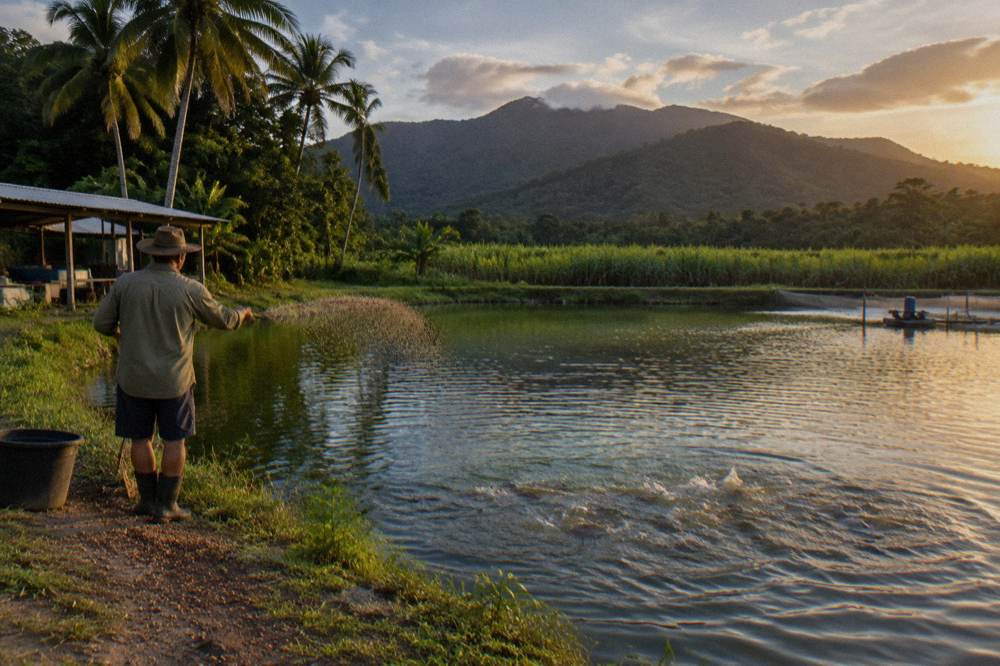
Why does the pond work when the wild fishery defeats people? Every difficulty listed earlier in this article is engineered out. The fish are present at known density, so there is no search. The water is still, so there is no tide to decode. There is no timber to lose tackle in, no crocodile-safe bank to find, no closed-season window to miss. What remains is the honest part of the challenge that transfers to wild fishing anyway: presenting a lure a barra will commit to, and handling the strike when it comes. Anglers who practise that loop in a pond arrive at their first guided estuary charter measurably better prepared.
Which Path Suits Your Trip?
Choose a guided estuary morning if you want the real Cairns barramundi fishery, tides, structure and all, from AUD 150 per person with gear included. Choose a stocked-pond session, from USD 54.52 or AUD 70 depending on the listing, if certainty of a hooked fish matters more than the hunt. Split a longer trip between both and you get the authentic challenge, plus catch-and-release ponds where a bite is far more likely.
Think about the trip you are actually having. A three-day visit in June with a partner who fishes occasionally is a different proposition from a week in October built around the build-up bite. The estuary charter is a 4.30am alarm and a 6.30am marina meet, four and a half hours on Trinity Inlet, and the genuine possibility of a blank morning even with a good skipper, because barra remain barra. The pond is a drive north, an hour of arm ache and a story to tell. Neither is the wrong answer; they answer different questions.
Timing matters more than most itineraries admit. October and November, the build-up, are prime barra months around Cairns, and the fishing can be electric. But from 1 November the closed season arrives, the estuary trips pivot to jacks, grunter, queenfish and cod, and the ponds become the only way to deliberately tangle with a barramundi. Check your travel dates against the closures before you build the fishing day, not after. A quick comparison of all the options, prices and inclusions sits in the Cairns fishing charters compared guide.
The last word goes to expectations. Barramundi are hard to catch near Cairns for reasons that are structural, tidal, seasonal and legal, and no honest writer should pretend otherwise. The fish that made this region famous earned that reputation on the days it beat everybody. Pick your path, fish the windows, respect the closure, and the odds move further toward you than most visitors ever manage. More background on what this publisher covers across the region is on the Fishing Tours Cairns homepage.
Common Questions About Barramundi Near Cairns
Why Are Barramundi So Hard To Catch Near Cairns?
They hold tight to snaggy structure, feed in narrow low-light and tide windows, and are protected by a 58 to 120 cm slot and a closed season from 1 November to 31 January. Local knowledge of which snag fishes at which tide is the main edge a guide adds.
Can I catch barramundi in Cairns between November and January?
Not in tidal waters or most fresh waters. The east coast closed season from 1 November to 31 January bans targeting barramundi entirely, including catch and release. Lake Tinaroo is exempt, and stocked-pond sessions at the Wonga Beach farm are a separate, controlled fishery.
Do I need a fishing licence to target barramundi in Cairns?
No licence is required for recreational fishing in Queensland tidal waters, including the estuaries and the reef. A Stocked Impoundment Permit is required from age 18 if you fish Lake Tinaroo.
Are stocked-pond barramundi the same as wild ones?
The fish are the same species, but the experience is different. Pond sessions at the Wonga Beach farm are catch and release in controlled water with tackle and guides provided, which makes a hookup far more certain than wild fishing, and it is honest to describe them as a farm experience rather than a wild-barra trip.
What is the best bait or lure for barramundi?
Wild barra around Cairns respond to live bait and to lures that imitate wounded baitfish or prawns, worked tight to structure during moving tides and low light. Water clarity changes the choice, which is one reason local guidance outperforms guesswork.
Is a guided charter worth it for a first-time barra angler?
For most visitors, yes. A shared morning estuary charter from AUD 150 per person includes rods, reels, bait and tackle, puts you on Trinity Inlet at the right hour, and removes the tackle, access and crocodile-safety problems that defeat self-guided anglers.