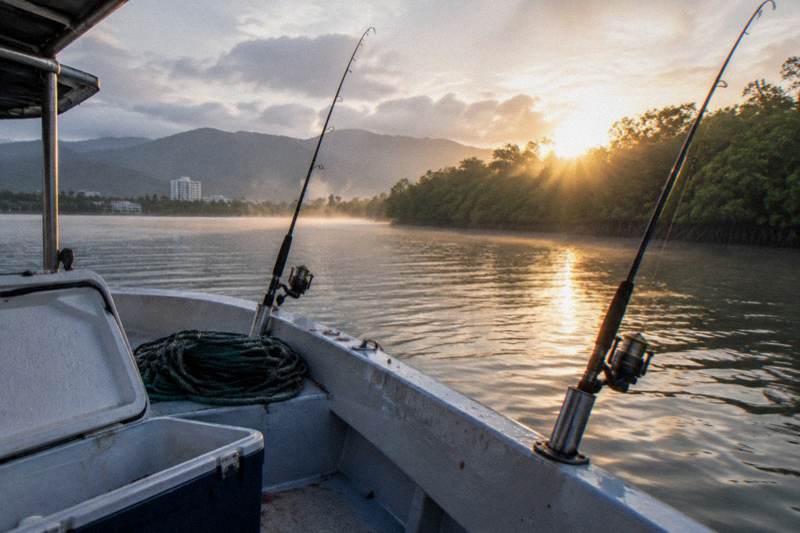
Where Can You Catch Barramundi Near Cairns?
The waters around Cairns where barramundi live: Trinity Inlet, the Barron, Mulgrave, Russell and Daintree systems, Lake Tinaroo and the stocked ponds at Wonga Beach, with closure and permit facts.
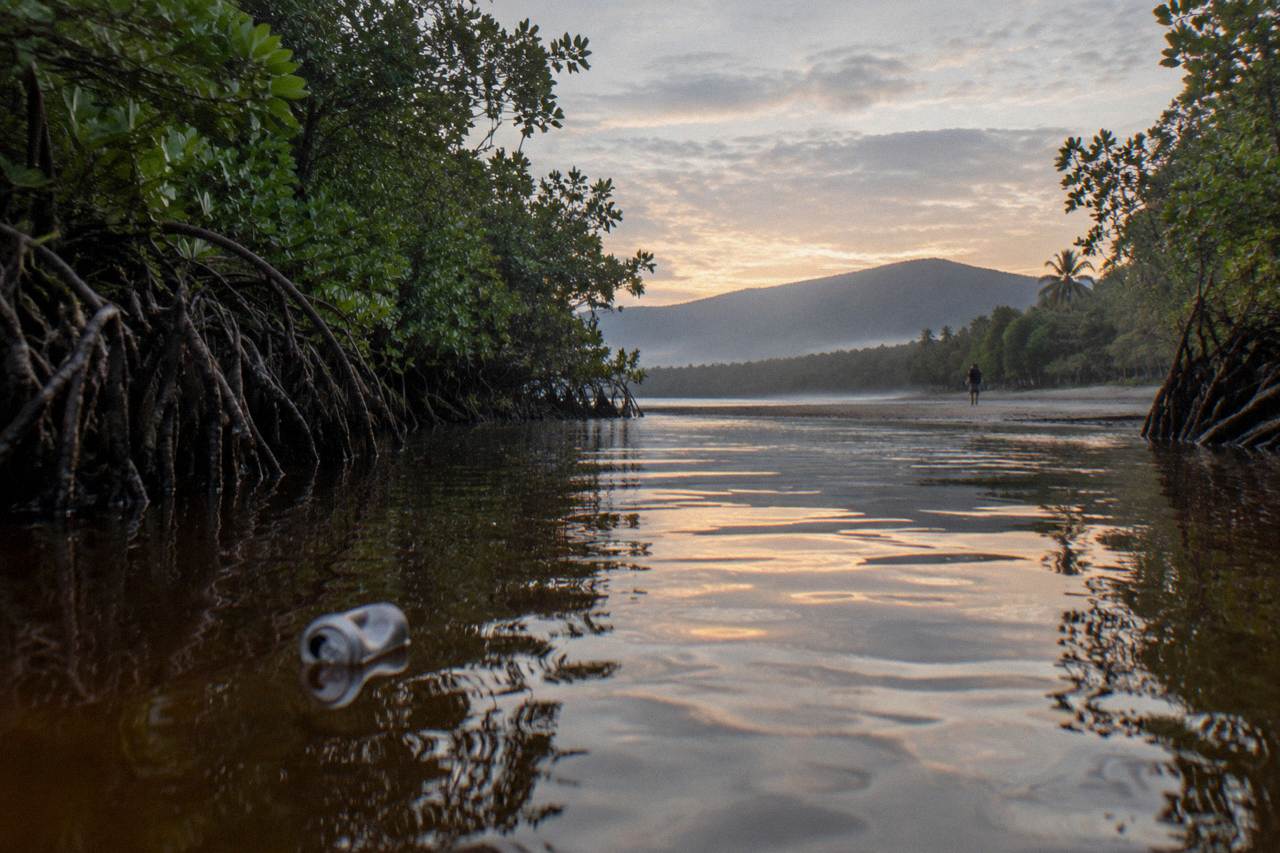
Barramundi fishing around Cairns is a story about water, not one magic spot. The fish live in a chain of estuaries and rivers that runs from the Daintree in the north, through the Barron River and Trinity Inlet at the city itself, down to the Mulgrave and Russell systems to the south, and in one big stocked impoundment up on the tableland, Lake Tinaroo. Each of those waters behaves differently, and one of them, the lake, plays by its own rulebook when the closed season arrives.
The short answer is that wild barramundi near Cairns live in Trinity Inlet, the Barron, Mulgrave, Russell and Daintree systems, and in Lake Tinaroo, which is stocked and exempt from the closure. The east coast closed season runs 1 November to 31 January and bans targeting barra in tidal and most fresh waters, while Tinaroo stays open year round with a Stocked Impoundment Permit required from age 18.
The fish move with the seasons and the tides, so the "where" changes through the year. In the build-up months of October and November, barra feed hard ahead of the closure, and reports from the 2026 season describe active fish in the creeks, the inlet and the rivers south of the city. After the wet season, the run-off from March to May is the other noted peak, when fish that spent the floods up in the floodplains drop back into the main channels.
One more thing before the detail: if you only have a short visit and still want a strong shot at a barramundi, there is a stocked-pond option at Wonga Beach, about 1.5 hours north of Cairns, where farmed fish lift your odds well above wild water, fished catch and release. It is not a wild-barra trip and this article will not pretend otherwise, but for many travellers it is the realistic answer.
For everyone who wants the wild version, the rest of this guide walks the waters one by one: what lives in them, what the rules say, and how you actually get a line in each one, whether that is on a guided charter or from the bank of a dam.
Trinity Inlet: The Barramundi Water On Cairns' Doorstep
Trinity Inlet is the closest barramundi water to central Cairns, a mangrove creek system that begins behind the marina and winds southeast through channels that hold barramundi, mangrove jack, grunter, queenfish, trevally and estuary cod. A morning estuary charter out of the Cairns Marlin Marina fishes it on a 4.5 hour trip from AUD 150 per person with rods, reels, bait and tackle supplied.
The inlet is the reason Cairns works as a barra town without a car. Charters leave from Finger D at the Marlin Marina, at 1 Spence St, a short walk from the Esplanade, and within minutes the boat is among mangrove-lined channels, snaggy points and creek mouths. Early-season 2026 reports from the Cairns region describe solid estuary action in the inlet alongside jacks, trevally, cod and queenfish, which matches what the system is known for: barra share the water with a full cast of other estuary species, so a session here is never a single-species bet.
Tides matter more than almost anything in the inlet. Barramundi hunt the edges on the rising water and ambush prey where the current funnels past structure, so guides work the mangrove points, the fallen timber and the creek junctions on the tide that moves baitfish into those ambush zones. Dawn sessions are the standard format locally, and the one estuary charter on this site's roster runs exactly that: a 6.30am meet, a 19-foot river boat, a maximum of six guests, and four and a half hours on the water. It is rated 4.6 from 22 reviews, a small pool, but a consistent one, and it carries free cancellation.
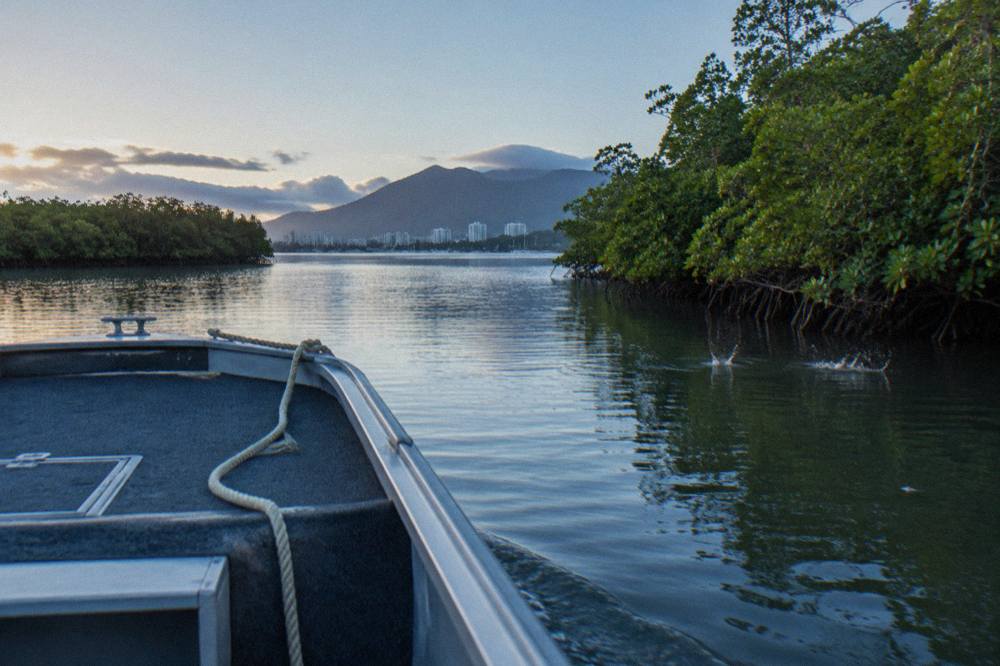
The listing for that trip does not name target species, which is honest, because no operator can promise a barramundi in wild water. What it promises is guided access to Trinity Inlet with gear included. If barra are the reason you are on the boat, say so when booking and the skipper will fish accordingly, within the seasons and limits. The estuary scene is covered in more depth in the estuary fishing in Cairns guide, which compares the water types and what each one produces through the year.
The Rivers South Of Cairns: Mulgrave And Russell
The Mulgrave and Russell rivers, a short drive south of the city, are the second string of Cairns' barra country, two parallel systems that hold barramundi, mangrove jack and grunter in their lower tidal reaches. 2026 reports from the Russell and Mulgrave describe barra and jacks in good numbers, and the same run-off and build-up peaks apply as in the inlet.
These are river fisheries rather than creek fisheries, which changes how they are fished. The channels are wider, the snags are bigger, and the fish spread along kilometres of bank rather than packing into creek mouths. Local knowledge counts for a lot here: where a visiting angler sees a wall of mangroves, a guide sees the five places along it where barra actually sit. That is the practical case for a charter on these waters, and operators working the southern rivers run the same style of small-boat guided trips as the Trinity Inlet fleet.
Access from the bank is possible at a handful of public ramps and reserves along both rivers, but two cautions apply. The first is crocodiles: north Queensland estuaries are croc country, and the Queensland Government's advice is to stand well back from the water's edge, never wade in to retrieve a lure, never clean fish or dump scraps near the water or a boat ramp, and take extra care at dawn, dusk and after rain or high tides. Sightings can be reported on 1300 130 372. The second is the closed season, which we come to below, because it applies to these rivers exactly as it does to the inlet.
There is no crewed private-charter product from the southern rivers on this site's roster, so anyone wanting to fish the Mulgrave or Russell with a guide is choosing from the wider Cairns estuary fleet, and the honest way to do that is to book the morning estuary charter and raise the southern rivers with the operator before the day. Some tides and seasons suit the inlet better; some suit a run south. The skipper makes that call on the morning.
The Barron River And The Daintree To The North
North of the city, the Barron River near the airport mouth and the Daintree River about two hours up the coast both hold barramundi, with the Daintree the stronger barra system of the two. Early-October 2026 reports from the Daintree describe barramundi and queenfish active in the system, and the same closure window applies from 1 November.
The Barron is the closest thing Cairns has to a suburban barra river. Its lower tidal reaches, around the mouth and the boating access near the northern beaches, fish best around the bigger tides when salt water pushes up the channel. It is a patchier fishery than the inlet or the Daintree, and anyone fishing it from the bank should keep the crocodile rules in mind as strictly as anywhere else, because the Barron is well inside croc country. Because the Barron can be hit and miss, it pays to understand why barramundi are so hard to catch before you commit a session to it.
The Daintree is the serious option. The river and its tributaries run through tall forest, the water is often tea-coloured, and the system produces barra across a long stretch of the year, with queenfish, jacks and grunter alongside. Most visiting anglers fish it with a local guide, of which there are several based around the Daintree village, because the river is big, the barra hold in water that takes local time to learn, and estuary crocodiles are a constant, not a footnote. If you are staying in Port Douglas, the Daintree and the closer river mouths are the natural barra waters, and the fishing tours in Port Douglas guide covers what departs from there, including the one product on this roster with hotel pickup from Port Douglas rather than Cairns.
Is Lake Tinaroo Open When The Closed Season Is On?
Yes, Lake Tinaroo, on the Atherton Tableland about 90 minutes' drive from Cairns, is exempt from the east coast barramundi closed season, so barra fishing there is allowed year round, including through the 1 November to 31 January window that shuts the coast. Anglers 18 and over need a Stocked Impoundment Permit, at AUD 13.60 a week or AUD 64.58 a year, with a concession rate of AUD 46.45.
Tinaroo Falls Dam is the escape hatch of Cairns barra fishing. It is a stocked impoundment, which is why the closure does not apply: the closed season exists to protect spawning wild fish, and the dam's barra population is maintained by stocking rather than natural spawning runs. The lake holds barramundi and sooty grunter, the two species listed for the impoundment, and it fishes differently from the coast. This is freshwater dam fishing: trolling and casting the timber stands and points, often from a small boat or kayak, with spin gear rather than the live-bait estuary style. The wider set of guides lives on Fishing Tours Cairns.
The permit is the one piece of paperwork, and it is genuinely required. Everyone 18 and over line fishing at Tinaroo must hold a Stocked Impoundment Permit, bought online or from agents before you fish; under-18s do not need one. There is no licence requirement at all in tidal waters or on the reef, which is worth knowing because the two systems sit side by side here: the coast needs no permit, the dam does. The official permit page for Tinaroo Falls lists the current fees and the rules, and it is the place to confirm before you drive up. For the full picture on which waters around Cairns are licence-free and where a permit still applies, see our plain-English guide to Cairns fishing licence rules.
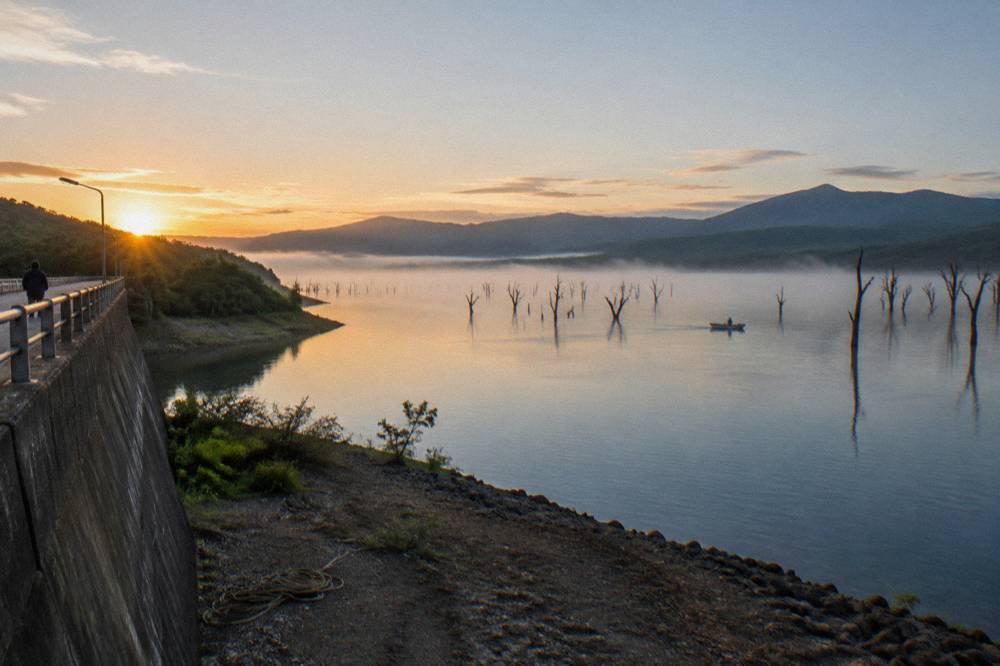
The practical trade-off is consistency versus scenery of the wild kind. Tinaroo does not guarantee fish either, but it guarantees the season stays open, and the drive up the range puts you in a different landscape entirely: highland scrub, cool nights and a lake ringed by cattle country. For a November or December trip, when every estuary from the Daintree to the Russell is closed to barra targeting, Tinaroo and the stocked ponds are the only legal barra fishing within reach of Cairns.
What The Closed Season Actually Means For Your Trip
From 1 November to 31 January, barramundi cannot be targeted anywhere in Queensland tidal waters or most fresh waters on the east coast, and that includes catch and release, because the stress of capture can stop fish spawning. Charters are bound by it too. The only exempt waters near Cairns are listed stocked impoundments such as Lake Tinaroo.
The wording matters. This is not a "keep only" closure; it is a targeting closure. You may not fish for barramundi at all during those three months in tidal water, and the freshwater closure mirrors it, with the dams listed as exceptions. If you are on an estuary charter in the closure window, the trip still runs, but the skipper fishes for everything else the systems offer: mangrove jack, grunter, queenfish, trevally, estuary cod and flathead, which is a genuinely good bench. A jack on light tackle in a snag is not a consolation prize.
| Water | Barramundi status | Closed season | Permit needed |
|---|---|---|---|
| Trinity Inlet | Wild barra in a mangrove creek system | 1 Nov to 31 Jan | No licence in tidal waters |
| Barron River | Wild barra, patchy lower tidal reaches | 1 Nov to 31 Jan | No licence in tidal waters |
| Mulgrave River | Wild barra and jacks, tidal reaches | 1 Nov to 31 Jan | No licence in tidal waters |
| Russell River | Wild barra and jacks, tidal reaches | 1 Nov to 31 Jan | No licence in tidal waters |
| Daintree River | Wild barra, queenfish and jacks | 1 Nov to 31 Jan | No licence in tidal waters |
| Lake Tinaroo | Stocked impoundment barra | Exempt, open year round | Stocked Impoundment Permit from age 18 |
| Wonga Beach ponds | Farmed barra, catch and release | Operator's listing confirms dates | No permit stated, check the listing |
For anyone planning dates, the calendar windows are the thing to anchor on. The closure starts on 1 November, which is the same day the marine stinger season opens on the Cairns coast, so the 1 November line divides the year neatly: barra open and lower stinger risk from June to October, barra closed and stinger season from November through January. Inside the open months, the October build-up is prime feeding time and early-October 2026 reports had barra active across the local systems right up to the wire. The Fisheries Queensland closures page carries the official dates each year. For a fuller picture of when the fishing actually peaks outside those closed months, our month by month barramundi fishing calendar for Cairns walks through the whole year.
Guided Access Or Self-Drive: Getting To The Fish
Guided estuary charters from the Cairns Marlin Marina start from AUD 150 per person for a shared half day, with market planning ranges from other operators running about AUD 104 to 150 shared half day and about AUD 800 for a private half day. Self-drive boat hire from AUD 189 per group puts you on Trinity Inlet without a skipper, but rods and bait cost extra on most hire listings.
The guided route is the one most visitors take, and it is easy to see why: gear, local knowledge and fish handling are all handled, and the departure point is a short walk from the Esplanade. The marina itself, a Ports North operation with 261 berths at 1 Spence St, sits about 7 km and 10 minutes from the airport, so even a fly-in morning charter is practical. No Cairns product on this roster offers hotel pickup; every Cairns departure is a self-arrival at the marina, which is worth planning around if you are staying out of the centre.
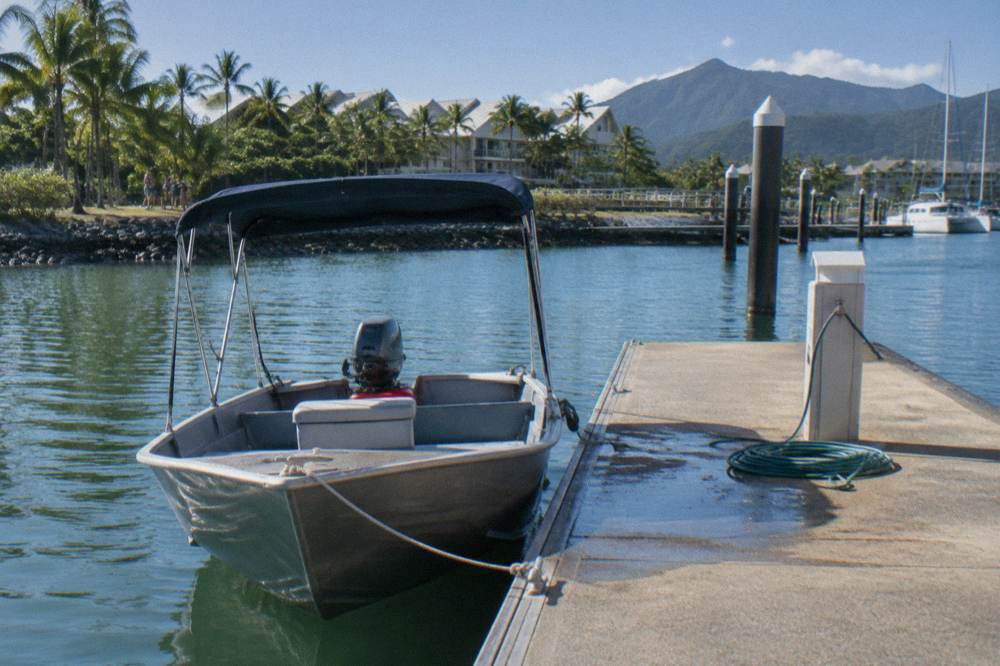
The self-drive route trades the guide for freedom. A shaded tinny for up to four people hires from AUD 189 per group for a half or full day, fuel included, with the driver needing to be 18 or older with a driver's licence; no marine licence is required per the listing. Rods, bait, ice and an esky cost extra on that listing, so the apparent price gap with a guided trip narrows once you add gear. A pontoon for up to eight starts at AUD 249 per group, with a safety briefing and fishing-spot tips at collection, though its review pool is small at 8 reviews. The trade-offs of both routes, and what a day on the water costs across formats, are compared in the Cairns fishing charters compared guide.
Between the two sits the stocked-pond middle path, which needs no boat, no guide and no luck with wild fish. That is the next section, and for many travellers it is the part of this question that actually ends in a bent rod.
The Stocked-Pond Option: Hook-A-Barra At Wonga Beach
Hook-A-Barra, at Wonga Beach about 1.5 hours' drive north of Cairns, is a barramundi farm where stocked ponds are fished catch and release with tackle and lures supplied. Sessions run from about one hour, and its stocked ponds near Cairns make a barra far likelier than a day on wild water. It is a farm experience, not a wild-barra or reef trip. If you would rather trade the certainty of stocked ponds for a run to the open ocean, how far out you go to reach the black marlin grounds off Cairns explains what that trip actually involves.
The honesty is the appeal. Wild barramundi are hard-won fish, and everything above depends on season, tide, weather and skill. The ponds at the Daintree Saltwater Barramundi Farm, Lot 3 Vixies Rd, remove the first three variables. Guides give an intro, hand you a rod, lures and bait, and the session runs on a catch-and-release basis, with whole fish or fillets available to buy at the farm if you want barra for the plate. There is no Cairns pickup; guests make their own way, and the drive north is a straightforward run past Port Douglas.
The operator sells several versions of the day, and the differences between them are worth seeing side by side before booking.
| Session | Price from | Rating and reviews | Group size |
|---|---|---|---|
| 1.5-hour pond session with viewing tanks | AUD 70 per person | 4.5 from 25 reviews | Shared session, guides on hand |
| 1-hour pond session | USD 54.52 per person | 4.9 from 293 reviews | Shared, maximum 18 |
| Lunch session with Port Douglas pickup | AUD 175 per person | 4.9 from 25 reviews | Hotel pickup and drop-off, Port Douglas |
| Farm tour, pond fishing and tasting board | USD 88.51 per person | 5.0 from 51 reviews | Small group, maximum 8 |
Note the first two rows: they are the same operator and the same one-hour pond session, listed in different currencies with different review pools. The AUD 70 listing is rated 4.5 from 25 reviews and the USD 54.52 listing is rated 4.9 from 293 reviews, the deepest review pool on this site's roster. Both carry free cancellation, and both fish the same ponds. The longer lunch version adds a farm tour, fish feeding and lunch with pickup from Port Douglas hotels, while the tasting-board version runs as a small group of no more than 8 with a behind-the-scenes farm tour followed by pond fishing and a barramundi tasting board.
Whether the ponds count as "catching barramundi near Cairns" is a fair question, and the honest answer is: they count as catching barramundi, full stop. The fish are real, they pull hard, and the techniques transfer. What they are not is wild fish in wild water, and this site will not blur that line. Fish the ponds for the certainty, or fish the inlet and the rivers for the chase, and plenty of visitors do both in one week.
Common Questions About Catching Barramundi Near Cairns
Where Can You Catch Barramundi Near Cairns?
In wild water: Trinity Inlet at the city, the Barron River to the north, the Mulgrave and Russell rivers to the south and the Daintree River further up the coast. In stocked water: Lake Tinaroo, which is exempt from the closed season, and the Hook-A-Barra ponds at Wonga Beach, about 1.5 hours north of Cairns.
What is the barramundi closed season near Cairns?
The east coast closed season runs 1 November to 31 January each year and bans targeting barramundi in tidal and most fresh waters, including catch and release. Lake Tinaroo is exempt. The official dates are published on the Fisheries Queensland closures page.
Do I need a fishing licence to fish for barramundi in Cairns?
No licence is needed for recreational fishing in Queensland tidal waters, so the inlet and rivers need no permit. Lake Tinaroo is different: anglers 18 and over need a Stocked Impoundment Permit, AUD 13.60 a week or AUD 64.58 a year.
Can you catch barramundi in Cairns in November and December?
Not in the coastal waters, which are closed to barra targeting from 1 November to 31 January. Lake Tinaroo stays open year round, and the stocked ponds at Hook-A-Barra run catch-and-release sessions, with the operator's listing the place to confirm dates.
Are barramundi hard to catch for beginners?
Wild barramundi are genuinely difficult: they are an ambush fish tied to tides, structure and season, and even good anglers blank. Beginners who want a barra usually start at the Wonga Beach ponds, where tackle is supplied and the fish are stocked, then graduate to an estuary charter.
What size barramundi can you keep near Cairns?
Legal barramundi must measure 58 to 120 cm, with a possession limit of 5 per person or 10 per boat when two or more people are aboard. The pond sessions at Hook-A-Barra are entirely catch and release.