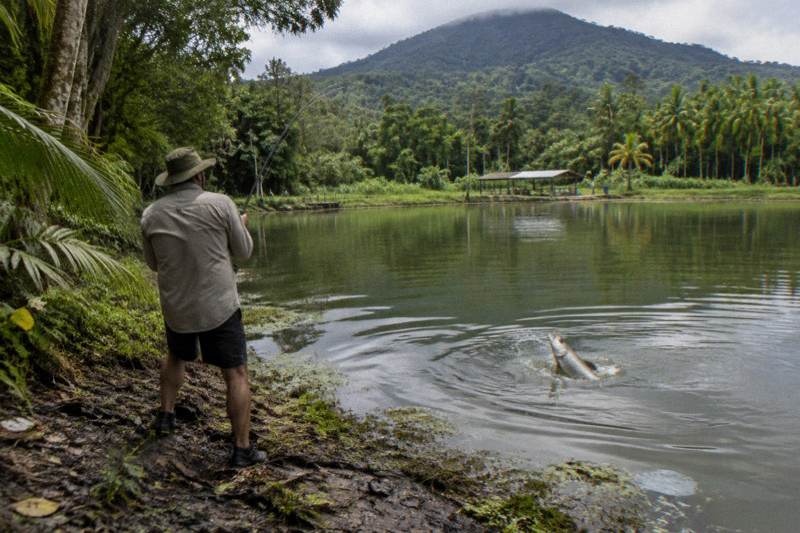
Barramundi Fishing In Cairns: Where And How To Hook A Barra
Barramundi are the fish most visitors to Cairns want to catch, and the region genuinely produces them, in Trinity Inlet, the Barron, Mulgrave, Russell and Daintree systems, and in stocked dams. But the rules matter more here than almost anywhere: a three-month closed season, a slot limit, and a roster of local tours that fishes stocked ponds rather than wild barra water.
Short answer
Wild barramundi fishing around Cairns runs in Trinity Inlet and the Barron, Mulgrave, Russell and Daintree systems, closed 1 November to 31 January, with a 58 to 120 cm slot and a limit of 5 per person. No wild-barra charter is bookable here; the barramundi products are four Hook-A-Barra pond sessions at Wonga Beach from AUD 70 and USD 54.52.
Barramundi sit at the top of the wish list for almost every angler who lands in Cairns, and the region deserves that reputation: the east coast stocks around here, Trinity Inlet first among them, are genuine producers of metre-class fish. What catches most visitors out is not the fishing. It is the paperwork around it. Queensland closes tidal barramundi fishing from 1 November to 31 January every year, bans even catch and release in that window, and enforces a slot limit that protects both juveniles and the big breeding females. Add the fact that no dedicated wild-barramundi charter operates among the bookable tours in this city, and the honest picture is more nuanced than the brochure version. If your travel dates fall inside that closed barra season, the offshore option is worth a look, and how far out Cairns boats run to reach the black marlin grounds explains what that run actually involves.
This guide lays out where wild barra actually live around Cairns, what the rules permit and when, the four Hook-A-Barra stocked-pond sessions at Wonga Beach that make up the bookable barramundi offering, and how Lake Tinaroo fits in as the year-round wild-fish exception. Every price and rating below comes from the live listings; every rule comes from Queensland Fisheries sources.
Where Barramundi Live Around Cairns
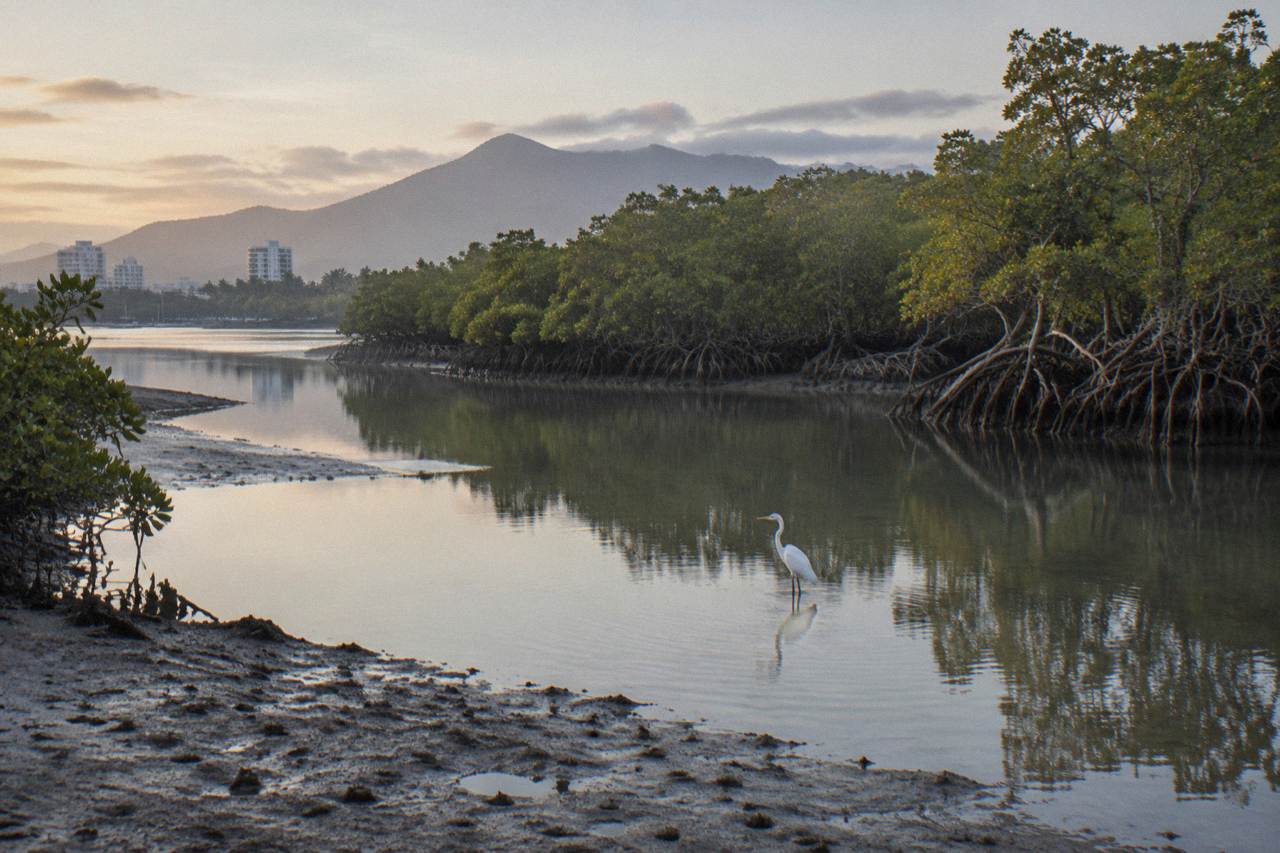
Barramundi around Cairns hold in five main systems: Trinity Inlet closest to town, then the Barron River just north of the city, the Mulgrave and Russell rivers about 30 to 40 minutes south, and the Daintree River further north. All are tidal waters, all hold mangrove jack, grunter, queenfish and trevally alongside the barra, and all fall inside the east coast closed season from 1 November to 31 January.
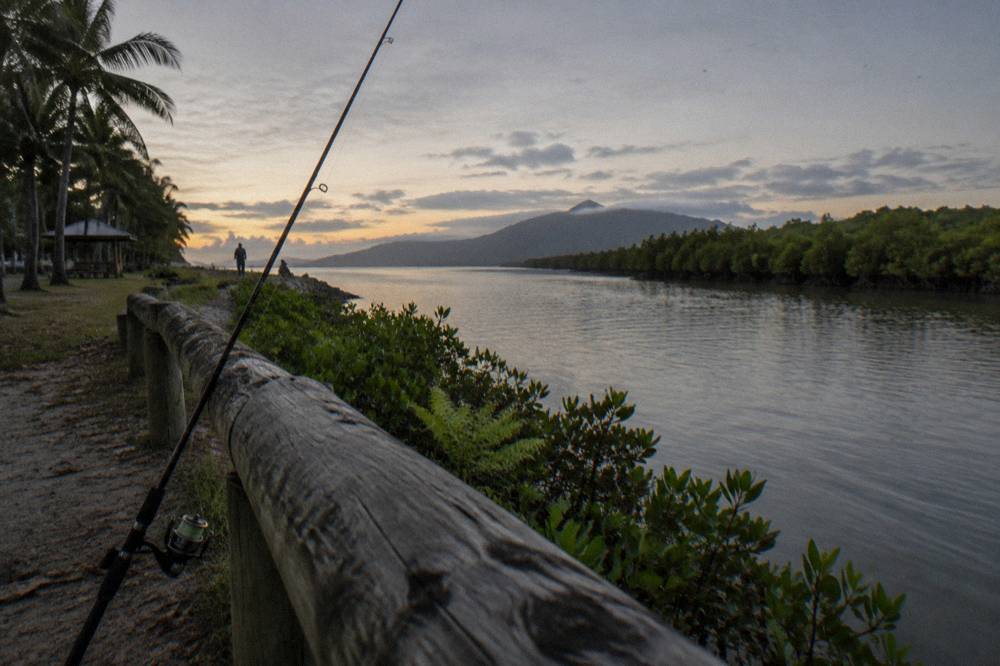
Trinity Inlet is the one you can fish without a vehicle. It snakes through mangrove country directly behind the airport and the city, and morning charter boats work its channels and snag-lined banks within sight of the Esplanade towers. Recent region-wide reports describe active barra in the inlet's creeks alongside jacks, grunter, queenfish, trevally, estuary cod and flathead, which is the standard mixed-estuary bag for this coast.
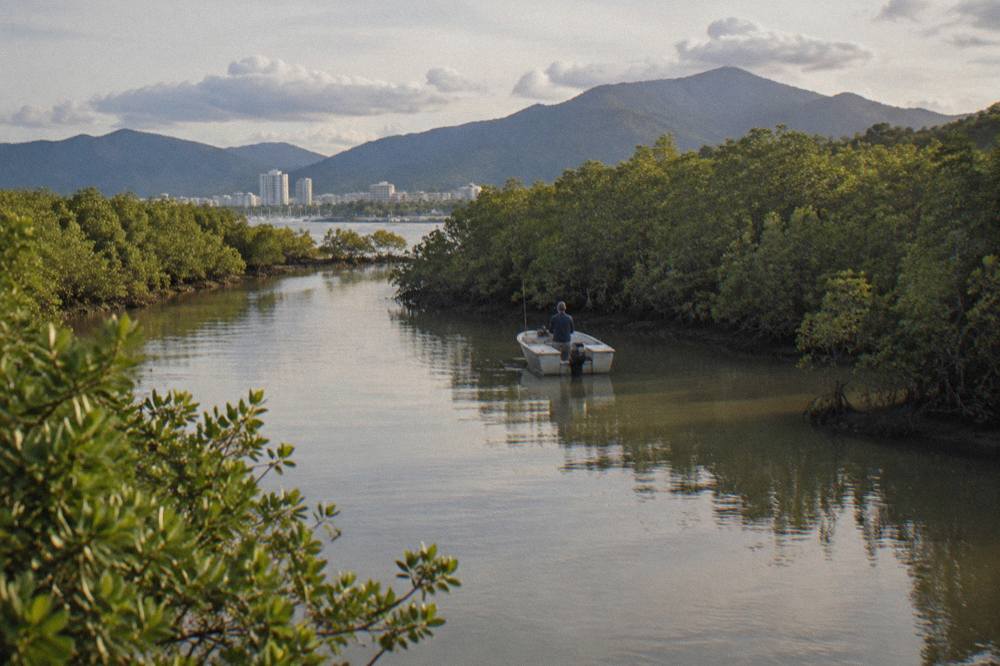
The Barron River, emptying just north of the city near the airport, is the second close option, with deeper holes and timber that hold barra through the warmer months. The Mulgrave and Russell systems to the south are twin rivers that share a floodplain; both are noted producers, and current reports from guides working them describe solid numbers of barra and mangrove jack through the late dry season build-up. The Daintree, roughly two hours north of the city, is the famous one, a big tea-coloured tidal river where barra share the water with crocodiles and the scenery does half the selling.
| System | Direction from Cairns | Character | Also holds |
|---|---|---|---|
| Trinity Inlet | In the city | Mangrove channels, snags, mud flats | Jacks, grunter, queenfish, cod, flathead |
| Barron River | North, near the airport | Deeper holes, timber | Jacks, trevally, sooty grunter upstream |
| Mulgrave River | South | Clearer freshwater meets tidal water | Jacks, sooties, jungle perch |
| Russell River | South | Tidal mangroves, snaggy banks | Jacks, grunter, barramundi |
| Daintree River | North, about two hours | Big tidal river, croc country | Jacks, queenfish, threadfin |
The pattern across all five is the same. Barramundi ambush prey around structure, so snags, rock bars, creek mouths and drain edges at low light are where the fishable water is. For a wider look at the estuary scene overall, including the charters that work it, see the Cairns estuary fishing guide, and the guide to where barramundi hide in Cairns goes deeper on individual spots.
The Closed Season And The Rules That Matter
Tidal barramundi fishing in Queensland is closed from 1 November to 31 January every year, and closed means closed: no targeting and no catch and release, because the stress of capture can stop a spawning fish from breeding. Outside the closure, barra must measure between 58 and 120 cm, the limit is 5 per person or 10 per boat with two or more aboard, and no licence at all is needed to fish tidal waters. If you plan to chase reef species offshore between barra trips, this guide to coral reef fin fish limits off Cairns explains the separate rules that apply on the reef.
The closure is the single biggest planning fact for a barra trip to Cairns. It covers all the tidal waters listed above and nearly all fresh waters too, with the stocked-impoundment dams, Lake Tinaroo among them, the listed exception. Book a trip between 1 November and 31 January expecting to chase wild barra and you will be fishing for something else: mangrove jack, grunter, queenfish and estuary cod are all open and all common in the same systems. The official closure dates and the no-targeting rule are set out on the Queensland Fisheries closures page.
| Rule | Detail |
|---|---|
| Closed season, east coast | 1 November to 31 January, tidal and most fresh waters |
| Catch and release in the closure | Not allowed, targeting itself is prohibited |
| Minimum size | 58 cm |
| Maximum size | 120 cm |
| Possession limit | 5 per person, or 10 per boat with 2 or more aboard |
| Licence, tidal waters | None required |
| Lake Tinaroo | Exempt from the closure, permit required from age 18 |
The slot limit deserves a word of respect. That 120 cm ceiling exists because big females carry the spawning stock; a metre-plus barra is a breeding animal, and the law requires it to go back. The size and possession figures come straight from the Queensland government's tidal fishing limits page, which also carries the rules for every other species you are likely to hook in barra country: mangrove jack over 35 cm with a limit of 5, mud crab over 15 cm across the shell at 7 per person or 14 per boat with no females taken.
Timing within the open season matters as much as the calendar itself. The two noted peaks are the run-off from March to May, when the wet season drains off the floodplains and barra feed hard at the creek mouths, and the build-up from October to November, when warm, still conditions push fish aggressive before the closure lands. A visit in the middle of the year can still produce fish, but the barra fishing is steadier at the shoulders of the wet.
If a barra on the line is the point of your trip and your dates fall inside or near the closure, there is one dependable answer, and it is not a wild river.
The Hook-A-Barra Pond Sessions At Wonga Beach, Compared
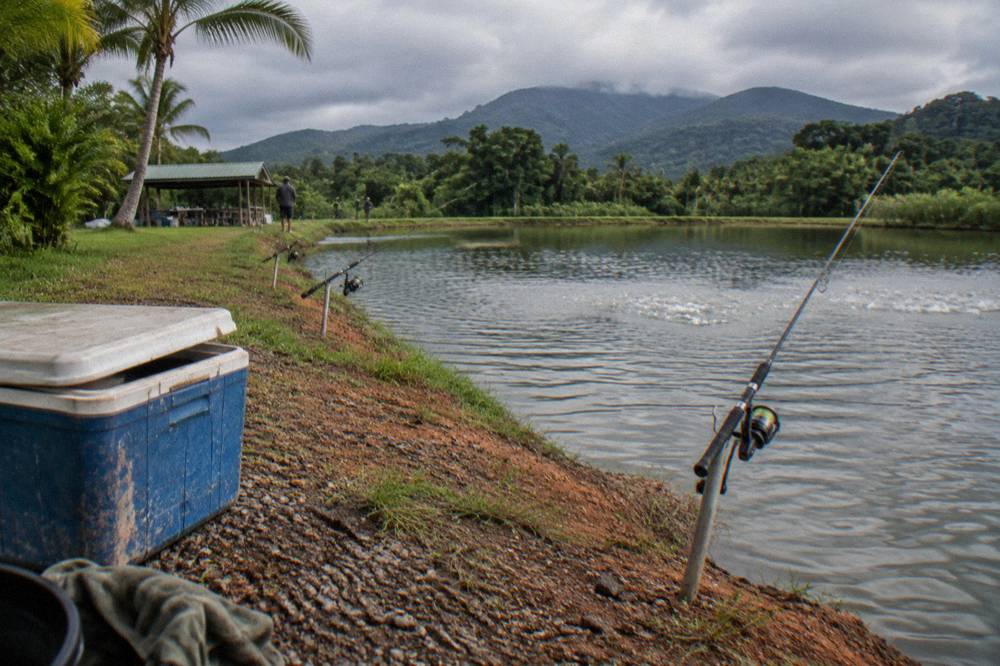
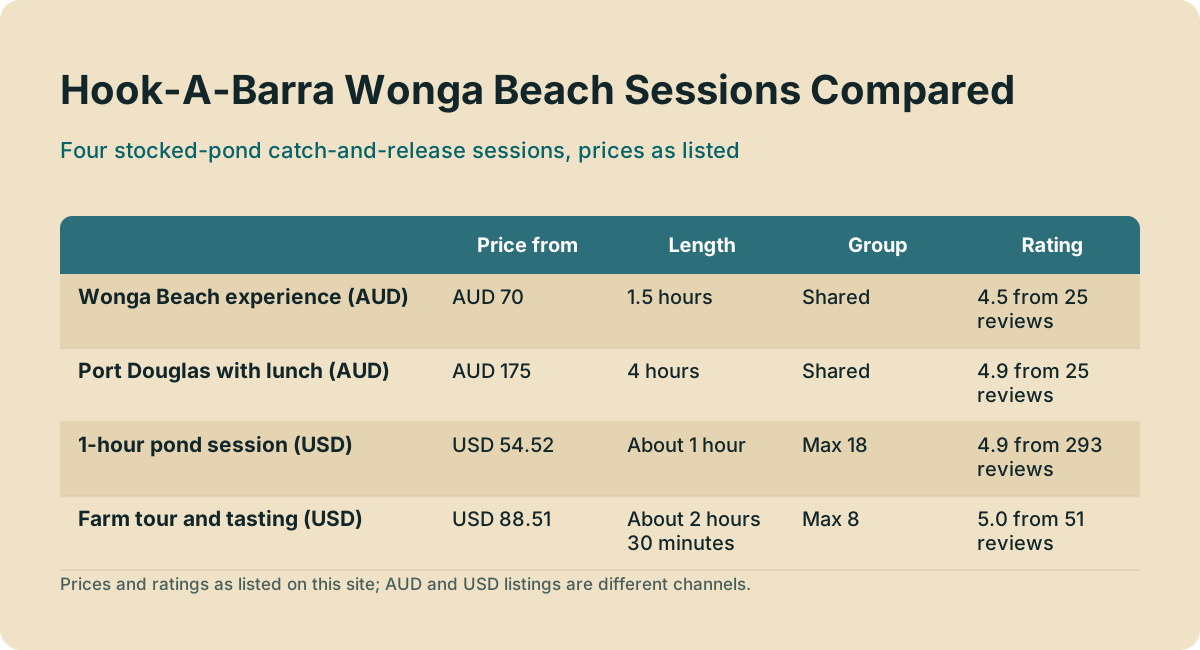
The barramundi products bookable from this site are four sessions at Hook-A-Barra, a stocked-pond catch-and-release operation at Wonga Beach, about 1.5 hours north of Cairns, run by the Daintree Saltwater Barramundi Farm. None is wild fishing, none offers Cairns pickup, and prices run from AUD 70 for a 1.5-hour session to USD 88.51 for a farm tour with pond fishing and a tasting board.
Being plain about what this is: stocked ponds, not a river or a reef. The fish are farmed barramundi, the fishing is all catch and release, and the experience is closer to a well-run farm visit with rods than to a charter. What you get in exchange is certainty. The ponds hold fish, the guides put tackle in your hand, and the calendar does not close, though the listing is the place to confirm session dates. It is also the only way most visitors will reliably feel a barra pull, because wild fish earn their reputation as one of the hardest targets on the coast.
The four listings differ more than their shared name suggests. The AUD 70 session runs 1.5 hours, includes tackle, lures, a guide intro and access to the barramundi viewing tanks, and rates 4.5 from 25 reviews. The Port Douglas version at AUD 175 is the only tour on this entire roster that picks anyone up, hotel transfer from Port Douglas rather than Cairns, and wraps a farm tour, an hour of pond fishing, fish feeding and lunch into four hours; it rates 4.9 from 25 reviews. The two USD listings serve the operator's international booking channel: a one-hour shared session at USD 54.52 rated 4.9 from 293 reviews, the deepest review pool on this roster, capped at 18 travellers, and a small-group tour at USD 88.51, maximum 8, pairing a behind-the-scenes farm tour with pond fishing and a barramundi tasting board, rated 5.0 from 51 reviews.
| Session | Price from | Length | Group | Rating | Inclusions |
|---|---|---|---|---|---|
| Wonga Beach experience (AUD) | AUD 70 | 1.5 hours | Shared | 4.5 from 25 reviews | Tackle, lures, guide intro, viewing tanks |
| Port Douglas with lunch (AUD) | AUD 175 | 4 hours | Shared | 4.9 from 25 reviews | Port Douglas pickup, farm tour, 1 hour fishing, lunch |
| 1-hour pond session (USD) | USD 54.52 | About 1 hour | Max 18 | 4.9 from 293 reviews | Rod, tackle, lures, bait; fish can be bought |
| Farm tour and tasting (USD) | USD 88.51 | About 2 hours 30 minutes | Max 8 | 5.0 from 51 reviews | Farm tour, pond fishing, barramundi tasting board |
A reading of those numbers: the one-hour USD listing and the AUD 70 listing are the same operator and the same style of session, listed on different channels with different review pools, group caps and currencies, so comparing the prices directly is meaningless; a traveller paying in AUD and one paying in USD each see their own number. The 5.0 rating on the tasting-board tour comes from a small pool of 51 reviews, real and positive, but small.
Choosing between them comes down to transport and appetite. All four are self-arrival at the farm, Lot 3 Vixies Road, Wonga Beach, except the Port Douglas lunch session, which picks up from Port Douglas hotels and states plainly that there is no Cairns pickup. If you are staying in Cairns without a car, the drive north is the real cost of the visit; if you are based in Port Douglas, the lunch session is the obvious pick and the only tour on this roster that collects you. If you want the barra on a plate as well as on the line, the tasting-board session is the one that ends with you eating the farm's fish, and whole fish or fillets can be bought on site at the one-hour session too.
The one-hour session with the 293-review pool is the one this site features for most visitors, because the price is low, the time commitment is small and the review base is the deepest of any barra product here: Check availability on the live listing. Every one of the four carries free cancellation.
For families or anyone who wants the pond session plus lunch without driving from Cairns, the Port Douglas pickup version sits in the same comparison table above. And for visitors who want the fuller story of the farm, the small-group tasting tour at USD 88.51 adds the behind-the-scenes walk first, which changes the character of the visit from a fishing stop into half a day out.
Lake Tinaroo, The Year-Round Wild Barra Option
Lake Tinaroo, on the Atherton Tablelands about 90 minutes west of Cairns, is the one place near the city where wild barramundi can be legally targeted during the closed season, because stocked impoundments are exempt from the 1 November to 31 January closure. Anglers 18 and over need a Stocked Impoundment Permit, at AUD 13.60 for a week or AUD 64.58 for a year, with a concession rate of AUD 46.45.
Tinaroo Falls Dam was stocked with barramundi decades ago and now holds genuinely large fish in still, timber-filled freshwater. Because it is a listed stocked impoundment, the east coast closure does not apply: barra fishing there runs year round. The permit is the only licence-style requirement, and it applies from age 18 while under-18s fish free, per the official Tinaroo Falls permit page. No tour on this roster goes to the lake, so it is a self-drive or private-arrangement trip, usually with a Tablelands-based guide found independently.
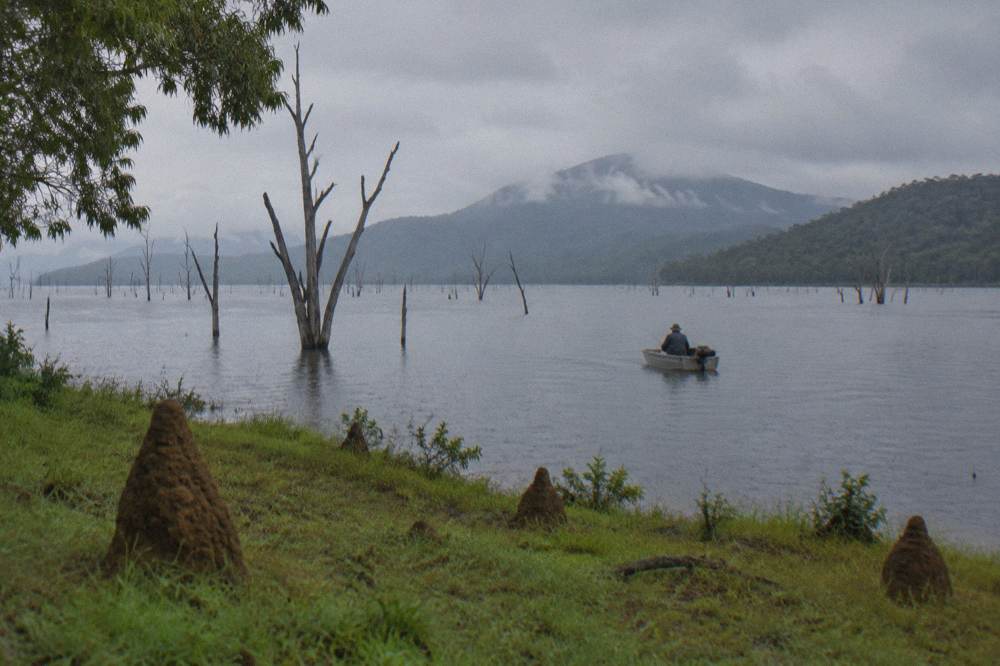
The fishing itself rewards the trip. Lake barra in impoundments behave differently from river fish: they school over submerged timber and points, respond hard to trolled or cast lures in low light, and grow fat on the lake's forage. The same 58 to 120 cm slot applies, and fisheries officers do check. Bring your own tackle or arrange it with a guide, since nothing on this site's roster covers the lake.
Wild Barra Charters: What Actually Exists On This Roster
No dedicated wild-barramundi charter is bookable through this site. The nearest honest fit is the morning estuary charter through Trinity Inlet, a 4.5-hour guided trip from the Cairns Marlin Marina at AUD 150 per person, rated 4.6 from 22 reviews, rods, reels, bait and tackle included, which fishes barra water without promising barra.
That distinction is worth spelling out. The estuary charter runs a 19-foot river boat with a maximum of 6 guests through Trinity Inlet at first light, meeting at 6.30am at Marina Finger D berth 2. The listing does not name target species, and this site will not invent any: the trip fishes the inlet, and what bites is what the day gives, barramundi among the possibilities in the open season, jacks, grunter, queenfish, trevally and cod the rest of the year. If your heart is set on a barra specifically and only a barra, the ponds are the product that delivers.
For readers comparing the whole market rather than this roster, other operators around Cairns list shared estuary half days from roughly AUD 104 to 150 per person and private half days around AUD 800, ranges from operator sites rather than bookable prices here. The full landscape of options, including boat hire and reef days, is mapped in the Cairns fishing charts comparison.
One more honest gap: there is no Port Douglas wild-barra boat on this roster either. What exists from Port Douglas is the Hook-A-Barra pond pickup covered above, and the broader picture is in the Port Douglas fishing tours guide. Self-drive boat hire on Trinity Inlet is a third route to barra water, and the Fishing Tours Cairns site covers it in the boat hire pages: a shaded tinny runs from AUD 189 per group of up to 4, though rods and bait cost extra there.
Best Months And Tides For Barramundi Around Cairns
The strongest wild-barramundi windows around Cairns are the run-off from March to May and the build-up from October to November, with the fishery closed entirely from 1 November to 31 January. Within any open month, the best fishing clusters around dawn and dusk, the top and bottom of the tide, and the 3 to 4 days either side of a new or full moon. To plan a trip around these windows, our month-by-month barramundi fishing calendar for Cairns breaks down how the whole season shapes up.
The run-off is the celebrated season. As wet-season floodwater drains off the floodplains into the rivers and inlet, barra gather at creek mouths and feed with an urgency you do not see mid-year. It is also the least predictable window, because a big wet can dirty the rivers for weeks at a time. The build-up is the quieter twin: October's heat and calm make fish aggressive in the lead-up to spawning, and it lines up neatly with the last weeks before the closure lands.
| Period | Wild barra quality | Notes |
|---|---|---|
| March to May | Peak, run-off | Floodplain drain, barra at creek mouths |
| June to August | Steadier, cooler | Fewer barra, clearer water, jacks and grunter reliable |
| September to October | Peak, build-up | Hot, calm, aggressive fish before the closure |
| 1 Nov to 31 Jan | Closed | No targeting; jacks, grunter, queenfish open |
| February | Improving late | Post-wet rivers settling, dirty early |
Tide and light are the daily levers. Around the solunar hinges, the hour either side of dawn and the lead into dusk, barra move onto the edges and hunt. Neap tides concentrate them in the holes; bigger tides spread them along the banks and into the drains. The site's guide to the best times to fish in Cairns and the tides explainer cover this in detail.
Pond sessions sidestep all of this, which is half their value: the Hook-A-Barra fish feed through the day, so a mid-morning session in November fishes as well as one in June, subject to the farm's own schedule on the listing.
Crocodile And Stinger Safety In Barra Country
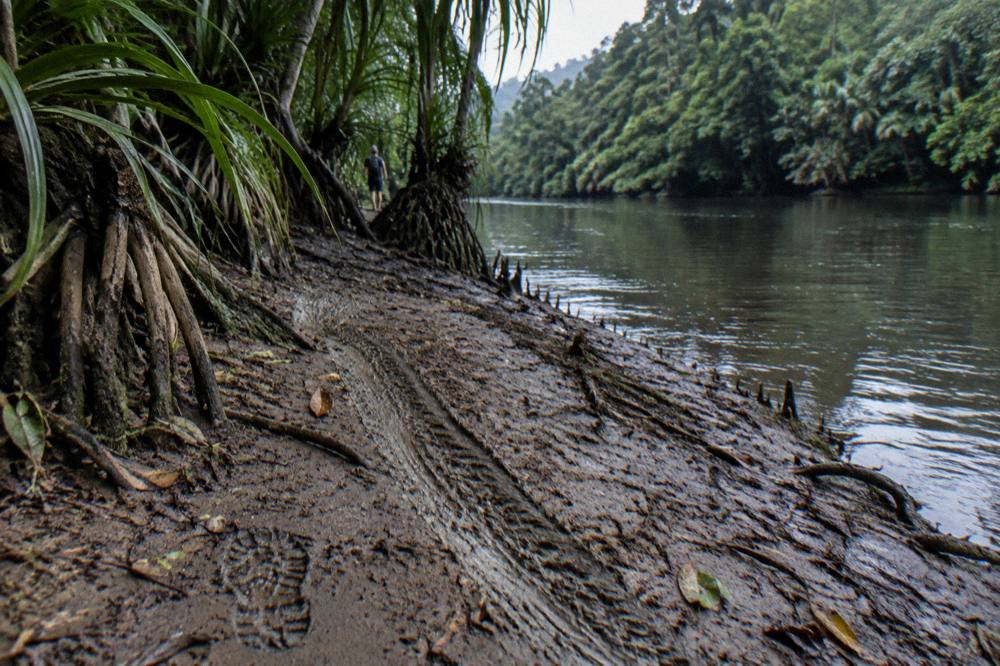
Every wild barramundi water around Cairns is crocodile habitat, full stop: no water body in croc country is considered crocodile-free. Stand well back from the water's edge, never wade in to retrieve a snagged lure, never clean fish or dump scraps near the water or boat ramps, take extra care at dawn, dusk, after rain and on big tides, and report sightings on 1300 130 372.
The estuary systems that hold barra, the Daintree especially, are the same waters that hold large crocodiles, and the two facts are not separable. The state's guidance is practical rather than alarmist: fish 5 metres or more back from the bank where you can, put a solid object like an esky between you and the water when land-based, keep arms and legs inside the boat, and stay clear of slide marks and crocodile traps. A charter deck or a pond deck at Wonga Beach removes most of the exposure; a solo bank session on a Daintree sandbar maximises it.
Stingers run on their own calendar. The official marine stinger season spans November to May, the same opening day as the barra closure, with risk lower from June to October and lower again on outer-reef trips than on inshore beaches. For an estuary or pond trip in the clear months this barely registers; for a November visit it means a stinger suit where advised and a proper look at any patrolled-beach signage. Free shore options and their rules are catalogued in the free fishing spots in Cairns guide.
Planning Your Barramundi Trip: A Short Checklist
Decide first whether you want a wild barramundi or a barramundi on the line. Wild fish mean the open season from February to October, low light, the right tide and no guarantee; a booked fish means a Hook-A-Barra pond session from AUD 70, any month, tackle included. Everything else, dates, transport, licence-free tidal rules, croc sense, follows from that one choice.
For most visitors the honest recommendation is both, sequenced. Book a pond session early in the stay, the one-hour or 1.5-hour version, so the barra box is ticked and the casting basics are warmed up. Then take the estuary charter into Trinity Inlet for the wild version, understanding it as a great morning's fishing on barra water rather than a barra guarantee. If your dates fall between 1 November and 31 January, the sequence shortens itself: ponds, the still-open estuary species, or the drive to Tinaroo.
Budget it in one glance. The pond ladder runs AUD 70, AUD 175, USD 54.52 and USD 88.51 depending on session and booking channel. The estuary charter is AUD 150 per person. A Tinaroo permit is AUD 13.60 a week from age 18. Fuel and time north to Wonga Beach or west to the Tablelands are the hidden lines on any self-drive version. The full cost landscape, including private options, is broken down in the Cairns charter cost guide.
Whatever you choose, book against the rules rather than around them: the closure dates, the slot limit and the green-zone maps exist to keep this fishery producing metre fish for the next visit, and the operators who respect them are the ones worth your money.
Common Questions About Barramundi Fishing In Cairns
When is barramundi season closed in Cairns?
The east coast barramundi closed season runs from 1 November to 31 January every year, covering tidal and most fresh waters. Targeting barramundi, including catch and release, is prohibited in that window. Lake Tinaroo is exempt, and the Hook-A-Barra stocked ponds at Wonga Beach are a farm experience rather than a wild fishery, with the listing the place to confirm session dates.
Do I need a licence to fish for barramundi in Cairns?
No licence is required for recreational fishing in Queensland tidal waters, including Trinity Inlet, the rivers and the reef. The only permit on the barra map is the Stocked Impoundment Permit for Lake Tinaroo, needed from age 18, at AUD 13.60 a week or AUD 64.58 a year.
What is the legal size for barramundi in Queensland?
Barramundi must measure between 58 and 120 cm, with a possession limit of 5 per person or 10 per boat when two or more people are aboard. The upper limit protects the big breeding females, so a metre-plus fish must be released.
Can I catch barramundi in Cairns all year round?
Wild barramundi, no: the tidal fishery closes 1 November to 31 January. Lake Tinaroo is the year-round wild option, and the Hook-A-Barra stocked ponds at Wonga Beach run as a farm experience outside the wild calendar. Best open-season windows are the March to May run-off and the September to October build-up.
Are there barramundi fishing charters in Cairns?
No dedicated wild-barramundi charter is bookable on this roster. The nearest fit is the 4.5-hour morning estuary charter through Trinity Inlet at AUD 150 per person, rated 4.6 from 22 reviews, which fishes barra water without promising a species. The four Hook-A-Barra pond sessions at Wonga Beach give a far better shot at a barra than wild water, all catch and release, from US$54.52 to A$175.